Just so you know – some links on this page are affiliate links. If you click and buy something, I may earn a small commission (think coffee money, not a luxury vacation) at no extra cost to you. I only share things I genuinely like and believe are worth it. Thanks for supporting this little corner of the internet – it really helps keep everything running.
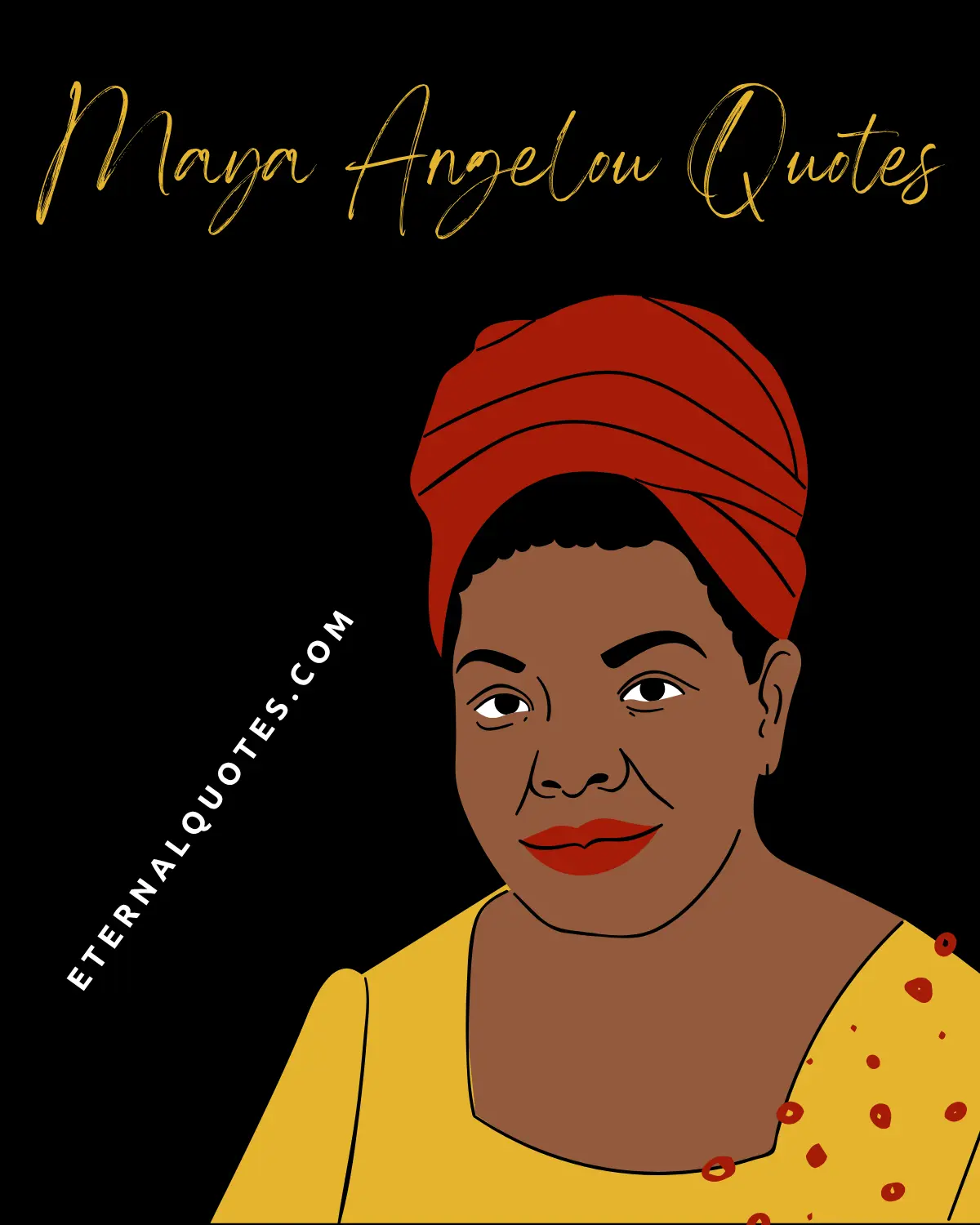
Maya Angelou lived as though language itself was a responsibility. She did not use words carelessly or for decoration. She used them the way a sculptor uses stone — to reveal something that was already present but hidden, something that required patience and precision to bring into the light. Her writing and her speaking both carried that quality: the sense that she had sat with an idea long enough to know its full weight before she let it out into the world.
What made her voice so enduring was not simply that she had suffered — many people suffer and leave no lasting trace. It was that she transformed what she carried. The losses, the silences, the years of erasure all became material. She shaped them into something that could be handed to another person and used. That is a rare and serious gift, and it is why her words continue to travel so far beyond the circumstances that first produced them.
Across her life she moved between many roles — poet, memoirist, performer, teacher, activist — and she inhabited each one fully. She was not interested in half-measures. She believed that a life well lived required showing up with all of yourself, not just the parts that felt safe to display. That belief runs through everything she ever wrote and said, and it is part of why reading her still feels like being held to a standard worth meeting.
Her perspective on human nature was neither naively optimistic nor cynical. She had seen too much to pretend that cruelty did not exist, and she said so plainly. But she also insisted, with equal plainness, that love was stronger than any of it — not as sentiment, but as a daily practice and a deliberate choice. That combination of clear-eyed honesty and genuine warmth is what gives her wisdom its particular texture: hard enough to trust, soft enough to hold onto.
On How We Touch Each Other
One of Angelou’s most consistent preoccupations was the question of impact — not the grand, visible kind, but the quiet, lasting impression a person leaves on another. She noticed that the emotional residue of an encounter outlasts the words exchanged or the actions taken. This is not a sentimental observation. It is a practical one, and it changes how a person thinks about what they owe to the people around them.
To take that idea seriously is to take ordinary interactions more seriously than we often do. The small exchanges — how we greet someone, how we listen, how we leave a room — accumulate into the story other people carry about us. Angelou understood that this accountability was not a burden but a form of dignity, a way of recognizing that every person you meet is changed, however slightly, by the encounter.
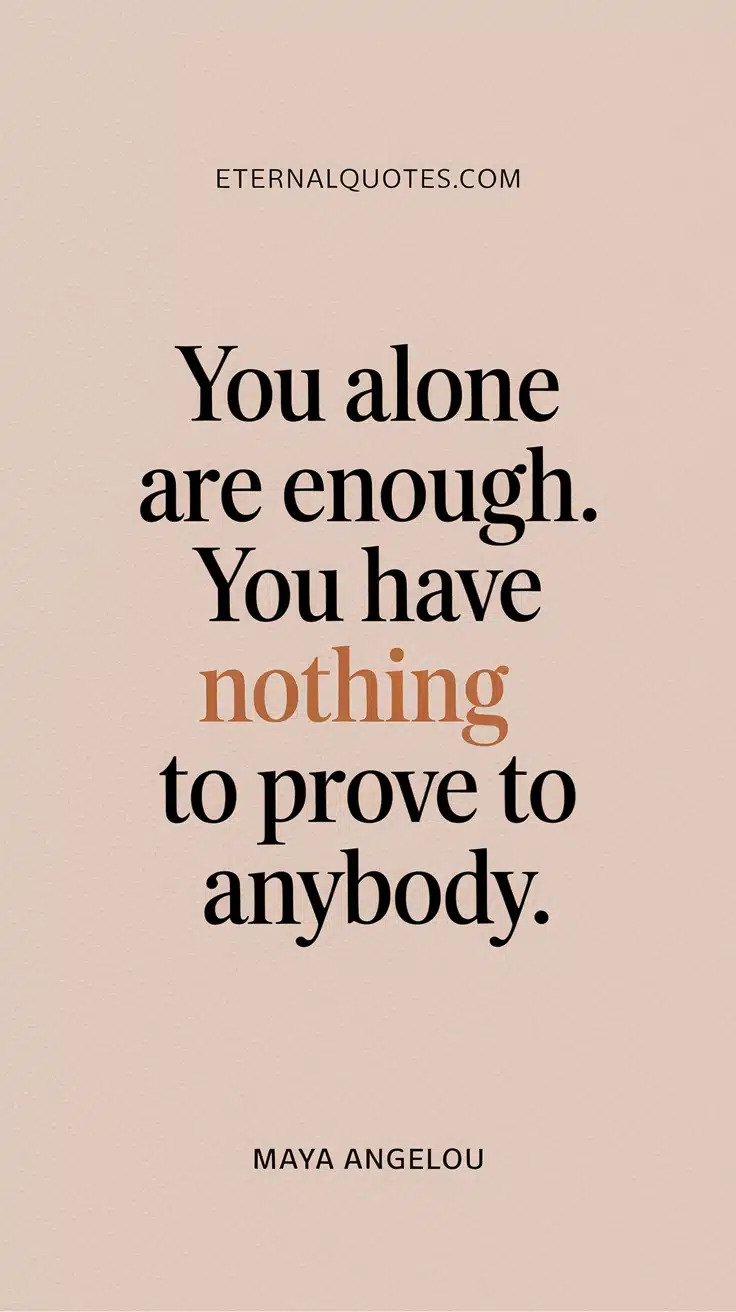
“I’ve learned that people will forget what you said, people will forget what you did, but people will never forget how you made them feel.”
“If you don’t like something, change it. If you can’t change it, change your attitude.”
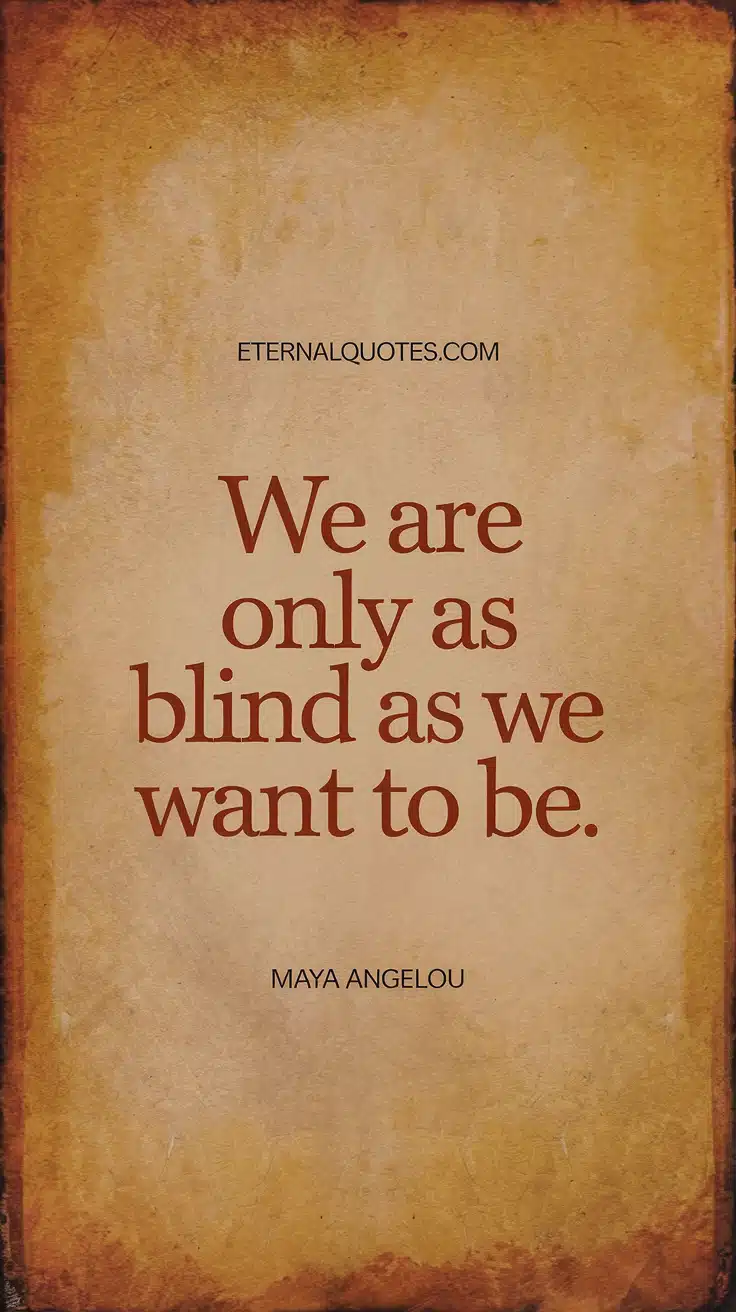
“There is no greater agony than bearing an untold story inside you.”
“You may not control all the events that happen to you, but you can decide not to be reduced by them.”
“We may encounter many defeats but we must not be defeated.”
Looking for Good K-Beauty?
MISSHA has a huge range of Korean skincare and makeup, including some seriously popular bestsellers.
On Thriving, Not Just Surviving
Angelou drew a clear line between surviving and thriving, and she did not consider the first to be enough. Survival is the minimum — the baseline that gets a person through. But thriving requires something more intentional: a willingness to bring passion into the work, compassion into the relationships, and humor into the hard places. She modeled all of this, and she did so without performing it.
Her thinking about self-respect was similarly uncompromising. She believed that the standard you hold for how others treat you is inseparable from the standard you hold for yourself. Lowering one inevitably lowers the other. This is not arrogance but clarity — the kind of clarity that makes authentic connection possible, because it is grounded in something real rather than in the anxious performance of acceptability.
More Quotes You May Enjoy


“My mission in life is not merely to survive, but to thrive; and to do so with some passion, some compassion, some humor, and some style.”
“When someone shows you who they are, believe them the first time.”
“I respect myself and insist upon it from everybody. And because I do it, I then respect everybody, too.”
“Love recognizes no barriers. It jumps hurdles, leaps fences, penetrates walls to arrive at its destination full of hope.”
“The ache for home lives in all of us, the safe place where we can go as we are and not be questioned.”
On Growth and What It Actually Costs
Angelou had little patience for the idea of growth as something comfortable or decorative. She understood it as a process that involves genuine difficulty — the kind of transformation that looks, from the outside, nothing like what it will eventually become. The butterfly image she used was not meant as gentle inspiration. It was a reminder that the beauty on the other side of change requires enduring the part that is neither beautiful nor comfortable.
Her words about empathy and giving carry the same quality — they ask something of the reader rather than simply reassuring them. She believed that most of us have more capacity than we are currently using, and that the gap between what we feel and what we do is usually a question of courage rather than ability. That is a more demanding proposition than most people want to sit with, which is exactly why it is worth sitting with.
“We delight in the beauty of the butterfly, but rarely admit the changes it has gone through to achieve that beauty.”
“I’ve learned that you shouldn’t go through life with a catcher’s mitt on both hands; you need to be able to throw something back.”
“If you have only one smile in you, give it to the people you love.”
“Do the best you can until you know better. Then when you know better, do better.”
“I think we all have empathy. We may not have enough courage to display it.”
On Courage as the Root of All Virtue
Angelou placed courage at the center of her ethical thinking, not as one virtue among many but as the condition that makes all the others possible. You cannot practice honesty consistently without courage. You cannot sustain kindness in difficult circumstances without it. You cannot forgive, or love fully, or create anything meaningful without being willing to risk something. She had thought this through, and it shows in how precisely she stated it.
Her reflections on creativity carry the same spirit. She refused to treat creativity as a finite resource — something that could be used up or protected by hoarding. She experienced it as generative, as something that expanded with use rather than diminished. That understanding freed her to give generously and to work without the kind of anxious scarcity that paralyzes so many people who want to make things.
“You can’t use up creativity. The more you use, the more you have.”
“Life is not measured by the number of breaths you take but by the moments that take your breath away.”
“Courage is the most important of all the virtues because without courage, you can’t practice any other virtue consistently.”
“A wise woman wishes to be no one’s enemy; a wise woman refuses to be anyone’s victim.”
“Music was my refuge. I could crawl into the space between the notes and curl my back to loneliness.”
On Reaching Hearts Over Reaching Stars
Angelou distinguished carefully between ambition that is aimed at achievement and ambition that is aimed at connection. She did not dismiss the first, but she held the second in higher regard. The desire to reach people — to actually land in someone else’s experience and matter there — she saw as the wiser and more difficult pursuit. Most of the things that last are built on that kind of reaching.
Her thoughts on language carry this same weight. She took words seriously as objects, not just as vehicles for information. She knew that the human voice adds something that print cannot replicate — a warmth, a specificity, a presence that changes what the words mean. That conviction shaped her own relationship with performance and public speaking, which she used until very late in her life.
“The desire to reach for the stars is ambitious. The desire to reach hearts is wise.”
“If one is lucky, a solitary fantasy can totally transform one million realities.”
“Words mean more than what is set down on paper. It takes the human voice to infuse them with deeper meaning.”
“I’ve learned that making a ‘living’ is not the same thing as ‘making a life.'”
“Have enough courage to trust love one more time and always one more time.”
On Prejudice and Standing on Your Own Side
Angelou spoke about prejudice with the precision of someone who had lived inside its effects for a long time. She understood it not just as a social or political problem but as a personal one — something that distorts the person who holds it as much as it harms the person it is directed toward. It corrupts one’s relationship to the past and makes it harder to inhabit the present clearly. That framing is more useful than outrage alone.
Her insistence on being an advocate for herself was not self-centeredness but survival wisdom. She recognized that no one else could be relied upon to see you clearly if you had not first committed to seeing yourself clearly. The practice of being on your own side — actively, without apology — creates the stability from which genuine generosity toward others becomes possible.
“Prejudice is a burden that confuses the past, threatens the future, and renders the present inaccessible.”
“Never make someone a priority when all you are to them is an option.”
“My great hope is to laugh as much as I cry; to get my work done and try to love somebody and have the courage to accept the love in return.”
“While I know myself as a creation of God, I am also obligated to realize and remember that everyone else and everything else are also God’s creation.”
“I learned a long time ago the wisest thing I can do is be on my own side, be an advocate for myself and others like me.”
On the Rhythm That Runs Through Everything
Angelou had a sensibility that was at once deeply personal and genuinely universal. She could speak about her own experience with complete specificity and somehow arrive at something that felt true for everyone. Her observation that everything in the universe has a rhythm is not metaphor dressed up as wisdom — it is the kind of thing a person says when they have actually paid attention to how life moves, how loss and recovery alternate, how nothing stays entirely still.
Her reflections on human similarity were equally grounded. She did not argue for commonality in the abstract. She pointed to the specific — the shared structures of experience, the ways grief and joy and longing look roughly the same across all kinds of lives. That is where real solidarity begins: not in ideology but in the recognition of shared texture.
“Everything in the universe has a rhythm, everything dances.”
“If I am not good to myself, how can I expect anyone else to be good to me?”
“We can learn to see each other and see ourselves in each other and recognize that human beings are more alike than we are unalike.”
“You are the sum total of everything you’ve ever seen, heard, eaten, smelled, been told, forgot—it’s all there.”
“I’ve learned that whenever I decide something with an open heart, I usually make the right decision.”
On History, Bitterness, and the Work of Living
Angelou held a nuanced view of anger and bitterness — she did not treat them as identical. Bitterness, she believed, turned inward and consumed the person who carried it. Anger, handled well, could be clarifying and even cleansing. She was not interested in suppressing difficult emotions but in understanding what each one is actually for, and in using them rather than being used by them.
Her words about history are among her most careful. She did not suggest that painful pasts could be undone or that pretending they did not happen was an option. What she offered instead was a different relationship to that pain — one in which it is faced rather than avoided, held rather than buried, and ultimately used as evidence that certain things need not happen again. That is not consolation. That is a serious call to attention.
“The need for change bulldozed a road down the center of my mind.”
“Bitterness is like cancer. It eats upon the host. But anger is like fire. It burns it all clean.”
“I work very hard, and I play very hard. I’m grateful for life. And I live it – I believe life loves the liver of it. I live it.”
“The children to whom we read simple stories may or may not show gratitude, but each boon we give strengthens the pillars of the world.”
“History, despite its wrenching pain, cannot be unlived, but if faced with courage, need not be lived again.”
On Truth, Silence, and the Voice Within
Angelou made a distinction between truth and facts that deserves to be taken seriously. Facts are measurable, verifiable, finite. Truth is something more elusive — the full meaning of what happened, the feeling underneath the event, the pattern that only becomes visible from a certain distance. She spent her life trying to get at truth rather than simply cataloguing facts, and that is what separates her work from mere autobiography.
Her invitation to listen to oneself — to find in quietude something that resembles the voice of God — is not a religious prescription so much as a practical one. She believed that most of us already know more than we admit. We know what is right. We know when something is off. The noise of daily life drowns that knowing, and stillness is what allows it to surface again.
“There’s a world of difference between truth and facts. Facts can obscure truth.”
“Each time I write a book, every time I face that yellow pad, the challenge is so great. I have written eleven books, but each time I think, ‘Uh oh, they’re going to find out now. I’ve run a game on everybody and they’re going to find me out.'”
“I am grateful to be a woman. I must have done something great in another life.”
“Listen to yourself and in that quietude you might hear the voice of God.”
“A woman in harmony with her spirit is like a river flowing. She goes where she will without pretense and arrives at her destination prepared to be herself and only herself.”
On Love as Duty and Song
Angelou treated love not as an emotion that happened to you but as a responsibility you took on. The honorary duty of a human being, she said, is to love — and that framing matters. Duty implies something you show up for regardless of how you feel that day. It implies continuity, reliability, and a kind of seriousness that romantic notions of love often lack.
Her image of the bird that sings not because it has an answer but because it has a song is one of the most quietly liberating things she ever said. It separates the act of expression from the demand for certainty or resolution. You do not need to have everything figured out before you give what you have. The song is reason enough. The giving is the point.
“The honorary duty of a human being is to love.”
“I am a Woman Phenomenally. Phenomenal Woman, that’s me.”
“If you don’t like something, change it. If you can’t change it, change your attitude. Don’t complain.”
“One isn’t necessarily born with courage, but one is born with potential.”
“A bird doesn’t sing because it has an answer, it sings because it has a song.”
On Rising Through Everything That Tries to Diminish You
The image of rising — of moving upward through words that cut, through eyes that wound, through deliberate attempts to extinguish — runs through Angelou’s work like a spine. She returned to it not because it was a comforting fantasy but because she had lived it. Rising, in her understanding, is not triumphalism. It is the refusal to be permanently defined by what someone else decided you were.
Her words about caring for others — that succeeding means finding it in your heart to care for somebody else — redirect the whole notion of success away from acquisition and toward relationship. This is not a small reorientation. It changes what you are aiming for, what counts as a good day, what you look back on and feel was worth the time. That kind of reframing, quietly done, is one of the things her work does best.
“You may shoot me with your words, you may cut me with your eyes, you may kill me with your hatefulness, but still, like air, I’ll rise.”
“Nothing can dim the light which shines from within.”
“Some people cannot see a good thing when it is right here, right now. Others can sense a good thing coming when it is days, months, or miles away.”
“Ask for what you want and be prepared to get it.”
“If you find it in your heart to care for somebody else, you will have succeeded.”
On the Light That Comes from Within
Angelou believed that every person carries something original and irreplaceable — not as flattery but as a structural conviction. Her idea that each of us comes trailing wisps of glory is not decorative language. It is a claim about the inherent worth of a human being that precedes any achievement or failure, any approval or rejection. The challenge she sets is to live in a way that does not contradict that origin.
Her encouragement to open — eyes, mind, heart — reads as both invitation and instruction. She was not asking for passive receptivity but for active attention: to the beauty that is already present, to the wonders that are available when the mind is not closed, to the love that is already being offered when the heart is not armored. That kind of openness takes practice, and she knew it.
“I believe that each of us comes from the Creator trailing wisps of glory.”
“Any book that helps a child to form a habit of reading, to make reading one of his needs, is good for him.”
“Open your eyes to the beauty around you, open your mind to the wonders of life, open your heart to those who love you, and always be true to yourself.”
“We are not just flesh and bone. And for me that is my inspiration.”
“Each person deserves a day away in which no problems are confronted, no solutions searched for.”
On Speaking Carefully and Trusting Life
Angelou treated speech as something that carried weight in both directions — what you say shapes the world around you, but it also shapes you. The discipline of speaking carefully, of making sure your words are pointed at something true and meant, is a discipline that touches everything else. She noticed that people who speak carelessly tend to think carelessly, and she was not interested in either.
Her simple instruction to those who had given up on love — trust life a little bit — is perhaps the most compressed piece of wisdom she ever offered. It does not promise that love will work out perfectly or that the risk is small. It asks only for a slight loosening of the grip, a small increment of willingness. That is often all that is needed to let something new begin.
“A wise person speaks carefully and with truth, for every word that passes between one’s teeth is meant for something.”
“To those who have given up on love: I say, ‘Trust life a little bit.'”
“At the end of the day people won’t remember what you said or did, they will remember how you made them feel.”
“All men are prepared to accomplish the incredible if their ideals are threatened.”
“Stepping onto a brand-new path is difficult, but not more difficult than remaining in a situation, which is not nurturing to the whole woman.”
On What We Owe to Literacy and Literature
Angelou had a deep and personal relationship with books that began in childhood. Language had literally saved her at a time when she had stopped speaking to the outside world, and she never forgot what it felt like to be restored to life through the voice of another person on a page. That experience made her a passionate advocate for reading and for the particular kind of life that reading makes possible.
Her observation about hate — that it has caused endless problems but solved none — is one of those statements that lands quietly and then stays. It is not a lecture. It is a clean accounting. She was not arguing against passion or anger; she was making a simple empirical point about utility. Hate has never once repaired what it broke. That fact alone should give anyone pause.
“My mother said I must always be intolerant of ignorance but understanding of illiteracy.”
“Life is pure adventure, and the sooner we realize that, the quicker we will be able to treat life as art.”
“When I look back, I am so impressed again with the life-giving power of literature.”
“If we lose love and self respect for each other, this is how we finally die.”
“Hate, it has caused a lot of problems in the world, but has not solved one yet.”
On Forgiveness as an Act of Freedom
Angelou’s understanding of forgiveness was unsentimental. She did not associate it with weakness or with pretending the harm did not happen. She associated it with love — specifically, with the kind of love that requires courage to sustain. To forgive, in her framing, is to do something active and muscular: to stand up and declare yourself finished with a particular weight. That is not softness. That is a form of strength.
Her thoughts on travel and the recognition of shared humanity carry the same spirit of reaching past the divisions that keep people from seeing each other clearly. She was not naïve about how entrenched prejudice can be, but she believed in the power of actual encounter — the experience of being near someone different from you and discovering that the same things move you both to tears and laughter.
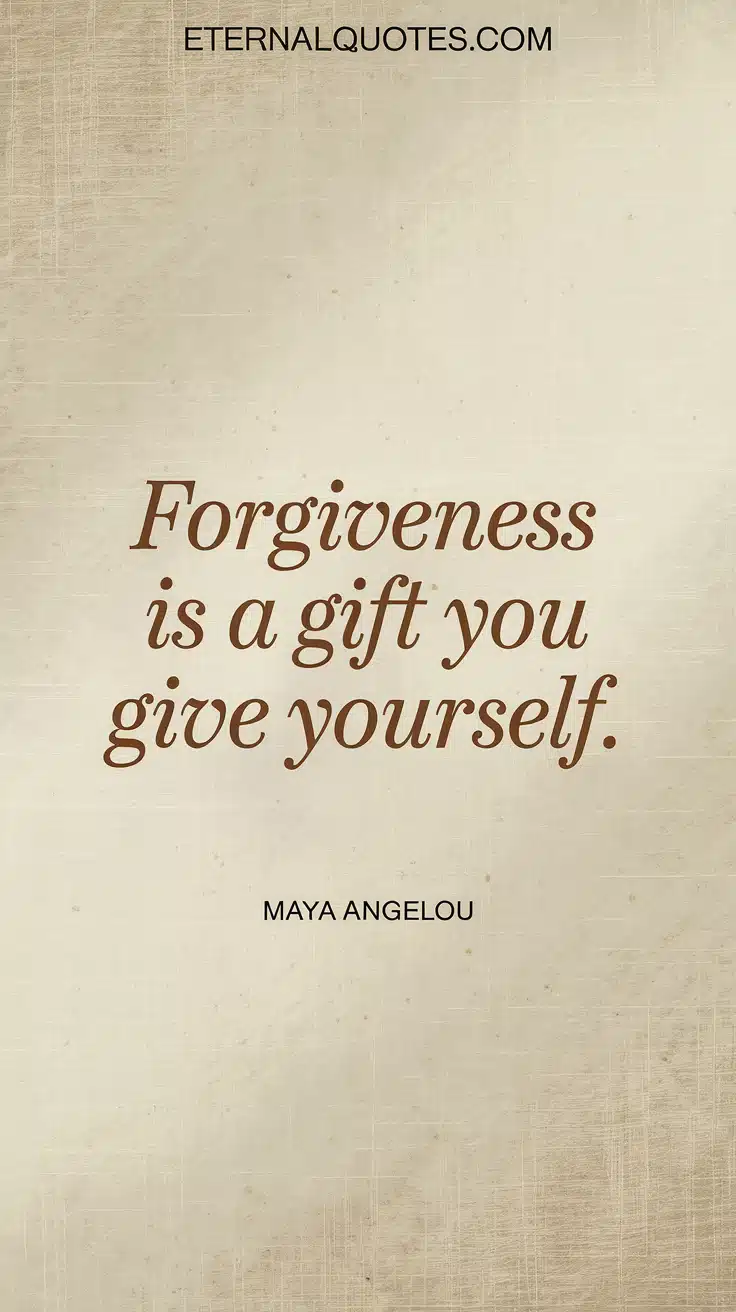
“You can’t forgive without loving. And I don’t mean sentimentality. I don’t mean mush. I mean having enough courage to stand up and say, ‘I forgive. I’m finished with it.'”
“You can only become truly accomplished at something you love.”
“What you’re supposed to do when you don’t like a thing is change it. If you can’t change it, change the way you think about it.”
“Perhaps travel cannot prevent bigotry, but by demonstrating that all peoples cry, laugh, eat, worry, and die, it can introduce the idea that if we try and understand each other, we may even become friends.”
“Determine to live life with flair and laughter.”
On Being Present and Thankful
Presence, for Angelou, was not a passive state but an active one. Being present in all things meant paying full attention — not with half of your mind somewhere else, not with the past or future pulling you away from what is actually happening. She understood gratitude in the same way: not as a feeling you wait to stumble into, but as a practice of deliberate attention to what is already here and already good.
Her reflections on love and men are characteristically honest — neither bitter nor idealized. She had been hurt and she had been loved, and she held both facts without letting either one cancel the other out. That capacity to carry contradiction without being destroyed by it is one of the things that made her such a trustworthy voice on the hardest subjects.
“I know for sure that loves saves me and that it is here to save us all.”
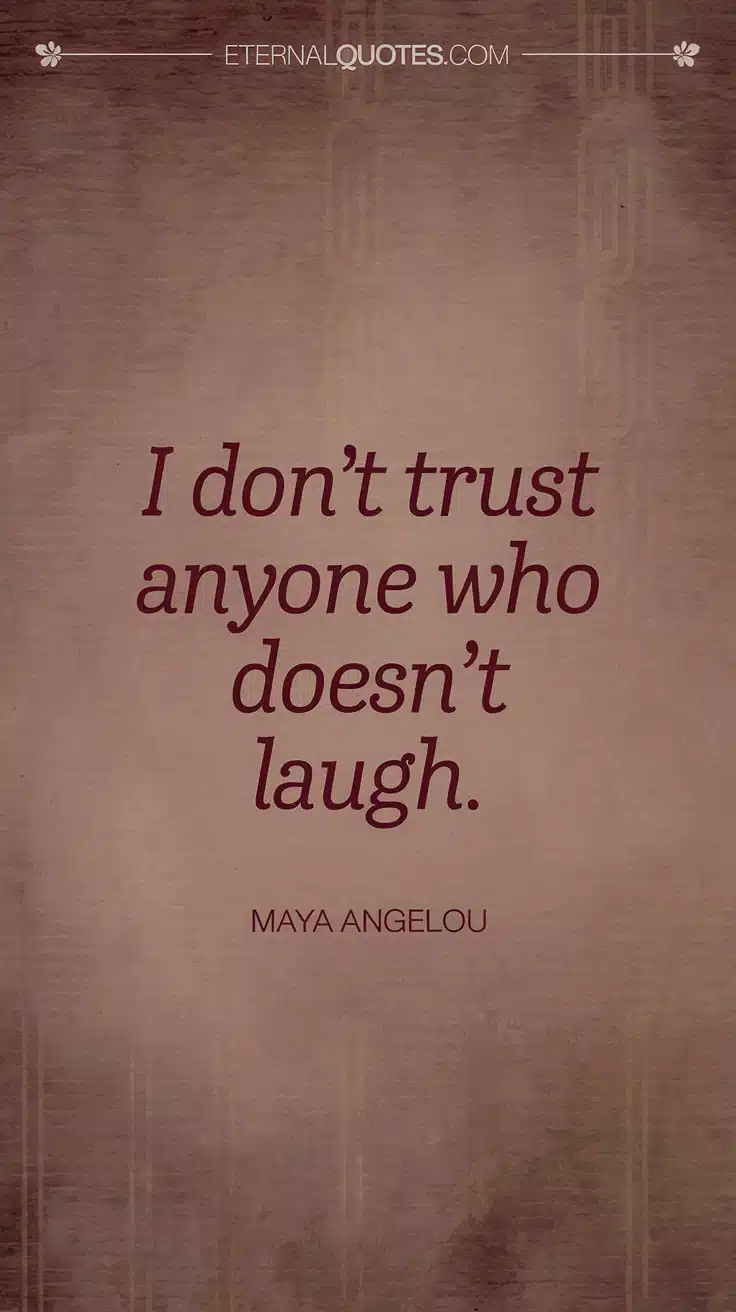
“The main thing in one’s own private world is to try to laugh as much as you cry.”
“Be present in all things and thankful for all things.”
“If growing up is painful for the Southern Black girl, being aware of her displacement is the rust on the razor that threatens the throat.”
“I’ve never had a dislike for men. I’ve been badly treated by some. But I’ve been loved greatly by some. I married a lot of them.”
On Showing Yourself and What That Requires
Angelou believed that there is something in each person that wants to be known — not performed, not curated, but actually seen. She also understood that most people spend enormous energy preventing exactly that from happening, because being seen requires trusting that what is revealed will not be used against you. Courage, again, is the thing that makes the difference between someone who is only ever partially present and someone who risks the full encounter.
Her willingness to name the specific forms of oppression she had experienced — racial, gendered, economic — was not self-pity but clarity. She named them because naming them accurately is a precondition for understanding them, and understanding them is a precondition for changing them. She was never interested in vague gestures toward injustice. She insisted on precise language about precise realities.
“When people show you who they are, believe them.”
“You can tell a lot about a person by the way they handle these three things: a rainy day, lost luggage, and tangled Christmas tree lights.”
“We allow our ignorance to prevail upon us and make us think we can survive alone, alone in patches, alone in groups, alone in races, even alone in genders.”
“There’s something which impels us to show our inner souls. The more courageous we are, the more we succeed in explaining what we know.”
“The black female is assaulted in her tender years by all those common forces of nature at the same time she is caught in the tripartite crossfire of masculine prejudice, white illogical hate and black lack of power.”
On the Courage to Keep Creating
Angelou’s honesty about her own creative self-doubt — the fear of being found out, of having run a game on everyone — is one of the most humanizing things she ever admitted. Here was a woman who had written eleven books, received dozens of honorary degrees, spoken at a presidential inauguration, and she still faced every blank page with the same terror. That fact is not discouraging. It is clarifying. The fear does not go away. You go anyway.
Her observation about cynicism in young people — that it means moving from knowing nothing to believing nothing — identifies something worth taking seriously. The distance between those two states is not wisdom but loss. Genuine wisdom tends to increase wonder rather than foreclose it. When a person becomes harder and more closed as they age, something has gone wrong, and Angelou was clear-eyed about what that something was.
“I wrote some of the worst poetry west from the Mississippi River, but I wrote. And I finally sometimes got it right.”
“Self-pity in its early stages is as snug as a feather mattress. Only when it hardens does it become uncomfortable.”
“A cynical young person is almost the saddest sight to see, because it means that he or she has gone from knowing nothing to believing nothing.”
“I believe that every person is born with talent.”
“I am convinced that most people do not grow up. We find parking spaces and honor our credit cards. We marry and dare to have children and call that growing up.”
On Why We Write, Walk, and Climb
Angelou’s understanding of why human beings express themselves — why they write, speak, make art, push into mountains and oceans — comes down to something very simple: because they can, and because the impulse to explain oneself to another is one of the most fundamental things a person carries. Expression is not a luxury or an indulgence. It is part of what being human means, and she treated it accordingly.
Her final thought on intelligence — the kind she called mother wit, the knowing that was present before any formal education — points to a source of confidence that is available to everyone regardless of background or credential. She believed that people who trusted that interior knowing tended to do right. The problem is not that we lack the knowledge. It is that we have learned not to trust it.
“All knowledge is spendable currency, depending on the market.”
“It is time for parents to teach young people early on that in diversity there is beauty and there is strength.”
“I long, as does every human being, to be at home wherever I find myself.”
“Politicians must set their aims for the high ground and according to our various leanings, Democratic, Republican, Independent, we will follow. Politicians must be told if they continue to sink into the mud of obscenity, they will proceed alone.”
“We write for the same reason that we walk, talk, climb mountains or swim the oceans — because we can. We have some impulse within us that makes us want to explain ourselves to other human beings.”
On Courtesy, Strength, and the Right to Be
In her final public years, Angelou spoke often about courtesy — not as a social nicety but as a moral stance. To give courtesy and to accept nothing less than courtesy is to affirm the basic dignity of every person in the room, including your own. It is a small practice with large implications, and she took it seriously in a way that most people do not bother to.
Her most fundamental question — does a human being have the right to be? — is not rhetorical. It is the question beneath all the others. And the way she answered it, affirmatively and without condition, is the thread that runs through every poem she wrote and every word she spoke publicly. She believed you had the right to exist fully, not to justify yourself, not to earn your place. Simply to be, and to do so with as much dignity and generosity as you could manage.
“I’m grateful to intelligent people. That doesn’t mean educated. That doesn’t mean intellectual. I mean really intelligent. What black old people used to call ‘mother wit’ means intelligence that you had in your mother’s womb. That’s what you rely on. You know what’s right to do.”
“The idea is to write it so that people hear it and it slides through the brain and goes straight to the heart.”
“The quality of strength lined with tenderness is an unbeatable combination.”
“I answer the most rudimentary question. Does a human being have the right to be? And can a human being answer that question, affirmatively, without having to answer another question, to be what?”
“I encourage courtesy. To accept nothing less than courtesy, and to give nothing less than courtesy.”
What She Left Behind
Maya Angelou left behind something harder to name than a body of work. She left behind a way of being in language — a standard for how seriously a person can take the act of saying something true. Every writer or speaker who has tried to close the gap between what they feel and what they can actually say in words owes something to what she demonstrated was possible.
She also left behind a particular insistence on wholeness. She did not accept the idea that a person must suppress or hide the most difficult parts of their experience in order to be acceptable. Her own life was the argument: that the full story, honestly told, is more useful and more beautiful than any edited version. That insistence gave permission to a great many people who needed it.
Her wisdom about courage — that it underlies everything else worth doing — is probably the single most practical thing she gave us. Not the courage of grand gestures or public heroism, but the daily kind: the courage to tell the truth in a small room, to stay in a difficult conversation, to love someone without guarantees, to get up and try again after a failure that felt definitive. That kind of courage is available to everyone.
Reading her now, years after her death, one of the things that strikes most is how much she expected from people — not in a harsh or demanding way, but in the way of someone who genuinely believed that people were capable of more than they were currently giving. She held a high opinion of human potential, tested against everything she had seen of human failure, and it survived. That combination is rare and worth paying attention to.
Her words about how people will remember how you made them feel have become so widely quoted that it is easy to forget how precise and demanding an observation it actually is. It places the weight of your legacy not in your accomplishments or your rhetoric but in the quality of your presence — in whether the people around you felt more or less like themselves after spending time with you. That is a harder standard than most of us hold ourselves to.
What she ultimately asked of her readers was not admiration but action — not to be moved by her words and then set them aside, but to be changed by them in some small and lasting way. To do better when you know better. To trust love one more time. To be present in all things. These are not complicated instructions. They are, however, ones that require the whole of a person to follow — and that, she seemed to believe, is exactly what you have to offer.