
Just so you know – some links on this page are affiliate links. If you click and buy something, I may earn a small commission (think coffee money, not a luxury vacation) at no extra cost to you. I only share things I genuinely like and believe are worth it. Thanks for supporting this little corner of the internet – it really helps keep everything running.
Words spoken from lived experience carry a different kind of weight. They are not constructed to impress or perform — they come from somewhere real, from lives shaped by resistance and loss and quiet determination. Black thinkers, writers, leaders, and artists have long offered this kind of language to the world: grounded, honest, and stripped of pretense. That tradition is worth sitting with, not rushing through.
Wisdom tends to accumulate slowly, through years of navigating systems that were not built with you in mind, through failure and endurance and the hard work of remaining intact. The voices gathered here understood that. They were not simply optimists — many of them faced conditions that would have silenced most people entirely. And yet they kept thinking, kept speaking, kept insisting on the full humanity of themselves and others.
Reading their words now, across generations and contexts, there is something that holds. Not because struggle is romantic or hardship builds character in any tidy way, but because these thinkers were paying close attention to what it actually takes to move through a difficult world without losing yourself. That kind of attention is rare, and it produces language that stays with you.
What follows is a collection of those voices — spanning decades and disciplines, poets and scientists, athletes and activists. They do not all agree with each other. They do not all approach life from the same angle. But taken together, they offer something worth returning to: a record of minds that refused to be made small, and kept thinking anyway.
On Letting Go of Hate and Fear
Hate is an exhausting thing to carry. It demands attention and energy, and it tends to shape the person carrying it more than it shapes anything else. Many who have lived through genuine injustice — not the abstract kind, but the kind that shows up in daily life — have spoken about the particular drain of letting anger harden into hatred, and the strange freedom that comes from refusing to let it.
Fear operates differently — quieter, more internal — but it too has a cost. When a person knows clearly what they must do, fear often loses its grip not through courage in the dramatic sense, but through clarity. The mind made up is a different kind of mind than the one still circling, still uncertain. That distinction matters more than it might seem.
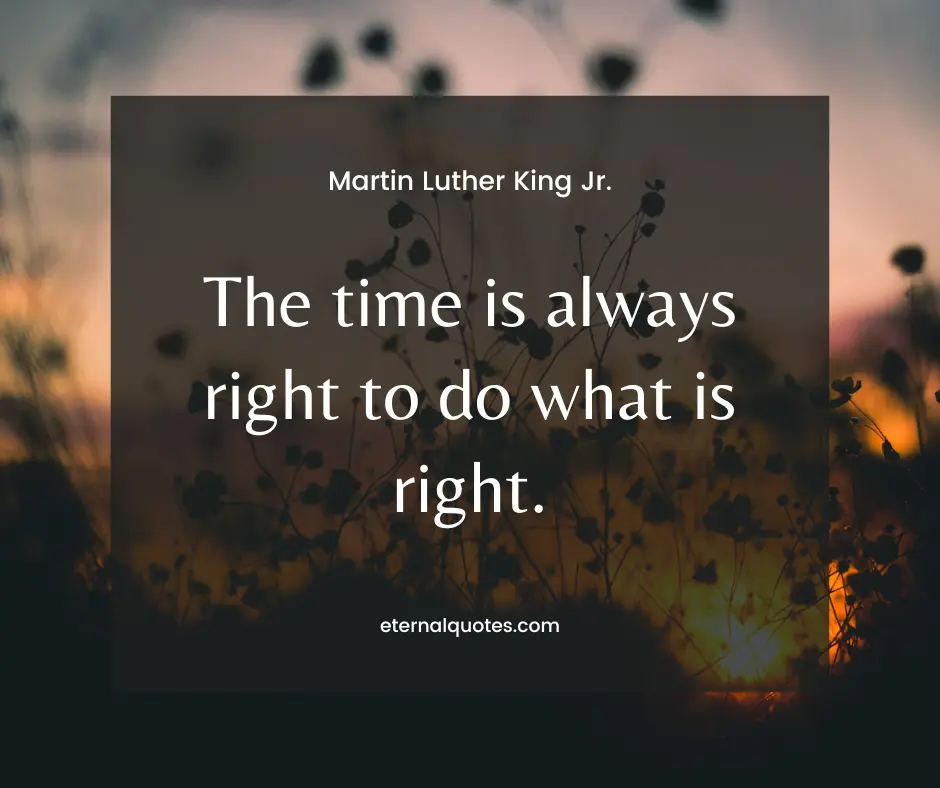
“Hate is too great a burden to bear. It injures the hater more than it injures the hated.”
Coretta Scott King
“I have learned over the years that when one’s mind is made up, this diminishes fear; knowing what must be done does away with fear.”
Rosa Parks
“Never be limited by other people’s limited imaginations.”
Dr. Mae Jemison
“You can’t separate peace from freedom because no one can be at peace unless he has his freedom.”
Malcolm X
“The battles that count aren’t the ones for gold medals. The struggles within yourself—the invisible, inevitable battles inside all of us—that’s where it’s at.”
Jesse Owens
Looking for Good K-Beauty?
MISSHA has a huge range of Korean skincare and makeup, including some seriously popular bestsellers.
On Transformation and Human Dignity
Dignity is not something that can be granted from the outside — though the outside world can certainly try to strip it away. The most enduring accounts of human transformation tend to involve people who held onto something interior, something the circumstances around them could not fully reach. That act of holding on, quiet and persistent, is its own form of power.
To recognize another person’s humanity is also, in some sense, to recognize your own. The two are connected in ways that get lost when fear or contempt are doing the organizing. Thinkers who have sat with this idea — often because they had to, because their own humanity was being actively contested — have returned from it with something worth paying attention to.
More Quotes You May Enjoy


“You have seen how a man was made a slave; you shall see how a slave was made a man.”
Frederick Douglass
“Whatever we believe about ourselves and our ability comes true for us.”
Susan L. Taylor
“In recognizing the humanity of our fellow beings, we pay ourselves the highest tribute.”
Thurgood Marshall
“Hold fast to dreams, for if dreams die, life is a broken-winged bird that cannot fly.”
Langston Hughes
“The future belongs to those who prepare for it today.”
Malcolm X
On Shared Humanity and the Work of Justice
Justice is not a distant abstraction — it is something felt in the texture of daily life, in whether people can move through the world with ease or are made to constantly prove their worth. Those who have understood this most clearly tend to be the people for whom injustice was not theoretical. Their clarity about what peace actually requires is hard to argue with.
The idea that human beings are bound together — that one person’s constriction diminishes others — runs through much of the thinking here. It is not a sentimental idea. It is something closer to an observation about how interconnected human life actually is, even when we pretend otherwise. The work of building something more just is not separate from the work of becoming more fully human.
“My humanity is bound up in yours, for we can only be human together.”
Desmond Tutu
“I prayed for twenty years but received no answer until I prayed with my legs.”
Frederick Douglass
“I am no longer accepting the things I cannot change. I am changing the things I cannot accept.”
Angela Davis
“Never underestimate the power of dreams and the influence of the human spirit.”
Wilma Rudolph
“True peace is not merely the absence of tension; it is the presence of justice.”
Martin Luther King Jr.
On Perseverance and Knowing Your Own Mind
Perseverance is often talked about in terms of grit and willpower, as though it were mainly a matter of refusing to stop. But there is a quieter kind of perseverance that runs alongside that — the kind that involves knowing who you are well enough that other people’s definitions of you don’t stick. That kind of self-knowledge is harder to build, and probably more durable.
Choosing not to let others’ perceptions become your own is not indifference — it is a form of clarity. It takes real effort to remain grounded in your own sense of yourself when the world around you is often actively invested in a different story. The people who manage it tend to carry a certain steadiness that has nothing to do with certainty, and everything to do with practice.
“You’re not obligated to win. You’re obligated to keep trying to do the best you can every day.”
Marian Wright Edelman
“Where there is no vision, there is no hope.”
George Washington Carver
“I’m not afraid of storms, for I’m learning how to sail my ship.”
Harriet Tubman
“Life has two rules: number 1, never quit! Number 2, always remember rule number 1.”
Duke Ellington
“I’m not interested in trying to work on people’s perceptions. I am who I am, and if you don’t take the time to learn about that, then your perception is going to be your problem.”
Octavia Spencer
On Roots, Culture, and Uncommon Excellence
Knowing where you come from is not nostalgia — it is orientation. A person who understands something about the history that shaped them moves differently through the world than one who does not. That kind of rootedness does not limit what is possible; it tends to expand it, because you are working from a foundation rather than a void.
Excellence in the everyday — doing ordinary things with uncommon care and attention — is its own kind of statement. It does not require a grand stage or a dramatic moment. It accumulates quietly, in the texture of choices made repeatedly over time. The discipline that makes this possible is internal, which is also what makes it impossible to take away.
“A people without the knowledge of their past history, origin and culture is like a tree without roots.”
Marcus Garvey
“When you can do the common things of life in an uncommon way, you will command the attention of the world.”
George Washington Carver
“If you don’t like something, change it. If you can’t change it, change your attitude.”
Maya Angelou
“Never let success go to your head, and never let failure go to your heart.”
Quincy Jones
“We all have dreams. But in order to make dreams come into reality, it takes an awful lot of determination, dedication, self-discipline, and effort.”
Jesse Owens
On Failure, Shoulders, and Defining Yourself
The ability to fail without being undone by it is one of the less-discussed forms of freedom. It requires a certain relationship to your own identity — one that does not depend entirely on outcomes. That kind of inner stability is not indifference to results; it is a deeper kind of investment, one that can withstand setbacks without collapsing.
No one arrives anywhere entirely on their own. The people who have been most honest about their own success tend to acknowledge this readily — the generations who cleared the way, who absorbed the costs, whose efforts made certain paths possible. Owning your story fully means holding that inheritance alongside your own effort, not choosing between them.
“In order to be truly free, you must understand deeply that you have to be able to fail.”
Ta-Nehisi Coates
“You are where you are today because you stand on somebody’s shoulders. And wherever you are heading, you cannot get there by yourself.”
Vernon Jordan
“I have learned that success is to be measured not so much by the position that one has reached in life as by the obstacles which one has overcome while trying to succeed.”
Booker T. Washington
“Defining myself, as opposed to being defined by others, is one of the most difficult challenges I face.”
Carol Moseley Braun
“Your story is what you have, what you will always have. It is something to own.”
Michelle Obama
On Wholehearted Effort and the Meaning of Freedom
Giving something your full effort is not a guarantee of any particular outcome — but it does change your relationship to the result. There is a different kind of peace available to the person who brought everything they had to a moment, regardless of how it ended. That peace is not resignation; it is more like completeness, a sense that the effort itself was the point.
Freedom, understood properly, is not something handed over — it is something lived. It shows up in how a person authors their own days, in the choices they make about what to stand for and what to refuse. The thinkers here who wrote or spoke about freedom were not describing an abstract ideal; they were describing something they had worked to embody, often in conditions that actively resisted it.
“Just don’t give up what you’re trying to do. Where there is love and inspiration, I don’t think you can go wrong.”
Ella Fitzgerald
“I found that ultimately if you truly pour your heart into what you believe in — even if it makes you vulnerable — amazing things can and will happen.”
Emma Watson
“Don’t settle for average. Bring your best to the moment. Then, whether it fails or succeeds, at least you know you gave all you had.”
Angela Bassett
“You are the designer of your destiny; you are the author of your story.”
Lisa Nichols
“Freedom is not something that anybody can be given. Freedom is something people take, and people are as free as they want to be.”
James Baldwin
On Being Your Own Best Thing
Self-worth that does not depend on external validation is difficult to build and easy to talk about. The people who seem to have found it are not those who have been spared difficulty, but those who have moved through difficulty without letting it become the final word on who they are. That distinction is worth sitting with — because the path runs through the hard things, not around them.
The idea that you are, yourself, your own best thing — that your selfhood is not a consolation prize but the actual prize — cuts against a lot of what the world tends to communicate. It takes real clarity to hold onto that. And it takes something more than clarity: a willingness to refuse the diminishments that accumulate over time, and to keep choosing, quietly, who you intend to be.
“You are your best thing.”
Toni Morrison
“Impossible is just a word thrown around by small men who find it easier to live in the world they’ve been given than to explore the power they have to change it.”
Muhammad Ali
“Don’t be afraid. Be focused. Be determined. Be hopeful. Be empowered.”
Michelle Obama
“No person is your friend who demands your silence, or denies your right to grow.”
Alice Walker
“Every great dream begins with a dreamer. Always remember, you have within you the strength, the patience, and the passion to reach for the stars to change the world.”
Harriet Tubman
On the Complexity of History and the Gift of Humility
History is not a clean story. It does not move in a straight line, and its truths resist the kind of tidying that makes for comfortable narratives. The writers and scholars who have engaged most honestly with Black history tend to return from it with something more complex than either despair or triumph — a kind of clear-eyed reckoning that holds multiple things at once.
Humility about what you do not yet know is not weakness — it is actually a precondition for learning anything meaningful. The willingness to remain a student of your own life, to keep revising your understanding as you go, is one of the quieter forms of courage. It keeps you open in ways that certainty tends to close off.
“The thing about black history is that the truth is so much more complex than anything you could make up.”
Henry Louis Gates
“For I am my mother’s daughter, and the drums of Africa still beat in my heart.”
Mary McLeod Bethune
“I’ve learned that I still have a lot to learn.”
Maya Angelou
“When we drop fear, we can draw nearer to people, we can draw nearer to the earth, we can draw nearer to all the heavenly creatures that surround us.”
bell hooks
“Sometimes, I feel discriminated against, but it does not make me angry. It merely astonishes me. How can any deny themselves the pleasure of my company? It’s beyond me.”
Zora Neale Hurston
On Carrying Weight, Knowing Your Origins, and Valuing Difference
The way a person carries difficulty reveals something about their relationship to themselves. It is not the weight that matters most — most lives accumulate plenty of it — but the posture adopted in response. Some people learn, over time, to carry their burdens without letting them reshape who they are. That is not detachment; it is a form of inner architecture, built slowly and often without fanfare.
Diversity is not a policy or a metric — it is a reality about human life that either gets honored or ignored. When it is genuinely valued, it changes the quality of what becomes possible: more perspectives at the table, more ways of seeing a problem, more range in what gets considered worth building. The thinkers here understood this not as an abstract principle but as something they had felt the absence of, and worked toward.
“It’s not the load that breaks you down, it’s the way you carry it.”
Lena Horne
“As long as you keep using your hardships and mistakes to diminish someone else’s, you cannot see your own.”
Tressie McMillan Cottom
“If you know whence you came, there is really no limit to where you can go.”
James Baldwin
“When we’re talking about diversity, it’s not a box to check. It is a reality that should be deeply felt and held and valued by all of us.”
Ava DuVernay
“The impatient idealist says: ‘Give me a place to stand and I shall move the earth.’ But such a place does not exist. We all have to stand on the earth itself and go with her at her pace.”
Chinua Achebe
What These Voices Leave Behind
A sentence read at the right moment can quietly rearrange something inside you that had been stuck for years. Not because the words are magic, but because someone else has already stood where you are standing and found language for it — and that discovery, that recognition, loosens something. It reminds you that the experience you are having is human, which means it is survivable, which means it has been navigated before.
The voices in this collection did not speak into a void. They spoke out of specific lives, shaped by specific conditions — conditions that were often hostile, often unjust, often designed to produce silence. That they spoke at all is worth something. That they spoke with such clarity and range is remarkable. What they left behind is not a simple message but a more complicated and more honest one: that human life is difficult, and also worth every bit of the effort it requires.
Resilience is one of those words that gets used so often it starts to lose its shape. But what it actually describes — the capacity to be met with something hard and not be permanently diminished by it — is real, and it is something these thinkers understood from the inside. They did not describe resilience as a trait you either have or don’t. They described it more like a practice, something you return to, something built through the accumulation of choices made under pressure.
What runs through almost all of this, if you sit with it long enough, is a refusal to be made less than whole. Not a triumphant refusal — not dramatic or loud — but a persistent, quiet insistence on the full reality of a life. That insistence is itself a kind of instruction. It suggests that the most important work any person can do is to keep showing up as themselves, completely, even when the world around them is invested in a smaller version.
History does not move cleanly forward, and neither do individual lives. But there is a direction embedded in this body of thought — toward more honesty, more dignity, more genuine connection between people who might otherwise remain strangers to each other. That direction is worth orienting toward, not because the destination is guaranteed, but because the movement itself changes what is possible.
These words were written and spoken across generations, but they land in the present. They ask something of the reader — not admiration, not reverence, but engagement. To let a line sit with you. To carry a thought into your own day and see what it does there. The best of what any thinker can offer is not an answer but a companion — something to think alongside as you work out what your own life means and what you intend to do with it.