
Just so you know – some links on this page are affiliate links. If you click and buy something, I may earn a small commission (think coffee money, not a luxury vacation) at no extra cost to you. I only share things I genuinely like and believe are worth it. Thanks for supporting this little corner of the internet – it really helps keep everything running.
Writing resists simple explanation. It sits somewhere between compulsion and craft, between the need to process experience and the desire to shape language into something durable. Most people who write seriously will tell you they couldn’t fully explain why they do it — only that stopping feels worse than continuing. That tension, quiet and persistent, is at the heart of what it means to live as a writer.
Every writer begins somewhere unremarkable — a notebook, a cheap pen, a thought that wouldn’t leave them alone. The gap between that beginning and any kind of mastery is crossed not through inspiration alone but through accumulated hours, failed drafts, and the slow development of an ear for what works. Progress in writing rarely announces itself. It tends to arrive quietly, noticed only in retrospect when you read something old and feel the distance you’ve traveled.
Doubt is a constant companion for most writers, and it doesn’t necessarily diminish with experience. What changes, over time, is the relationship to that doubt — learning to work through it rather than wait for it to lift. The blank page holds a particular kind of pressure that never fully disappears. Learning to sit with that discomfort, to begin anyway, is perhaps the most important skill a writer can develop.
The writers who have left the deepest marks on literature were not immune to struggle. Their words endure not because the writing came easily, but because they stayed with it — returning again and again to the page with honesty and patience. What they left behind is more than a body of work. It’s a record of what it looks like to take language seriously, and to keep going even when the reasons feel obscure.
Starting the Work
Beginning is often the hardest part of any writing. The moment before the first word is placed carries an almost unreasonable weight — as if everything that follows depends on getting that opening exactly right. Most experienced writers will tell you the opposite is true. Starting imperfectly, even badly, is nearly always better than waiting for the conditions to feel ready.
What separates writers who finish things from those who don’t is rarely talent. It’s more often the willingness to move forward through uncertainty, to treat the first draft as a private space where nothing needs to be good yet. That permission — to be messy before you worry about being clear — is what makes starting possible at all.
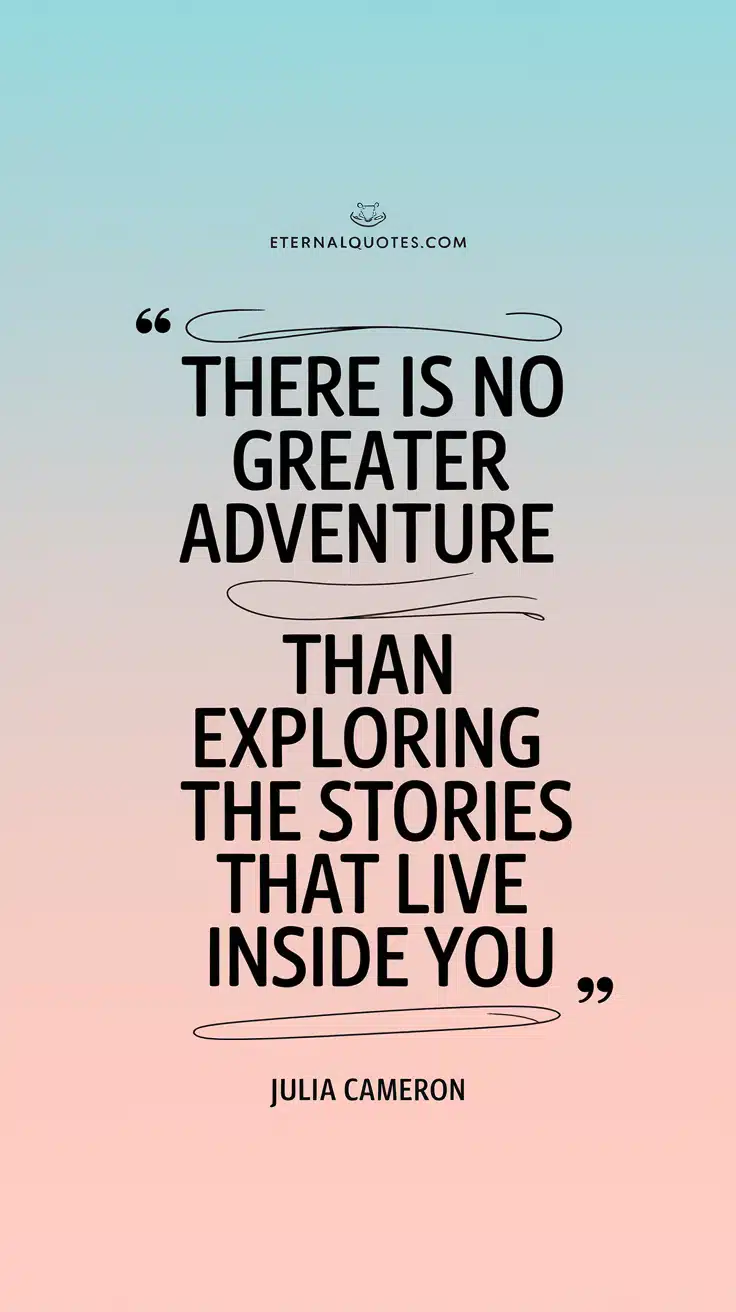
“Write with the door closed, rewrite with the door open.” – Stephen King
“There is nothing to writing. All you do is sit down at a typewriter and bleed.” – Ernest Hemingway
“If you want to be a writer, you must do two things above all others: read a lot and write a lot.” – Stephen King
“Start writing, no matter what. The water does not flow until the faucet is turned on.” – Louis L’Amour
“Writing is not a matter of time, but a matter of space.” – Richard Bach
Looking for Good K-Beauty?
MISSHA has a huge range of Korean skincare and makeup, including some seriously popular bestsellers.
Persisting Through Difficulty
Writing through difficulty is something every serious writer knows intimately. The days when the work feels impossible are not exceptions — they are part of the rhythm of a sustained practice. Showing up anyway, producing something even when the energy isn’t there, is what keeps a writer moving forward.
Many writers describe their practice as a form of emotional survival rather than achievement. Writing becomes the place where fear, grief, and confusion can be set down and examined at a slight remove. For those who have found this quality in their work, writing becomes less optional over time — more a necessity than a choice.
More Quotes You May Enjoy



“A writer is someone for whom writing is more difficult than it is for other people.” – Thomas Mann
“Sometimes you have to go on when you don’t feel like it, and sometimes you’re doing good work when it feels like all you’re managing is hanging on.” – Annie Lamott
“I can shake off everything as I write; my sorrows disappear, my courage is reborn.” – Anne Frank
“If there’s a book that you want to read, but it hasn’t been written yet, then you must write it.” – Toni Morrison
“Every secret of a writer’s soul, every experience of his life, every quality of his mind, is written large in his works.” – Virginia Woolf
Writing as Craft and Discipline
Craft is not something a writer arrives at — it is something they practice continuously, without ever fully completing it. The technical dimensions of writing, how sentences are built, how scenes are paced, how words are selected and discarded, require the same ongoing attention that any skilled trade demands. Reading widely is part of that study.
Discipline in writing is quieter than it sounds. Sometimes it’s sitting with a paragraph for an hour and changing a single word. Sometimes it’s recognizing that a draft is broken and being willing to take it apart rather than paper over the cracks. That honest engagement with the work, unglamorous as it is, is where the craft actually develops.
“Writing is a form of therapy; sometimes I wonder how all those who do not write, compose, or paint can manage to escape the madness, melancholia, the panic and fear which is inherent in a human situation.” – Graham Greene
“Writing is a job, a craft, and a calling. Some days the job is hard, some days the craft is difficult, and some days the calling feels impossible.” – Theodora Goss
“Writing is easy. All you have to do is cross out the wrong words.” – Mark Twain
“Read, read, read. Read everything – trash, classics, good and bad, and see how they do it. Just like a carpenter who works as an apprentice and studies the master. Read!” – William Faulkner
“The first draft of anything is shit.” – Ernest Hemingway
The Long Road of Becoming
Becoming a writer is not an event but a gradual accumulation. There is no single moment of arrival, no threshold crossed that turns an amateur into a professional. What there is instead is a slow deepening — a growing familiarity with your own tendencies, your weaknesses, the particular way you see the world.
Writers who stay with it long enough discover that the work begins to teach them things about themselves they might not have found otherwise. Writing is a way of tasting experience twice — once as it happens, and again when you try to render it honestly on the page. That second encounter often reveals more than the first.
“A professional writer is an amateur who didn’t quit.” – Richard Bach
“Writing is like driving at night in the fog. You can only see as far as your headlights, but you can make the whole trip that way.” – E.L. Doctorow
“Don’t tell me the moon is shining; show me the glint of light on broken glass.” – Anton Chekhov
“We write to taste life twice, in the moment and in retrospect.” – Anaïs Nin
“There is no greater agony than bearing an untold story inside you.” – Maya Angelou
Language as a Living Tool
Words are not neutral. They carry weight, history, and the residue of every context they’ve appeared in before. A writer who takes language seriously learns to feel that weight — to choose words not just for their surface meaning but for their texture, rhythm, and what they quietly imply.
Good writing earns its punctuation, its silences, its restraint. Every mark on the page is a decision, and the best writers make those decisions with something close to instinct — an instinct built through years of reading and revision. The discipline of cutting is as important as the freedom of drafting.
“Cut out all those exclamation points. An exclamation point is like laughing at your own joke.” – F. Scott Fitzgerald
“The art of writing is the art of applying the seat of the pants to the seat of the chair.” – Mary Heaton Vorse
“Write drunk; edit sober.” – Peter De Vries
“Words are, of course, the most powerful drug used by mankind.” – Rudyard Kipling
“You don’t start out writing good stuff. You start out writing crap and thinking it’s good stuff, and then gradually you get better at it.” – Octavia E. Butler
Writing Toward Clarity
Writing toward clarity is not the same as writing simply. It means pursuing honesty about what you’re actually trying to say, even when that turns out to be more complicated than you first assumed. Many writers discover what they think only by writing — the act of putting words down surfaces ideas that weren’t fully formed before the sentence existed.
The writer who evokes sensation rather than just reporting facts understands something essential about how language works on a reader. It is not information that moves people — it is the feeling of experience rendered with precision and care. That kind of writing asks more of the writer: more observation, more patience, more willingness to revise until the sentence does what it needs to do.
“Good writing is supposed to evoke sensation in the reader – not the fact that it is raining, but the feeling of being rained upon.” – E.L. Doctorow
“I write entirely to find out what I’m thinking, what I’m looking at, what I see and what it means.” – Joan Didion
“Write like it matters, and it will.” – Libba Bray
“The role of a writer is not to say what we all can say, but what we are unable to say.” – Anaïs Nin
“Getting the first draft finished is like pushing a very dirty rock up a very steep hill.” – Anne Lamott
Why Writers Write
The reasons people write are as varied as the people themselves. Some write to understand what they feel. Some write to give shape to experiences that would otherwise blur and fade. Others write out of a need to say what hasn’t been said yet — to articulate something true about the world that exists just beyond the reach of ordinary conversation.
What seems consistent across writers, regardless of form or subject, is that writing functions as a way of being present to one’s own life. It is a practice of attention — to language, to experience, to the inner life that ordinary busyness tends to muffle. Writers who stay with it over the long term often describe it less as a career and more as a way of moving through the world.
“I can’t begin to tell you the things I would have missed. And if anyone reads this well — I hope they’ll pause and look at their own life and say, “What am I missing?” – Maya Angelou
“A writer is a person who cares what words mean, what they say, how they say it.” – E.B. White
“Writing is like sex. First you do it for love, then you do it for your friends, and finally you do it for money.” – Virginia Woolf
“Description begins in the writer’s imagination, but should finish in the reader’s.” – Stephen King
“I write to give myself strength. I write to be the characters that I am not. I write to explore all the things I’m afraid of.” – Joss Whedon
Authenticity and Voice
Finding a voice in writing is less about developing a distinctive style than about learning to stop imitating. Every writer passes through phases of influence, absorbing the rhythms and habits of writers they admire. The voice that eventually emerges is not invented so much as uncovered — present all along, beneath the imitation, waiting for enough confidence to surface.
Authenticity in writing does not mean confessional exposure. It means the writing is honest about what it knows and careful not to pretend otherwise. A writer working from genuine experience and genuine uncertainty produces something qualitatively different from one performing emotions they haven’t earned. Readers feel that difference, even when they can’t name it.
“You don’t make art out of good intentions and a clean conscience. It seems really important to be able to work with what you’ve got.” – Dorothy Allison
“You don’t write because you want to say something, you write because you have something to say.” – F. Scott Fitzgerald
“No tears in the writer, no tears in the reader. No surprise in the writer, no surprise in the reader.” – Robert Frost
“Writing is not a light switch. You don’t turn it on and off. You are always writing, even when you’re walking, even when you’re sleeping.” – Jane Hirshfield
“Find your own voice. Don’t try to sound like someone else.” – Neil Gaiman
Revision and the Courage to Improve
Revision is where most of the real writing happens. The first draft is a way of getting something down; every draft after that is a way of getting it right. Writers who resist revision often mistake the rawness of a first attempt for authenticity, when in fact revision is itself an act of honesty — looking clearly at what you’ve made and being willing to change it.
Trusting your instincts is part of the process, but so is questioning them. The writer who listens to what the work is trying to become, rather than forcing it into a predetermined shape, often ends up somewhere more interesting than they planned. That requires patience — with the material, with yourself, with the slow process of finding the right word in the right place.
“Your intuition knows what to write, so get out of the way.” – Ray Bradbury
“The first sentence can’t be written until the final draft is finished.” – Joyce Carol Oates
“Revision is not punishment. Revision is love.” – Donald Murray
“Write what disturbs you, what you fear, what you have not been willing to speak about. Be willing to be split open.” – “Natalie Goldberg”
“The difference between the almost right word and the right word is really a large matter. ‘Tis the difference between the lightning bug and the lightning.” – Mark Twain
What Writing Leaves Behind
Writing that endures tends to have a quality of freedom at its core — not freedom from difficulty, but freedom from the need to be something other than what it is. The writers whose words continue to be read are often the ones who wrote with the most honesty about what they saw and felt, who trusted the work enough to let it be unguarded.
Keeping going is, in the end, the most fundamental act available to a writer. The work itself tends to reveal more the longer you stay with it. Most writers report that their best work surprised them — arrived at in the process of writing something they weren’t sure would work at all.
“Lock up your libraries if you like; but there is no gate, no lock, no bolt that you can set upon the freedom of my mind.” – Virginia Woolf
“Writing is not a matter of time, but a matter of space.” – Richard Bach
“Write with the door closed, rewrite with the door open.” – Stephen King
“A writer always tries to create the most compelling version of the world, even if it’s an extremely dark world.” – N.K. Jemisin
“Keep writing. Keep doing it. Even when it seems impossible, even when it seems useless.” – Natalie Goldberg
The Quiet Permanence of the Written Word
Writing is one of the few human acts that genuinely outlasts the person who did it. What a writer puts on the page can be read by someone who was not yet born when it was written, in a place the writer never visited, by a person whose circumstances are entirely unlike their own. That reach is not something most writers think about while they work — it would be paralyzing to do so. But it is one of the quieter dignities of the practice.
What gets preserved in writing is not just information or story. It’s a particular way of seeing — the specific angle from which one person looked at their world and found language for it. That angle is unrepeatable. No one else will write your sentences, notice what you notice, feel what you feel and then find the precise words for it. The singularity of a writer’s perspective is not a limitation but a resource.
The writers in this collection understood that. They wrote through difficulty, through self-doubt, through the inevitable days when the work felt pointless or beyond them. What they left behind is not a record of ease but a record of commitment — to language, to truth, to the belief that the effort of writing is worthwhile even when the results are uncertain. That commitment is something any writer, at any stage, can recognize and share.
A piece of writing, once finished, belongs to whoever reads it. The writer releases it and it enters the world on its own terms, meaning different things to different people, arriving at unexpected moments and doing unexpected work. That loss of control is part of the bargain. It is also part of what makes writing feel like something more than a private activity — a way of being in conversation with people you will never meet.
For those who are just beginning, the distance between where they are and where they want to be can feel discouraging. Every writer who has written anything worth reading started in that same place, uncertain and inexperienced, with more ambition than ability. The ability comes — slowly, unevenly, with setbacks — through the same process it has always come through: reading carefully, writing honestly, and remaining willing to be taught by the work itself.
Writing is not a destination. It is a way of traveling — through your own thinking, through language, through the ongoing attempt to say something true. The page is always there, patient and indifferent, ready for whatever you bring to it today. That constancy is one of the things writers come to depend on. And the act of returning to it, again and again, is its own kind of answer to all the uncertainty that writing contains.