
Just so you know – some links on this page are affiliate links. If you click and buy something, I may earn a small commission (think coffee money, not a luxury vacation) at no extra cost to you. I only share things I genuinely like and believe are worth it. Thanks for supporting this little corner of the internet – it really helps keep everything running.
Confidence is often misunderstood as something loud or effortless. In reality, it is usually built in quieter ways – through repetition, self-trust, and the decision to keep showing up even when doubt is present. It does not require perfection. It asks for steadiness, honesty, and the willingness to believe that growth is still possible.
Most people do not feel certain all the time, no matter how composed they may seem from the outside. Confidence is not the absence of fear or hesitation. It is what begins to form when a person stops waiting to feel fully ready before moving forward. In that way, it becomes less about mood and more about practice.
Self-belief also changes with experience. It grows after hard seasons, after small wins, after difficult choices made with courage rather than comfort. Sometimes it develops slowly, almost without being noticed. Then one day a person realizes they are speaking more honestly, standing more firmly, and needing less outside approval than before.
What makes confidence meaningful is not that it makes life easy. It makes life more livable from within. A person who trusts themselves does not need to dominate every room or win every outcome. They simply begin to carry themselves with more ease, more clarity, and less fear of being exactly who they are.
The Quiet Power of Self-Belief
Self-belief often begins in ways that are not dramatic. It can start in private thoughts, in the tone a person uses with themselves, or in the choice to keep trying after a difficult moment. That kind of confidence may not look impressive from the outside at first. Still, it changes the entire direction of a person’s life.
Once someone begins to trust their own inner voice a little more, many things shift. Fear loses some of its authority. Doubt stops sounding like absolute truth. What grows in its place is a steadier relationship with oneself, and that steadiness becomes a real source of strength.
“You are braver than you believe, stronger than you seem, and smarter than you think.”
“The way you speak to yourself matters the most.”
“Doubt kills more dreams than failure ever will.”
“When you have confidence, you can have a lot of fun. And when you have fun, you can do amazing things.”
“Confidence is silent. Insecurities are loud.”
Looking for Good K-Beauty?
MISSHA has a huge range of Korean skincare and makeup, including some seriously popular bestsellers.
Learning to Stand on Your Own Worth
A lot of confidence comes from no longer treating worth as something that has to be earned every day. People often become stronger when they stop measuring themselves against approval, comparison, or impossible standards. The shift is subtle but important. They begin to understand that value does not disappear just because doubt is present.
That kind of inner security does not always arrive quickly. It grows as a person becomes less willing to define themselves through rejection or other people’s opinions. Over time, they learn that being enough is not the finish line. It is the place from which real growth can finally begin.
More Quotes You May Enjoy




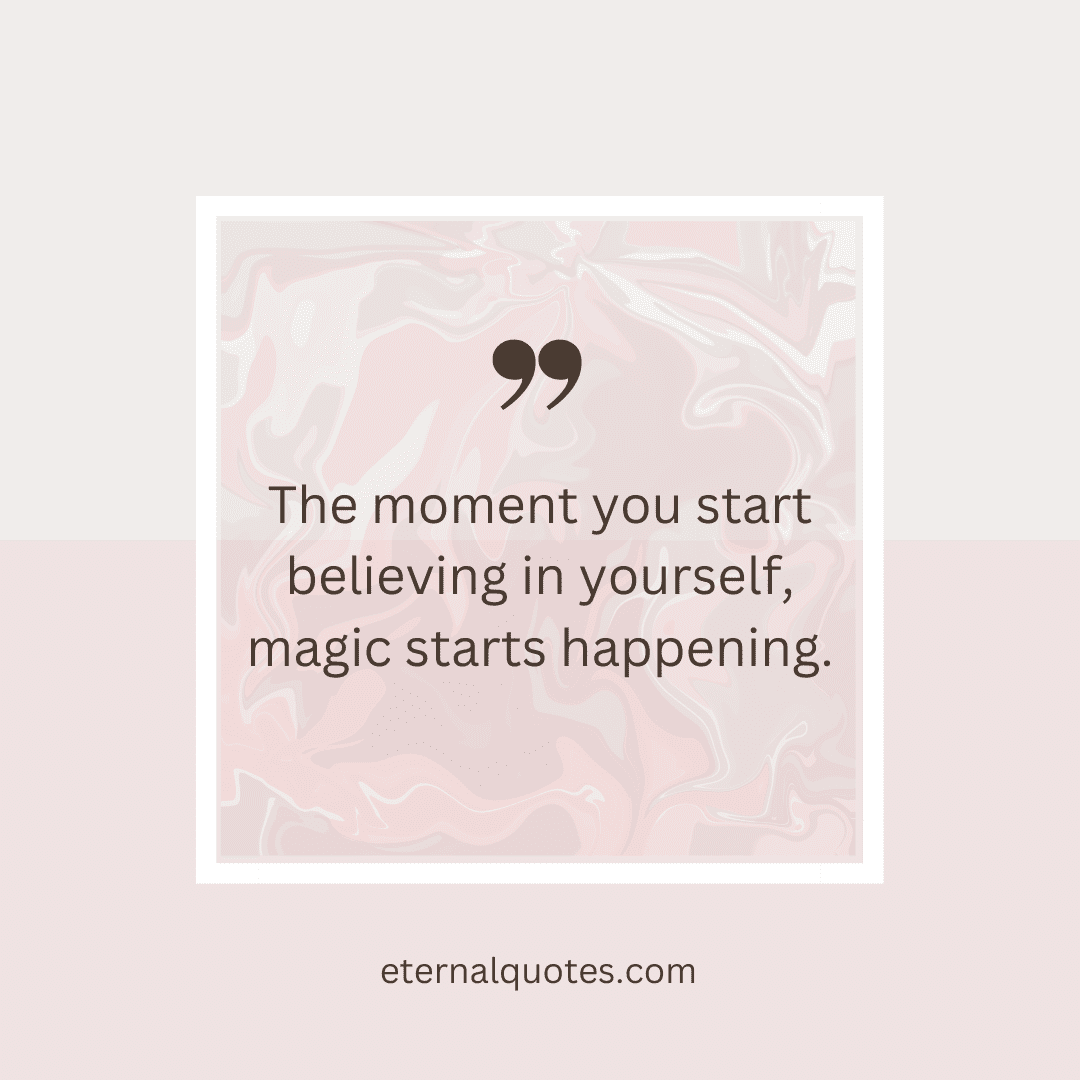
“Self-confidence is a superpower. Once you start believing in yourself, magic starts happening.”
“The question isn’t who’s going to let me; it’s who’s going to stop me.”
“You are enough just as you are. Remember that.”
“Don’t wait until you reach your goal to be proud of yourself. Be proud of every step you take.”
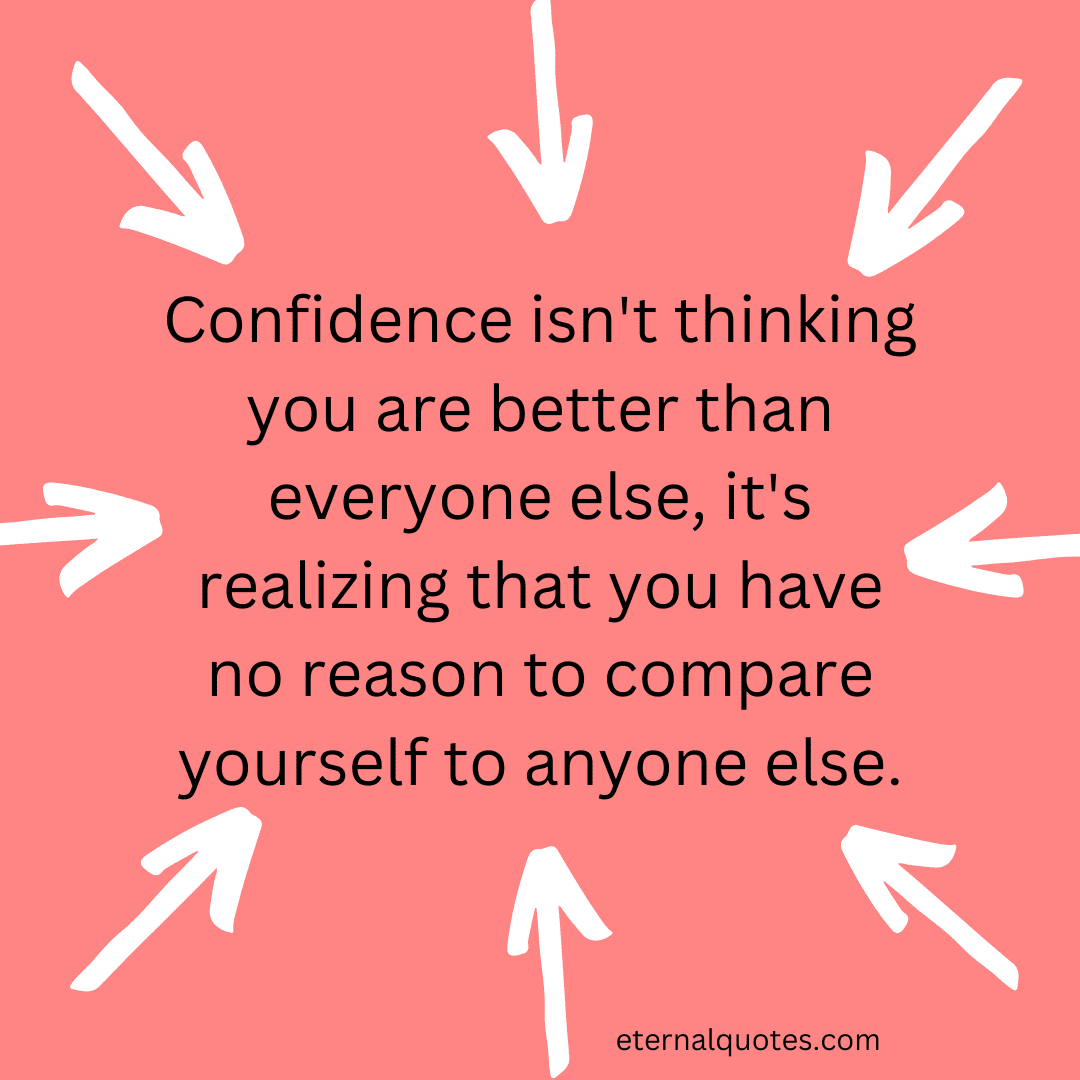
“Confidence is not ‘they will like me.’ It’s ‘I’ll be fine if they don’t.'”
Holding Your Ground Through Doubt
Doubt has a way of making temporary feelings sound permanent. It can convince a person that hesitation means weakness or that fear means they are not ready. Confidence grows when those thoughts are no longer obeyed automatically. A person learns to keep moving even when certainty has not fully arrived.
That process is not about pretending everything is easy. It is about refusing to hand over authority to insecurity. The more often someone acts from self-respect instead of self-doubt, the more natural confidence begins to feel. What once seemed fragile starts becoming part of how they carry themselves.

“Your crown might tilt sometimes, but never let it fall.”
“You have survived everything you’ve gone through up until this point. You’re doing great.”
“When you feel like quitting, remember why you started.”
“The only limits that exist are the ones in your own mind.”
“Don’t let someone dim your light simply because it’s shining in their eyes.”
Choosing Courage Over Old Fear
Confidence is often built by making a different choice than the one fear expects. That does not always mean doing something huge. Sometimes it means speaking honestly, trying again, or letting go of a story that has kept a person small for too long. Those moments matter because they change what becomes possible next.
The past can shape a person, but it does not need to define their future. Many people begin to feel stronger when they stop treating old pain as a final verdict on who they are. Confidence returns in pieces. It comes back through action, through honesty, and through the decision to live forward instead of only backward.
“You cannot be a prisoner of your past against your will. Because you can only live in the past inside your mind.”
“Fear is a reaction. Courage is a decision.”
“Your dreams don’t work unless you do.”
“The only person who can define your worth is you.”
“Make the most of yourself, for that is all there is of you.”
Building Confidence Through Action
Confidence does not only come from thinking differently. It also comes from doing. Repeated action teaches the mind what reassurance alone often cannot. When a person behaves as though they are capable, even in small ways, they begin collecting proof that supports a stronger self-image.
This is one reason disciplined effort matters so much. Confidence becomes sturdier when it is based on experience rather than wishful thinking. Each attempt, each risk, and each finished task adds something to that foundation. Over time, belief feels less like a fragile hope and more like something earned from within.
“Confidence is a habit that can be developed by acting as if you already had the confidence you desire.”
“Act as if what you do makes a difference. It does.”
“Believe you can and you’re halfway there.”
“You don’t need to be perfect to be amazing.”
“It’s not who you are that holds you back, it’s who you think you’re not.”
Letting Go of Comparison
Comparison can quietly undermine even the strongest intentions. It shifts attention away from growth and toward performance, making progress feel smaller than it really is. Confidence becomes easier to protect when a person stops using someone else’s path as the measure of their own. A life lived from the inside cannot be judged fairly by outside timelines.
The more someone returns to their own pace, their own values, and their own direction, the steadier they tend to feel. Confidence is not helped by constant comparison. It is strengthened by clarity. Knowing who you are becoming matters much more than trying to match who someone else appears to be.
“Stop comparing your chapter 1 to someone else’s chapter 20.”
“You are not what happened to you. You are what you choose to become.”
“The most beautiful thing you can wear is confidence.”
“Your life isn’t behind you; your memories are behind you. Your life is always ahead of you.”
“Don’t downgrade your dream just to fit your reality. Upgrade your conviction to match your destiny.”
Being Fully Yourself
There is a particular kind of confidence that comes from no longer hiding who you are. It does not depend on image or approval. It comes from accepting that being real matters more than being polished. People often feel lighter when they stop trying to be flawless and start becoming more honest instead.
That kind of self-acceptance is not passive. It takes courage to stay rooted in your own character when the world rewards imitation, perfection, or performance. Still, this is where confidence becomes most durable. When a person can remain themselves without apology, something in them becomes much harder to shake.
“Optimism is the faith that leads to achievement. Nothing can be done without hope and confidence.”
“You were born to be real, not to be perfect.”
“Focus on your strengths, not your weaknesses. Focus on your character, not your reputation.”
“Be proud of who you are, and not ashamed of how others see you.”
“Sometimes the bravest thing you can do is be yourself.”
Expanding Your Life Through Courage
Courage and confidence are deeply connected. One supports the other. A person becomes more confident when they do what fear told them not to do, and each act of courage leaves behind a little more proof that they can handle what once felt overwhelming. That proof matters more than empty reassurance ever will.
Life often opens in proportion to what a person is willing to face. The risks may not always lead to immediate success, but they nearly always change the person taking them. Confidence grows in that stretch between discomfort and action. It is built by participating fully rather than standing back and imagining every possible failure.
“Life shrinks or expands in proportion to one’s courage.”
“You were born to stand out, remember that.”
“Everything you want is on the other side of fear.”
“You attract what you believe you deserve.”
“Don’t let your fear of what could happen make nothing happen.”
Trusting Yourself More Deeply
Confidence becomes more stable when it is rooted in self-trust instead of constant validation. A person who trusts themselves is still allowed to be uncertain, still allowed to learn, and still allowed to fail. What changes is the belief that they can meet life without collapsing under every challenge. That belief becomes a kind of inner anchor.
This kind of trust is often built through discipline, repetition, and honesty with oneself. It forms when words and actions begin to align. The more a person proves dependable to themselves, the less they need reassurance from every direction. What follows is not arrogance, but a calmer and more grounded strength.
“Trust yourself. You know more than you think you do.”
“The only way to do great work is to love what you do.”
“Confidence comes from discipline and training.”
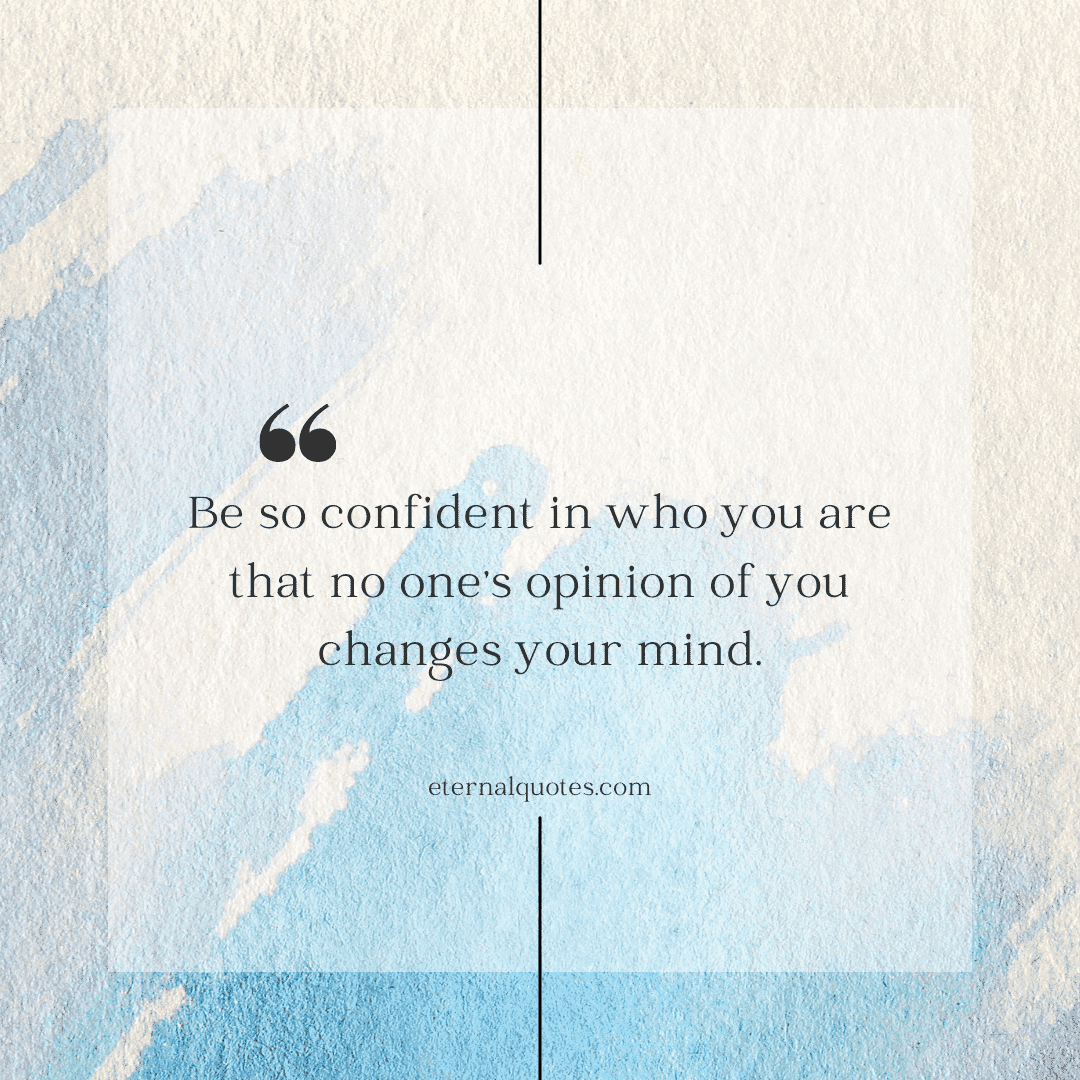
“No one can make you feel inferior without your consent.”
“Your success will be determined by your own confidence and fortitude.”
The Strength That Grows Over Time
Confidence is rarely a sudden transformation. More often, it is the result of small choices made again and again. A person decides to keep going, to take criticism without collapse, to own their life more honestly, and to remain committed even when the outcome is uncertain. Those choices may seem ordinary, but together they create real strength.
Over time, that strength changes the way someone meets difficulty. Fear may still appear, but it does not lead as often. Setbacks still happen, but they stop feeling like proof of inadequacy. What grows instead is a steadier conviction that challenges can be met, and that personal worth does not disappear in the presence of struggle.
“It’s not the absence of fear, it’s overcoming it. Sometimes you’ve got to blast through and have faith.”
“Take criticism seriously, but not personally.”
“Don’t watch the clock; do what it does. Keep going.”
“Own who you are. Own your life. No apologies.”
“You have been assigned this mountain to show others it can be moved.”
When Confidence Becomes a Way of Living
Confidence becomes most meaningful when it is no longer just something a person reaches for in difficult moments. It becomes part of how they live. It shows up in the way they speak, the boundaries they keep, the opportunities they say yes to, and the way they recover when things do not go as planned. At that point, confidence is no longer a performance. It is a relationship with oneself built on trust.
That relationship does not require constant certainty. It allows room for learning, mistakes, and change. What matters is that a person stops abandoning themselves every time fear appears. They begin to understand that courage and insecurity can exist in the same moment, and that choosing courage anyway is often where real confidence begins to deepen.
A stronger sense of self rarely arrives all at once. It is built in ordinary decisions – speaking kindly to yourself, continuing after setbacks, trusting your own judgment a little more, and refusing to shrink just to make other people more comfortable. These choices may seem small while they are happening. Over time, they shape the entire posture of a life.
People often wait to feel ready before acting with confidence, but that order is usually reversed. Confidence grows after movement, not before it. It comes from experience, from proof, from trying again after disappointment, and from seeing that you can survive uncertainty without losing yourself. Action teaches what hesitation never can.
The most grounded kind of confidence is not loud, flawless, or defensive. It does not need to dominate a room or impress everyone in it. It is steadier than that. It comes from knowing your worth without needing to announce it all the time, and from being willing to keep becoming who you are with honesty and patience.
In the end, confidence is less about feeling unstoppable and more about feeling rooted. It is the quiet understanding that you can meet your own life with courage, even when it stretches you. That kind of self-trust changes how a person walks through the world. It does not remove every doubt, but it gives doubt far less power than it once had.