

Just so you know – some links on this page are affiliate links. If you click and buy something, I may earn a small commission (think coffee money, not a luxury vacation) at no extra cost to you. I only share things I genuinely like and believe are worth it. Thanks for supporting this little corner of the internet – it really helps keep everything running.
Healing is one of those words that gets used so often it can start to feel hollow. But when you’re in the middle of it — when you wake up and the weight is still there, when something small undoes you without warning — it becomes the most real and necessary thing in the world.
The strange thing about healing is that it rarely looks the way we expect. Most of us imagine it as a steady climb toward being okay again. In practice, it moves more like water — sometimes rushing forward, sometimes pooling still, sometimes finding its way around obstacles we didn’t even know were there.
We carry a lot of unspoken pressure to recover quickly, to make sense of our pain, to arrive at gratitude and resolution on some invisible timeline. But the human heart doesn’t operate on a schedule. It processes in its own order, at its own pace, and it asks only for a little patience from the one who holds it.
Part of what makes healing so hard is that it requires you to stay present with discomfort long enough to move through it. That isn’t weakness — it’s one of the quieter forms of courage. Choosing to feel, to acknowledge, to sit with difficulty rather than run from it takes a kind of steadiness most people never receive credit for.
What helps, often, is simply being reminded that you are not alone in this. That others have walked through darkness and found their way to something softer on the other side. Not a return to who they were before, but a deeper acquaintance with who they actually are — someone more layered, more compassionate, more whole than the wound ever let them see.
Whatever brought you here, the fact that you’re seeking something — a word, a perspective, a small anchor of truth — says something worth honoring about you. You are still reaching. That matters.
Inner Strength & Resilience
Resilience is not the absence of struggle — it’s what happens inside you while you’re struggling. It builds quietly, in the moments you don’t quit, in the decisions you make to keep showing up for yourself even when it’s the last thing you feel like doing.
Strength, in this sense, isn’t loud or obvious. It often looks like someone getting through an ordinary Tuesday when ordinary feels impossible. It looks like asking for help, or resting without guilt, or simply deciding that this day is worth seeing through to the end.
The cracks in your heart are not signs of weakness – they’re where the light gets in to illuminate your power.
You’ve survived every difficult day so far, and that’s a perfect record worth celebrating.
Sometimes the strongest thing you can do is admit you’re not okay, and that’s perfectly okay.
Your resilience isn’t measured by how fast you bounce back, but by how you choose to move forward.
The warrior in you recognizes the warrior in your struggles – and warriors always find a way.
You are not broken, you are breaking open into something more beautiful than before.
Every time you choose healing over hurting, you’re building muscles you never knew you had.
Your scars are proof that you fought battles and won, even when winning looked like just surviving.
The strongest people aren’t those who never fall – they’re the ones who get up every single time.
You carry within you the strength of everyone who loved you and believed in you, living and gone.
Looking for Good K-Beauty?
MISSHA has a huge range of Korean skincare and makeup, including some seriously popular bestsellers.
Emotional Healing & Recovery
Emotional recovery asks something that goes against most of what we’re taught — it asks us to slow down and feel rather than push forward and suppress. The emotions we avoid don’t disappear. They wait, patient as anything, until we’re finally ready to meet them.
Recovery is not a single event but an accumulation of small, honest moments. Grief processed a little at a time. Anger acknowledged and released. Fear named out loud and gradually, gently, loosened. The work is quiet, and it is real, and it counts even when no one else can see it.
Your emotions are not enemies to defeat but messengers asking to be heard and honored.
The tears you cry today are watering the seeds of tomorrow’s growth.
You don’t have to carry the weight of your past into every room you enter.
Healing begins the moment you stop judging your pain and start nurturing your recovery.
Your heart knows how to mend itself – trust the process even when progress feels invisible.
Some wounds need time to close, and rushing them only creates deeper scars.
The pain you feel today is the love you once knew asking to be transformed, not erased.
Emotional healing isn’t about forgetting what hurt you, but changing how it lives within you.
You’re not responsible for what broke you, but you are capable of putting yourself back together.
The gentleness you show yourself in healing becomes the foundation for everything else you build.
Self-Compassion & Self-Love
Most of us are far kinder to the people we love than we are to ourselves. We extend patience, understanding, and grace to others almost automatically — then turn around and meet our own mistakes with a harshness we would never dream of directing at a friend.
Self-compassion isn’t about lowering your standards or excusing what you’d like to change. It’s about recognizing that you are a human being doing your best within your current circumstances, and that tenderness toward yourself is not a reward for getting things right — it’s a foundation you’re allowed to build on right now, exactly as you are.
You are worthy of love, especially from yourself, exactly as you are in this moment.
Self-compassion isn’t selfish – it’s the oxygen mask you put on before helping others breathe.
The relationship you have with yourself sets the tone for every other relationship in your life.
Your inner critic is not your truth-teller; it’s just old programming that needs updating.
Loving yourself isn’t a destination you arrive at, but a daily practice you commit to.
You don’t need to earn your own love – it’s yours by right of being human and alive.
The flaws you see as failures are often the very things that make you beautifully human.
Self-love means holding space for all parts of yourself, even the ones you’re still learning to accept.
Forgiveness begins with forgiving yourself for not knowing what you didn’t know when you didn’t know it.
You are both the garden and the gardener – tend to yourself with patience and care.
Mindfulness & Present Moment Awareness
The mind has a tendency to live everywhere except here. It rehearses conversations that haven’t happened, replays ones that have, and spends remarkable energy in futures and pasts that exist only as thought. Learning to return to the present moment is not about silencing any of that — it’s about noticing it, and gently coming back.
Presence doesn’t require stillness or silence or perfect conditions. It simply requires a willingness to meet this moment as it actually is — not as you wish it were, not as you fear it might become, but as it is right now. That willingness, practiced again and again, is the beginning of a very different relationship with your own inner life.
Your breath is always available as an anchor when your thoughts feel like storms.
Peace isn’t found in perfection but in accepting what is while working toward what could be.
The present moment doesn’t require you to be healed – it only asks you to be here.
Mindfulness isn’t about emptying your mind but about befriending whatever you find there.
Every time you return your attention to now, you’re practicing the art of coming home to yourself.
Your thoughts are weather patterns in the sky of your mind – observe them, don’t become them.
Healing happens in the space between thoughts, in the pause between breaths, in the stillness between heartbeats.
The present moment is a gift that keeps giving, even when it doesn’t feel like what you wanted.
Awareness is the first step to transformation – you can’t heal what you won’t acknowledge.
Being mindful means being kind to whatever shows up in your experience, without needing to fix it immediately.
Personal Growth & Transformation
Growth is rarely comfortable, and it almost never looks graceful from the inside. The version of yourself that’s emerging is being shaped by exactly what’s most difficult — the doubts, the setbacks, the moments when you weren’t sure you’d make it through. That pressure is not incidental to your growth. It is part of what creates it.
Transformation tends to happen in the quiet spaces between the dramatic moments. It’s a thought you didn’t used to be able to have. A reaction that’s softer than it would have been a year ago. A boundary you finally held. The changes are often small enough that you barely notice them as they happen — but over time, they become undeniable.
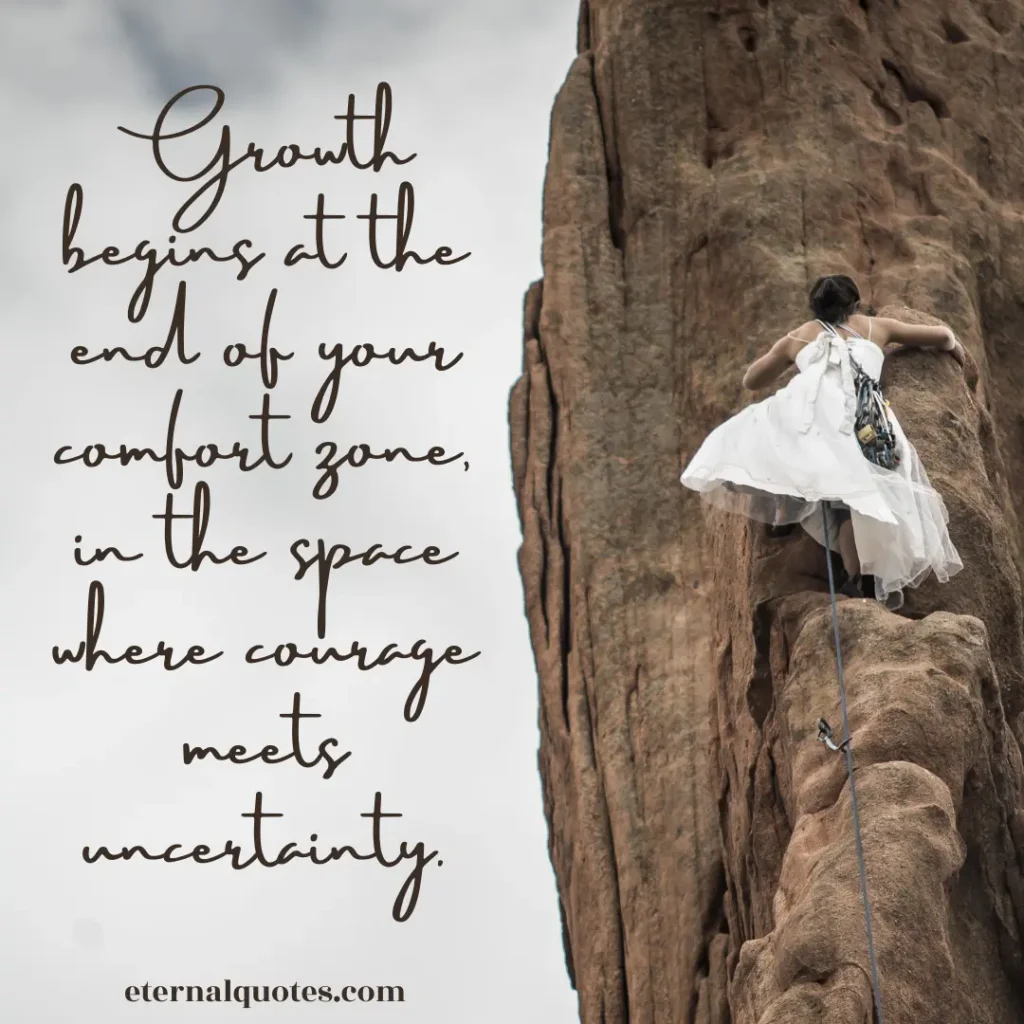
You are not the same person who entered this struggle, and that transformation is your victory.
Sometimes you have to lose yourself completely to find out who you really are beneath all the expectations.
Every challenge you face is an invitation to discover strength you didn’t know you possessed.
The person you’re becoming is worth every uncomfortable moment of growth you’re experiencing now.
Transformation isn’t about becoming someone new – it’s about remembering who you’ve always been beneath the wounds.
Your breaking point can become your breakthrough point when you choose to see crisis as opportunity.
Growth requires you to outgrow the stories that no longer serve the person you’re becoming.
The caterpillar doesn’t know it’s becoming a butterfly – trust your process even when you can’t see the outcome.
Personal evolution is messy, non-linear, and absolutely essential for authentic living.
You’re not falling apart, you’re falling into place – sometimes destruction precedes reconstruction.
Letting Go & Release
Letting go is one of the most misunderstood acts in healing. It’s often described as if it’s a single decision — a door you close once and walk away from. But in practice, it tends to be something you choose over and over, sometimes daily, sometimes in the same hour, until one day you realize the grip has genuinely loosened.
What makes release so difficult is that the things we hold onto tightest are often the things that once meant the most to us. Letting go isn’t a rejection of what mattered — it’s a recognition that carrying it forward isn’t serving you, and that something more aligned with who you’re becoming is waiting on the other side of open hands.
What you release with love will make space for what’s meant to find you.
Sometimes the most loving thing you can do is stop fighting for something that’s fighting against you.
Holding onto pain is like grasping a hot coal with the intent of throwing it at someone else – you’re the one who gets burned.
Release is not giving up, it’s giving over – trusting that something greater than your grip is holding you.
The things you’re afraid to let go of are often the very things keeping you from what you truly need.
Forgiveness is the gift you give yourself when you’re tired of carrying the weight of resentment.
Freedom lives on the other side of letting go, even when the journey there feels like falling.
Some chapters must end for new stories to begin – closing the book isn’t giving up, it’s making space.
What’s meant for you will not pass you by, no matter what you release along the way.
Letting go is an act of faith – faith that what’s coming is better than what you’re clinging to.
Self-Acceptance & Authenticity
Authenticity begins with a kind of honesty that can feel uncomfortable at first — the honesty of admitting who you actually are, rather than performing who you think you should be. So much energy goes into managing appearances, smoothing edges, fitting into shapes that were never made for us. The relief of releasing that is something most people only discover gradually.
Self-acceptance doesn’t ask you to love every aspect of yourself at once, or to stop wanting to grow. It asks something simpler: that you stop declaring war on the parts of yourself you haven’t yet figured out. That you meet your whole self — the polished parts and the complicated ones — with at least a quiet willingness to let them coexist.
Authenticity is not about being perfect – it’s about being real, flaws and all.
The parts of yourself you try to hide are often the parts that hold your greatest power.
Self-acceptance doesn’t mean settling for less – it means loving yourself enough to want more.
Your uniqueness is not a bug to be fixed but a feature to be celebrated.
The world needs what only you can offer – your specific blend of experiences, perspectives, and heart.
Comparison is the thief of joy and the enemy of self-acceptance – your journey is yours alone.
Embracing your whole self means making friends with the parts you’ve been at war with.
Authenticity is magnetic – when you stop trying to be everything to everyone, you become something beautiful to the right people.
The mask you wear to fit in will never feel as good as the freedom of being yourself.
Self-acceptance is the foundation from which all other healing grows – start there, always start there.
Inner Peace & Serenity
Inner peace is one of those things that sounds passive — like a state you arrive at and then simply maintain. But it’s more active than that. It’s something you choose, sometimes against the current of everything happening around you. A decision to stop fighting what you cannot change, and to direct your energy toward what you can.
Serenity doesn’t mean that life becomes uncomplicated or that your feelings flatten out into something manageable and mild. It means developing a certain stability at your center — one that can hold fear and uncertainty without being destroyed by them. That kind of steadiness is cultivated slowly, and it is absolutely worth cultivating.
Serenity comes not from controlling everything around you but from trusting your ability to handle whatever comes.
Your inner peace is not dependent on outer circumstances – it’s a choice you make moment by moment.
Stillness is not empty space but full presence – the place where wisdom whispers and healing happens.
Peace begins when you stop arguing with reality and start working with what is.
The calm you seek is not somewhere out there – it’s buried beneath the noise, waiting to be uncovered.
Serenity is your natural state; anxiety is just weather passing through your internal sky.
Inner peace doesn’t mean your life becomes problem-free – it means you become solution-focused.
The quiet mind hears what the busy mind misses – wisdom, intuition, and the voice of your own heart.
Peace is not a luxury for the healed – it’s a necessity for the healing.
Tranquility is not found in perfection but in acceptance, not in having all the answers but in being okay with questions.
Hope & Renewal
Hope is one of those quiet forces that can completely change how a person carries their life. It doesn’t always show up loudly or dramatically. A lot of the time it looks small — almost fragile — but it keeps you moving in ways that fear and logic alone never could. It is not a feeling you wait for. It’s often a choice you make before the feeling arrives.
Renewal rarely announces itself. More often, it reveals itself in retrospect — you look back and realize that something in you shifted during a period you thought was only hard. The difficult seasons have a way of clearing ground, making room for things that couldn’t have taken root in more comfortable soil.
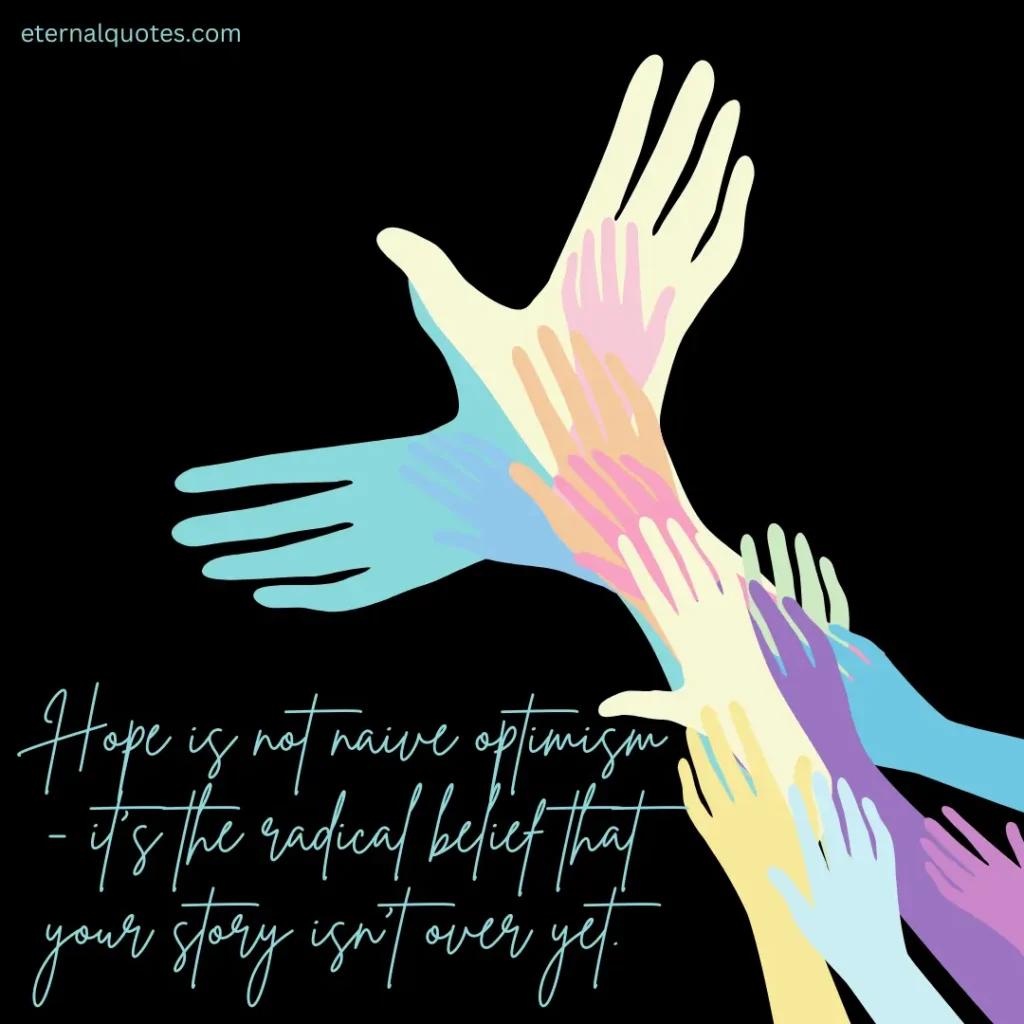
Every sunrise is proof that endings can be beginnings and that light always returns.
Your current chapter is not your final chapter – there are still beautiful pages to be written.
Renewal happens not because everything gets easier but because you get stronger.
Hope doesn’t require evidence – it creates evidence by refusing to give up.
The darkest hour really is just before dawn, and your dawn is coming.
Your future self is cheering you on, grateful for every step you’re taking toward healing.
New beginnings are often disguised as painful endings – trust the process of transformation.
Hope is the bridge between where you are and where you’re going – keep walking.
Every day you choose to heal is a day you choose hope over despair, growth over stagnation.
The seeds of tomorrow’s joy are being planted in today’s soil of struggle – tend them with hope.
Wholeness & Integration
Wholeness is not a state of having resolved everything. It doesn’t mean the absence of difficulty, or that your past no longer holds any weight. It means something quieter — a willingness to include all of your experience as part of who you are, rather than treating certain parts of yourself as problems to be solved or chapters to be rewritten.
Integration is the work of bringing the scattered pieces of yourself into the same room. The person you were before the loss. The person you became during it. The person who is still finding their footing now. None of these versions need to be discarded. They are all part of the same ongoing story, and there is room enough for all of them.
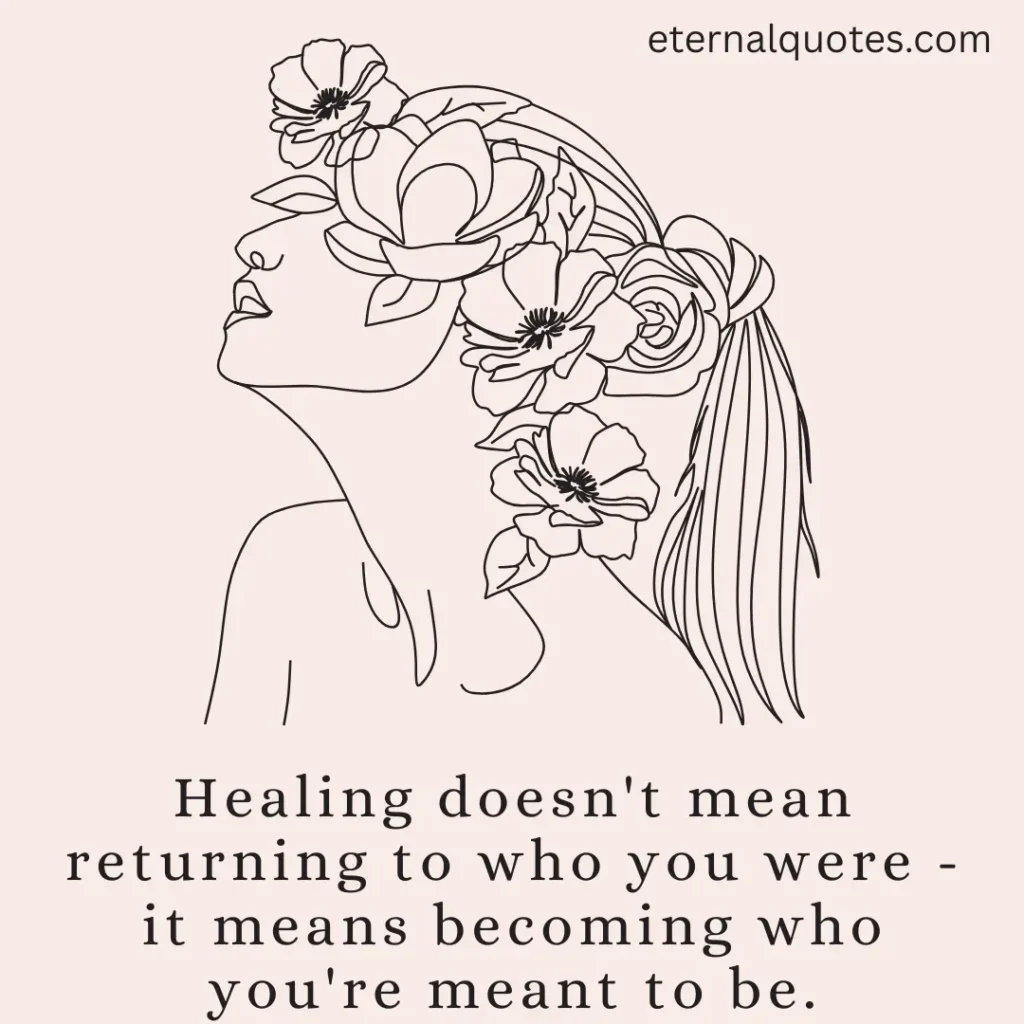
You are not broken pieces waiting to be fixed but a whole person learning to integrate all parts of your experience.
Wholeness includes the wounded parts, the healing parts, and the parts that have grown stronger.
Integration means making peace between who you were, who you are, and who you’re becoming.
Your scars are not evidence of damage but proof of your incredible capacity to heal and grow.
Completeness comes not from perfection but from embracing the full spectrum of your human experience.
You don’t need to fix yourself – you need to love yourself back to wholeness.
Every part of your journey, even the painful parts, has contributed to the masterpiece you’re becoming.
Wholeness is not about having it all together – it’s about being at peace with your beautiful complexity.
The goal isn’t to eliminate your struggles but to transform them into sources of strength and wisdom.
You are not a project to be completed but a person to be loved, especially by yourself.
Carry This With You
Healing is not a finish line. It doesn’t end at some point where you become permanently okay, unbothered by the past, fully formed and at peace. It’s more like a practice — something you return to, again and again, each time with a little more knowledge of yourself and a little more willingness to be honest about what you need.
The setbacks are not evidence that you’re doing it wrong. They are part of the process. So is the confusion, the circling back, the days when something you thought you’d worked through surfaces again. None of that means you haven’t made progress. It means you’re human, and humans heal in spirals, not straight lines.
One of the most important things you can do for yourself right now is release the idea that there’s a correct way to be going through what you’re going through. Your experience is valid as it is. Your pace is appropriate for you. The way your healing looks is not a reflection of how much you deserve to recover — it’s simply the particular shape your journey is taking.
Ask for help when you need it. Not because you’ve exhausted every other option, but because connection is part of how we heal. We are not meant to carry the heaviest things alone. Reaching out is not weakness — it is wisdom, and it takes a kind of courage that is easy to underestimate when you’re the one who has to do it.
Be patient with yourself in the way you would be patient with someone you deeply love. Offer yourself the same grace you extend to others without a second thought. Not once, not as a gesture, but as an ongoing practice — one that gets easier the more you return to it.
You are not behind. You are not broken beyond repair. You are someone in the middle of something hard, still showing up, still trying, still here. That is more than enough. Keep going.