
Just so you know – some links on this page are affiliate links. If you click and buy something, I may earn a small commission (think coffee money, not a luxury vacation) at no extra cost to you. I only share things I genuinely like and believe are worth it. Thanks for supporting this little corner of the internet – it really helps keep everything running.
Scripture has a way of arriving at exactly the right moment. A verse read in passing becomes the thing you hold onto through a difficult week; a line you’ve known since childhood suddenly opens up and means something it never meant before. The Bible is not a static text in that sense — it responds to where you are, and where you are keeps changing. That responsiveness is part of what has made it a living companion for so many people across so many different kinds of lives.
Faith is not a destination you arrive at and then maintain without effort. It is something that has to be tended — through prayer, through community, through returning again and again to the words that have anchored believers in every era. The act of reading scripture slowly, of sitting with a verse until it settles, is itself a form of practice. It trains the attention toward things that last rather than things that only feel urgent.
One of the quieter gifts of biblical language is its honesty about difficulty. These are not texts that pretend suffering doesn’t exist or that faith will protect you from hardship. Many of the most beloved verses were written from inside genuine anguish — from exile, from grief, from the experience of feeling abandoned. That honesty is part of what makes them trustworthy. They don’t offer comfort by denying the hard thing; they offer it by insisting that the hard thing is not the last word.
The verses gathered here span a wide range of moods and circumstances — from the confident and declarative to the quietly searching. Some will resonate immediately; others may take time. All of them have been carried by believers for generations, worn smooth by use and returned to in every season of life. Read them slowly, return to the ones that land, and let them do what good words do when given the proper attention.
Verses on Hope and Renewal
Hope in the biblical sense is not optimism — it is not simply the belief that things will get better because they usually do. It is something more anchored than that: a confidence rooted not in circumstance but in the character of God. That distinction matters enormously when circumstances are genuinely bad and ordinary optimism has nothing to stand on. Biblical hope holds because its foundation is not conditional on how things look from the outside.
Renewal is closely connected to this. The promise of renewed strength — of being replenished when the reserves run out — appears throughout scripture in different forms, but always with the same underlying logic: that what God begins, He sustains. The person who returns to Him when depleted does not return to an empty well. That assurance, repeated across so many different books and voices, carries the weight of accumulated testimony.
Isaiah 40:31 – “But those who hope in the Lord will renew their strength. They will soar on wings like eagles; they will run and not grow weary, they will walk and not be faint.”
Matthew 21:22 – “If you believe, you will receive whatever you ask for in prayer.”
Psalm 55:22 – “Cast your cares on the Lord and He will sustain you; He will never let the righteous be shaken.”
John 11:25 – “Jesus said to her, ‘I am the resurrection and the life. The one who believes in me will live, even though they die.'”
Romans 15:13 – “May the God of hope fill you with all joy and peace as you trust in Him, so that you may overflow with hope by the power of the Holy Spirit.”
Looking for Good K-Beauty?
MISSHA has a huge range of Korean skincare and makeup, including some seriously popular bestsellers.
Verses on Living by Faith
To live by faith rather than by sight is one of the most countercultural things scripture asks of its readers. The world rewards certainty, visible proof, measurable outcomes. Faith asks you to act on what you cannot yet see — not recklessly, but with the calm confidence of someone who trusts the character of the one who made the promise. That kind of trust develops over time, through smaller acts of reliance that gradually deepen into something more settled.
The verses in this section speak to the active nature of faith — not as a passive waiting, but as a lived orientation toward God. Faith that does not express itself in how a person walks through their days is, as James puts it plainly, incomplete. These verses invite a faith that shapes not just belief but behavior, not just conviction but the texture of everyday life.
More Quotes You May Enjoy

Galatians 2:20 – “I have been crucified with Christ and I no longer live, but Christ lives in me. The life I now live in the body, I live by faith in the Son of God, who loved me and gave Himself for me.”
Hebrews 10:23 – “Let us hold unswervingly to the hope we profess, for He who promised is faithful.”
Joshua 1:9 – “Have I not commanded you? Be strong and courageous. Do not be afraid; do not be discouraged, for the Lord your God will be with you wherever you go.”
Psalm 9:10 – “Those who know Your name trust in You, for You, Lord, have never forsaken those who seek You.”
Luke 1:37 – “For nothing will be impossible with God.”
Verses on Peace and Trust
The peace that scripture describes is not the absence of difficulty — it is a steadiness that coexists with difficulty, that holds even when circumstances give no particular reason for calm. This is the peace described as passing understanding: not the peace of having resolved everything, but the peace of knowing that the one in whom you trust has already resolved what matters most. It is less a feeling than a posture, less an emotion than a settled orientation.
Trust and peace are deeply linked in these verses. The mind kept steadfast — returned again and again to God rather than to the problem — is the mind that receives this peace. That returning is not automatic; it is a practice, sometimes a discipline. But the promise attached to it is consistent across both Testaments: the God who is trusted will not be found untrustworthy.
Isaiah 26:3 – “You will keep in perfect peace those whose minds are steadfast, because they trust in You.”
Mark 11:24 – “Therefore I tell you, whatever you ask for in prayer, believe that you have received it, and it will be yours.”
Psalm 62:8 – “Trust in Him at all times, you people; pour out your hearts to Him, for God is our refuge.”
Romans 5:1 – “Therefore, since we have been justified through faith, we have peace with God through our Lord Jesus Christ.”
1 John 5:4 – “For everyone born of God overcomes the world. This is the victory that has overcome the world, even our faith.”
Verses on Fear and Courage
Fear is one of the most honestly addressed subjects in the entire Bible. The command not to be afraid appears more frequently in scripture than almost any other, which is itself a kind of acknowledgment: fear is real, it is common, and it needs to be addressed directly rather than dismissed. The biblical answer to fear is not a denial of danger but a reorientation of focus — from the threat to the one who is greater than the threat.
Courage in this context is not the absence of fear but the decision to move forward in spite of it, with the knowledge that you are not moving alone. The repeated promise — I will be with you — is the foundation on which biblical courage stands. It does not promise that the difficult thing will be easy, only that it will not be faced without divine companionship. That distinction is worth sitting with.
Psalm 34:4 – “I sought the Lord, and He answered me; He delivered me from all my fears.”
Micah 7:7 – “But as for me, I watch in hope for the Lord, I wait for God my Savior; my God will hear me.”
Psalm 56:3 – “When I am afraid, I put my trust in You.”
Philippians 1:6 – “Being confident of this, that He who began a good work in you will carry it on to completion until the day of Christ Jesus.”
Habakkuk 2:4 – “The righteous shall live by faith.”
Verses on Grace and Salvation
Grace is the theological hinge on which so much of the New Testament turns. The idea that salvation is not earned, not deserved, not achievable through effort alone — but given freely, as a gift — was radical when Paul wrote it and remains radical now. It cuts against every human instinct toward merit and transaction. It says: what you most need cannot be purchased, only received.
The verses in this section trace that theme through different voices and contexts. What unites them is the consistent insistence that righteousness before God is a relational reality before it is a moral achievement — that it flows from connection to God rather than qualifying one for it. For people who carry the weight of their own inadequacy, this is one of the most liberating things scripture has to say.
Romans 1:17 – “For in the gospel the righteousness of God is revealed—a righteousness that is by faith from first to last, just as it is written: ‘The righteous will live by faith.'”
Psalm 37:4 – “Take delight in the Lord, and He will give you the desires of your heart.”
John 6:35 – “Then Jesus declared, ‘I am the bread of life. Whoever comes to me will never go hungry, and whoever believes in me will never be thirsty.'”
Psalm 91:2 – “I will say of the Lord, ‘He is my refuge and my fortress, my God, in whom I trust.'”
2 Timothy 1:7 – “For the Spirit God gave us does not make us timid, but gives us power, love, and self-discipline.”
Verses on God’s Presence in Hardship
Some of the most beloved verses in scripture were written from the darkest places. The Psalms in particular carry the full weight of human suffering — lament, confusion, the feeling of being abandoned — alongside the equally honest testimony of having been sustained. These are not sanitized accounts of faith in comfortable circumstances. They are accounts of faith under pressure, which is precisely what makes them useful when pressure arrives.
The promise that God accompanies His people through difficulty — not around it, but through it — appears with striking consistency across both Testaments. Waters, rivers, valleys, fires: the biblical imagery for hardship is vivid and unsparing, and so is the assurance of divine presence within it. These verses don’t minimize what you are going through. They insist you are not going through it alone.
James 2:17 – “Faith by itself, if it is not accompanied by action, is dead.”
Isaiah 43:2 – “When you pass through the waters, I will be with you; and when you pass through the rivers, they will not sweep over you.”
1 Peter 1:8-9 – “Though you have not seen Him, you love Him; and even though you do not see Him now, you believe in Him and are filled with an inexpressible and glorious joy.”
Psalm 112:7 – “They will have no fear of bad news; their hearts are steadfast, trusting in the Lord.”
Romans 12:12 – “Be joyful in hope, patient in affliction, faithful in prayer.”
Verses on Steadfastness and Perseverance
Perseverance is not a glamorous virtue. It lacks the drama of sudden transformation or the brightness of first conviction. It is the quieter, harder work of continuing — of returning to prayer when prayer feels dry, of maintaining faithfulness when the results are not yet visible, of holding on without the reassurance of immediate evidence. Scripture takes this virtue seriously precisely because it is so difficult and so necessary.
The call to be steadfast, to stand firm, to not grow weary runs through both Testaments with remarkable consistency. It is addressed to people who are tired — who have been holding on for a long time and need to be reminded that holding on is itself the faithful act. These verses are for the long middle of a faith journey, when the initial fire has quieted and what remains is the daily choice to keep going.
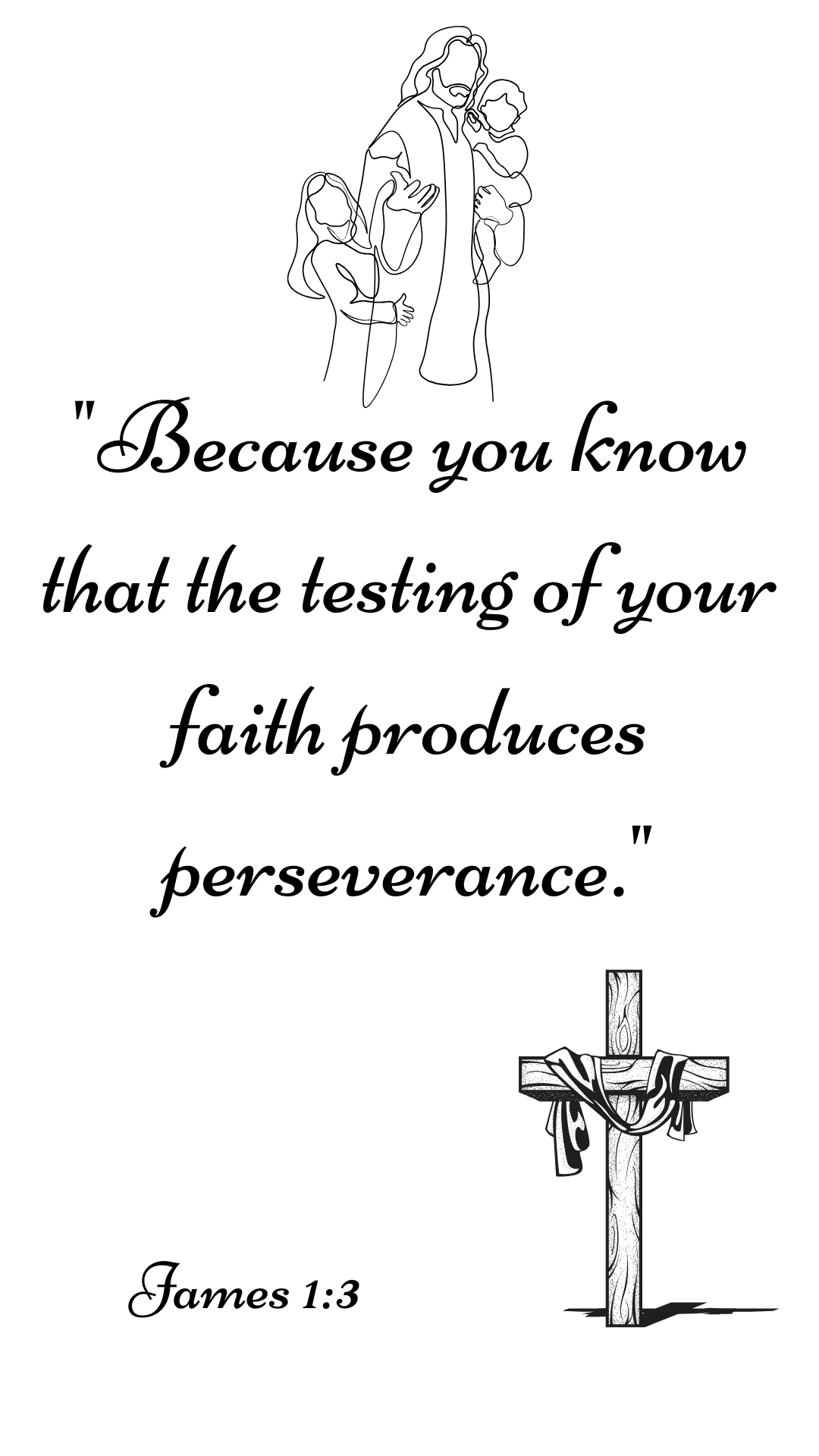
2 Chronicles 20:20 – “Have faith in the Lord your God and you will be upheld.”
Matthew 6:34 – “Do not worry about tomorrow, for tomorrow will worry about itself. Each day has enough trouble of its own.”
Psalm 118:6 – “The Lord is with me; I will not be afraid. What can mere mortals do to me?”
Ephesians 6:16 – “Take up the shield of faith, with which you can extinguish all the flaming arrows of the evil one.”
John 8:12 – “I am the light of the world. Whoever follows me will never walk in darkness, but will have the light of life.”
Verses on Refuge and Shelter
The image of God as refuge — as fortress, as shelter, as the place where the frightened and exhausted can find safety — is one of the most recurring images in the Psalms. It is not a passive metaphor. To run to a refuge is an act; it requires acknowledging that you need shelter, leaving behind the illusion of self-sufficiency, and moving toward the place where protection is actually found. The pride that keeps people from doing this is one of the things scripture addresses most consistently.
What these verses offer is not the assurance that nothing bad will reach you, but the assurance that you are not exposed and alone in the open. The shelter of God’s presence does not remove you from the world’s difficulties; it changes the conditions under which you face them. That change is not small. It is the difference between facing something with nothing at your back and facing it with something solid behind you.
Isaiah 12:2 – “Surely God is my salvation; I will trust and not be afraid.”
Psalm 23:4 – “Even though I walk through the darkest valley, I will fear no evil, for You are with me.”
Matthew 11:28 – “Come to me, all you who are weary and burdened, and I will give you rest.”
Psalm 121:1-2 – “I lift up my eyes to the mountains—where does my help come from? My help comes from the Lord, the Maker of heaven and earth.”
Isaiah 30:15 – “In quietness and trust is your strength.”
Verses on the Impossible Made Possible
Faith has always asked people to hold open the category of the impossible — not as wishful thinking, but as a theological conviction about the nature of the God they serve. The statement that nothing is impossible with God is not a promise that every desired outcome will occur; it is a declaration about divine capacity that expands the horizon of what can be hoped for and prayed toward. It keeps the imagination of faith from contracting to the size of what seems likely.
The mustard seed image in Matthew is perhaps the most famous expression of this principle: faith does not need to be large to be effective. What it needs to be is real — genuinely placed in the right object rather than spread thin across many uncertain ones. These verses are for the person who feels their faith is too small for what they are facing. The answer scripture gives is not to generate more faith, but to focus the faith they have.
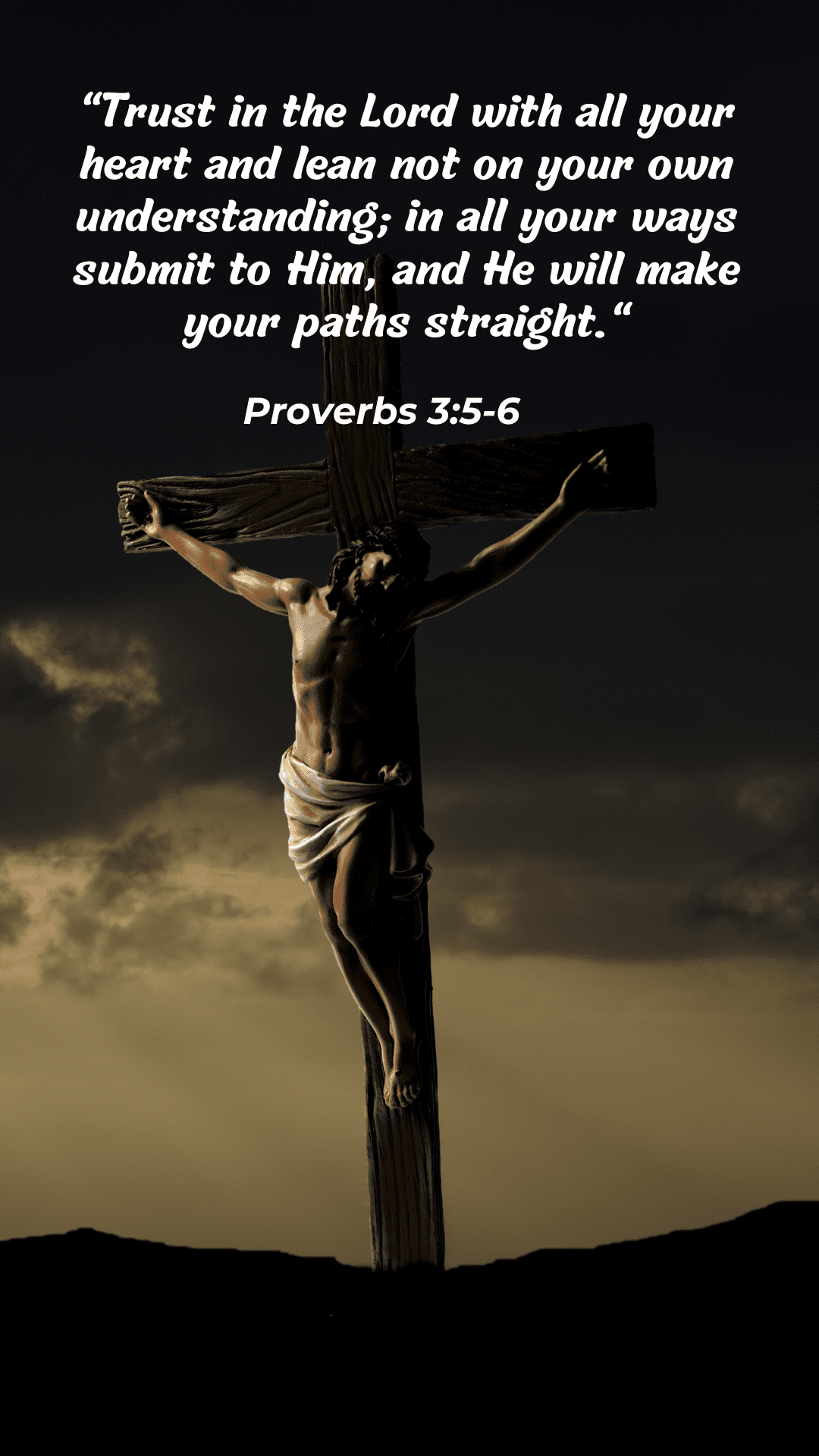
Proverbs 3:6 – “In all your ways submit to Him, and He will make your paths straight.”
Mark 10:27 – “With man this is impossible, but not with God; all things are possible with God.”
Hebrews 13:6 – “So we say with confidence, ‘The Lord is my helper; I will not be afraid. What can mere mortals do to me?'”
Matthew 17:20 – “Truly I tell you, if you have faith as small as a mustard seed, you can say to this mountain, ‘Move from here to there,’ and it will move.”
Psalm 138:3 – “When I called, you answered me; you greatly emboldened me.”
Verses on Standing Firm
The military imagery that Paul reaches for in his letters — armor, shields, standing your ground — is not accidental. It reflects a realistic assessment of what the life of faith involves: genuine opposition, genuine pressure, situations in which the instinct is to retreat or collapse. The call to stand firm is a call addressed to people who are genuinely being pushed, not people for whom holding on is easy.
What makes standing firm possible, in the biblical account, is not personal willpower but the assurance that you are standing within something larger than yourself. The ground of faith is not your own resolve; it is the faithfulness of God. That distinction matters enormously when resolve is running low. You are not holding yourself up — you are being held, and the holding is more reliable than any human grip.
Romans 8:31 – “If God is for us, who can be against us?”
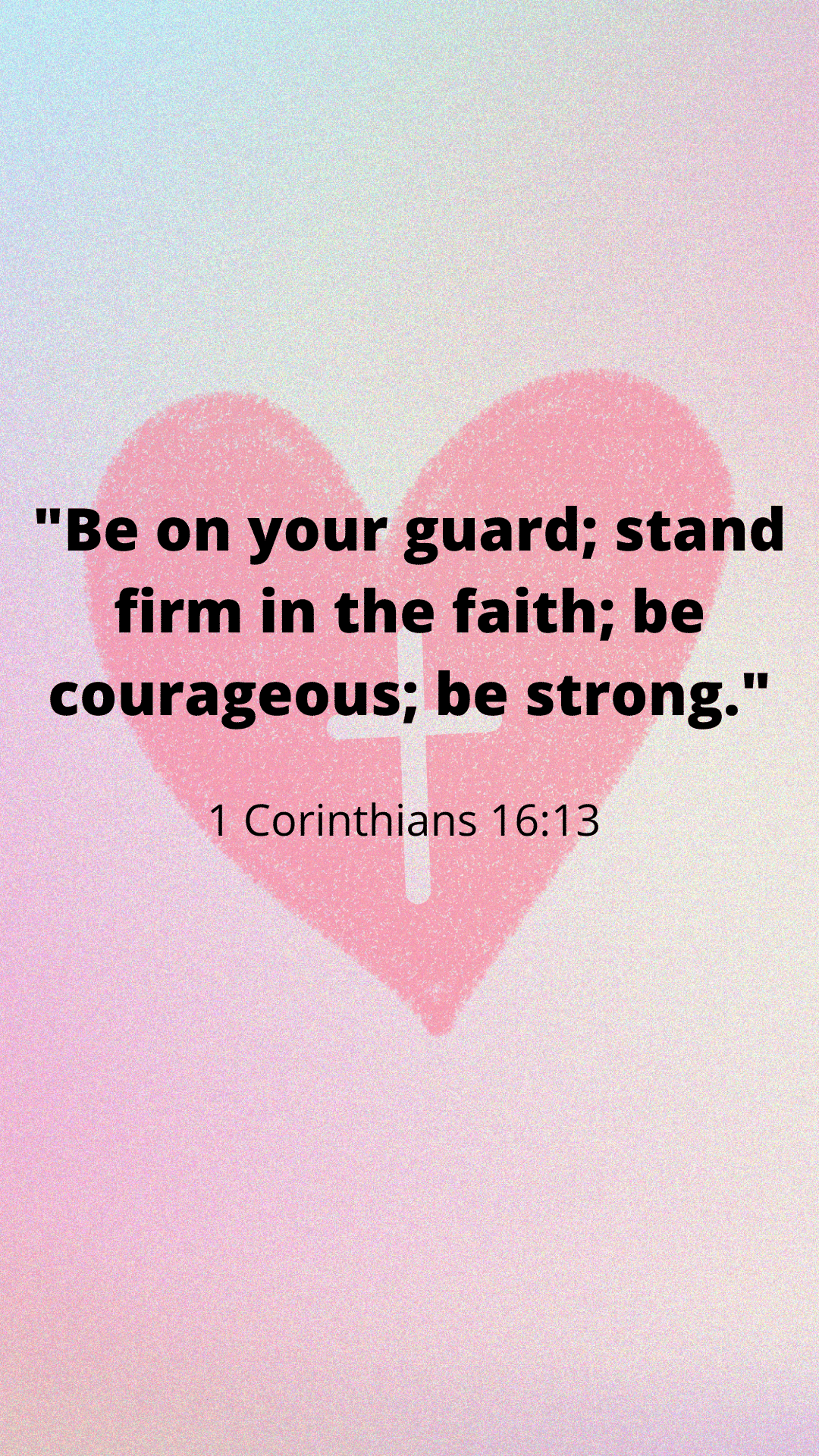
1 Corinthians 16:13 – “Be on your guard; stand firm in the faith; be courageous; be strong.”
Psalm 42:11 – “Why, my soul, are you downcast? Put your hope in God, for I will yet praise Him, my Savior and my God.”
Psalm 119:114 – “You are my refuge and my shield; I have put my hope in Your word.”
Hebrews 6:19 – “We have this hope as an anchor for the soul, firm and secure.”
Verses on Hearing and Responding to God’s Word
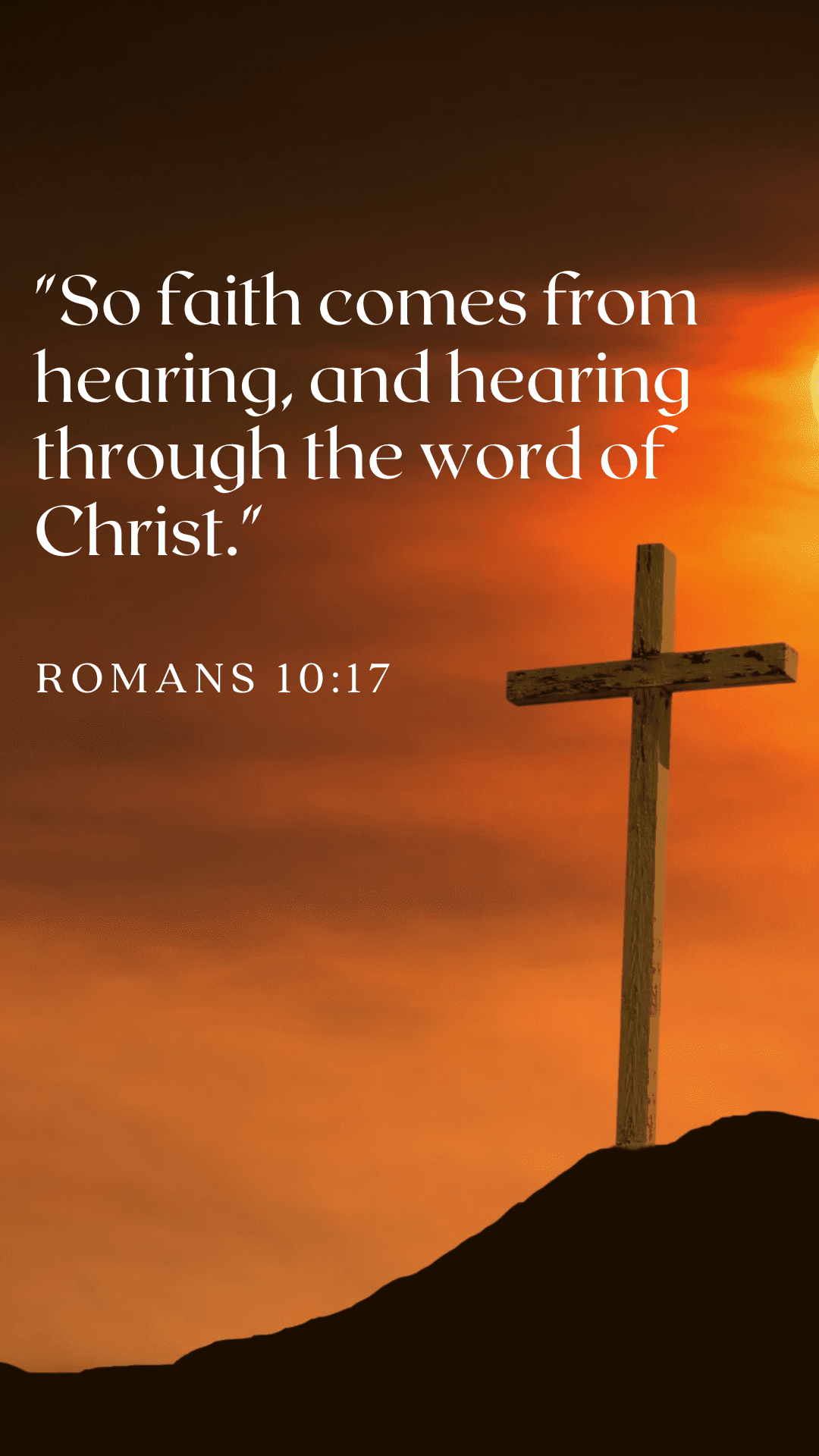
Faith, Paul writes, comes from hearing — from exposure to the word about Christ, from the message received and taken in. This is a humbling observation: faith is not primarily self-generated. It is cultivated through attention to something outside the self. The practices that surround scripture — reading, listening, memorizing, returning — are not supplementary to faith but generative of it. They are the ordinary means through which extraordinary conviction grows.
The invitation to seek, ask, and knock that Jesus extends in the Sermon on the Mount carries a similar emphasis on active engagement. Hearing is not passive; it requires turning toward the source. Seeking is not merely wishing; it involves movement. These verses call the reader into a posture of active receptivity — leaning toward God rather than waiting for Him to force His way through.
Romans 10:17 – “Faith comes from hearing the message, and the message is heard through the word about Christ.”
Matthew 5:14 – “You are the light of the world. A town built on a hill cannot be hidden.”
Psalm 16:8 – “I keep my eyes always on the Lord. With Him at my right hand, I will not be shaken.”
Isaiah 41:10 – “Do not fear, for I am with you; do not be dismayed, for I am your God.”
Colossians 3:2 – “Set your minds on things above, not on earthly things.”
Verses on Prayer and Petition
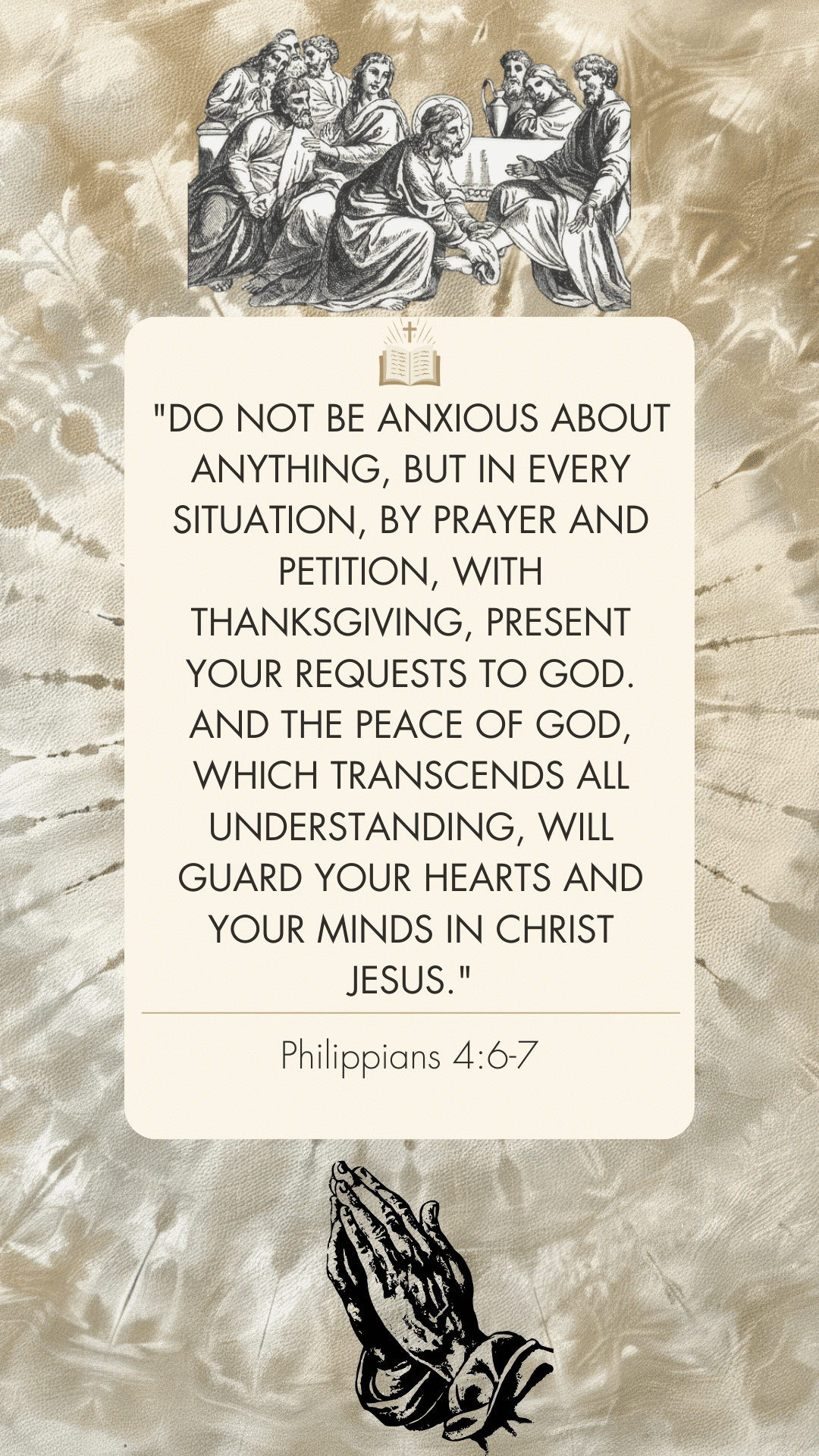
Prayer in scripture is not a formal religious exercise performed at prescribed times — it is the ongoing conversation of a person with the God who made them and knows them. The invitation to bring everything to God in prayer — anxieties, requests, gratitude, confusion — is an invitation into a relationship characterized by extraordinary access. The God of the universe, scripture insists, wants to hear from you. That claim is worth sitting with until it becomes real rather than merely familiar.
The peace that follows from this kind of prayer is described not as a consequence of answers received but as the experience of God’s presence in the act of bringing things before Him. Something changes when you turn toward God with what you are carrying — not always the circumstances, but something in you. These verses invite you into that experience rather than merely describing it.
James 1:5 – “If any of you lacks wisdom, you should ask God, who gives generously to all without finding fault.”
Philippians 4:6-7 – “Do not be anxious about anything, but in every situation, by prayer and petition, with thanksgiving, present your requests to God.”
John 14:27 – “Peace I leave with you; my peace I give you. I do not give to you as the world gives.”
Deuteronomy 31:6 – “Be strong and courageous. Do not be afraid or terrified because of them, for the Lord your God goes with you.”
Matthew 7:7 – “Ask and it will be given to you; seek and you will find; knock and the door will be opened to you.”
Verses on Walking by Faith, Not Sight
The life of faith frequently requires moving without full visibility — taking the next step before the whole path is clear, making decisions based on conviction rather than certainty. This is not irrational; it is the nature of trust in any relationship. We act on what we know of the one we trust rather than demanding proof before every step. The same logic applies to faith, with the distinction that what is known of God — through scripture, through experience, through the testimony of those who have gone before — is extraordinarily rich.
The verses in this section speak to that kind of forward motion — the willingness to arise, to shine, to set the mind on what is above rather than what is immediately visible. They are verses for the person who needs to take the next step and is looking for the conviction to do it. Not a map of the whole journey, but enough light for the next portion of it.
2 Corinthians 5:7 – “For we live by faith, not by sight.”
Romans 14:1 – “Accept the one whose faith is weak, without quarreling over disputable matters.”
Isaiah 60:1 – “Arise, shine, for your light has come, and the glory of the Lord rises upon you.”
Psalm 94:19 – “When anxiety was great within me, Your consolation brought me joy.”
Proverbs 18:10 – “The name of the Lord is a fortified tower; the righteous run to it and are safe.”
Verses on Eternal Life and God’s Love
The promise of eternal life in the New Testament is not primarily about the afterlife as a location — it is about a quality of life that begins now, in relationship with the God who is its source. To believe in the Son is to have already crossed from death to life, John writes. The future dimension of this promise is real and important, but it does not displace the present one. Eternal life is not something you wait for; it is something you are already, however partially, living.
God’s love in scripture is consistently described in terms that emphasize its unconditional and enduring character. It is not contingent on performance, not withdrawn in seasons of failure, not proportional to the believer’s faithfulness. It is described as unfailing, as poured out, as incapable of being separated from the one who receives it. These are not small claims, and they are worth returning to regularly — especially in the seasons when they feel hardest to believe.
John 3:36 – “Whoever believes in the Son has eternal life, but whoever rejects the Son will not see life.”
1 Thessalonians 5:16-18 – “Rejoice always, pray continually, give thanks in all circumstances.”
Romans 8:28 – “And we know that in all things God works for the good of those who love Him.”
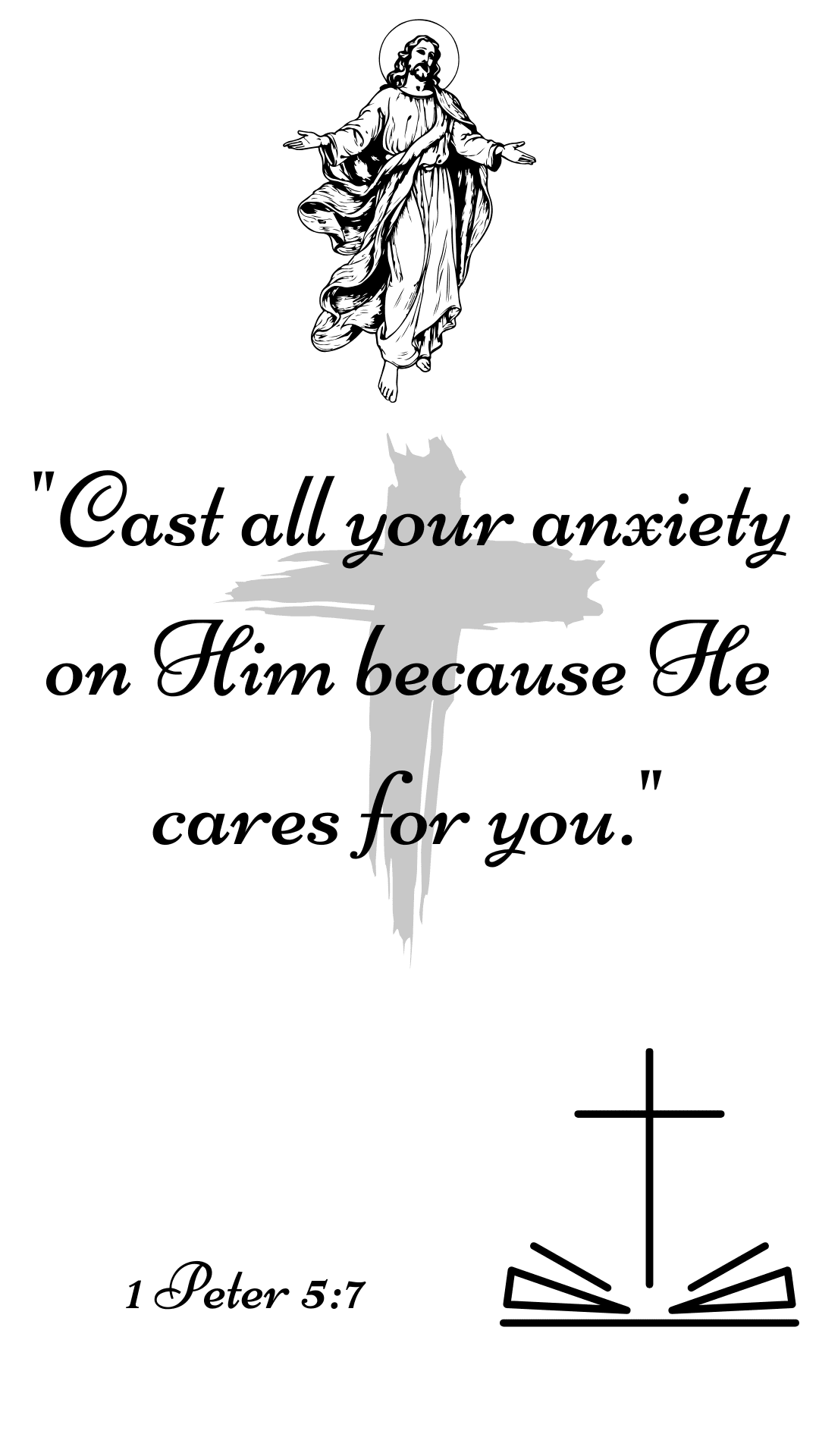
1 Peter 5:7 – “Cast all your anxiety on Him because He cares for you.”
Ephesians 2:8-9 – “For it is by grace you have been saved, through faith—and this is not from yourselves, it is the gift of God.”
Verses on Seeking God First
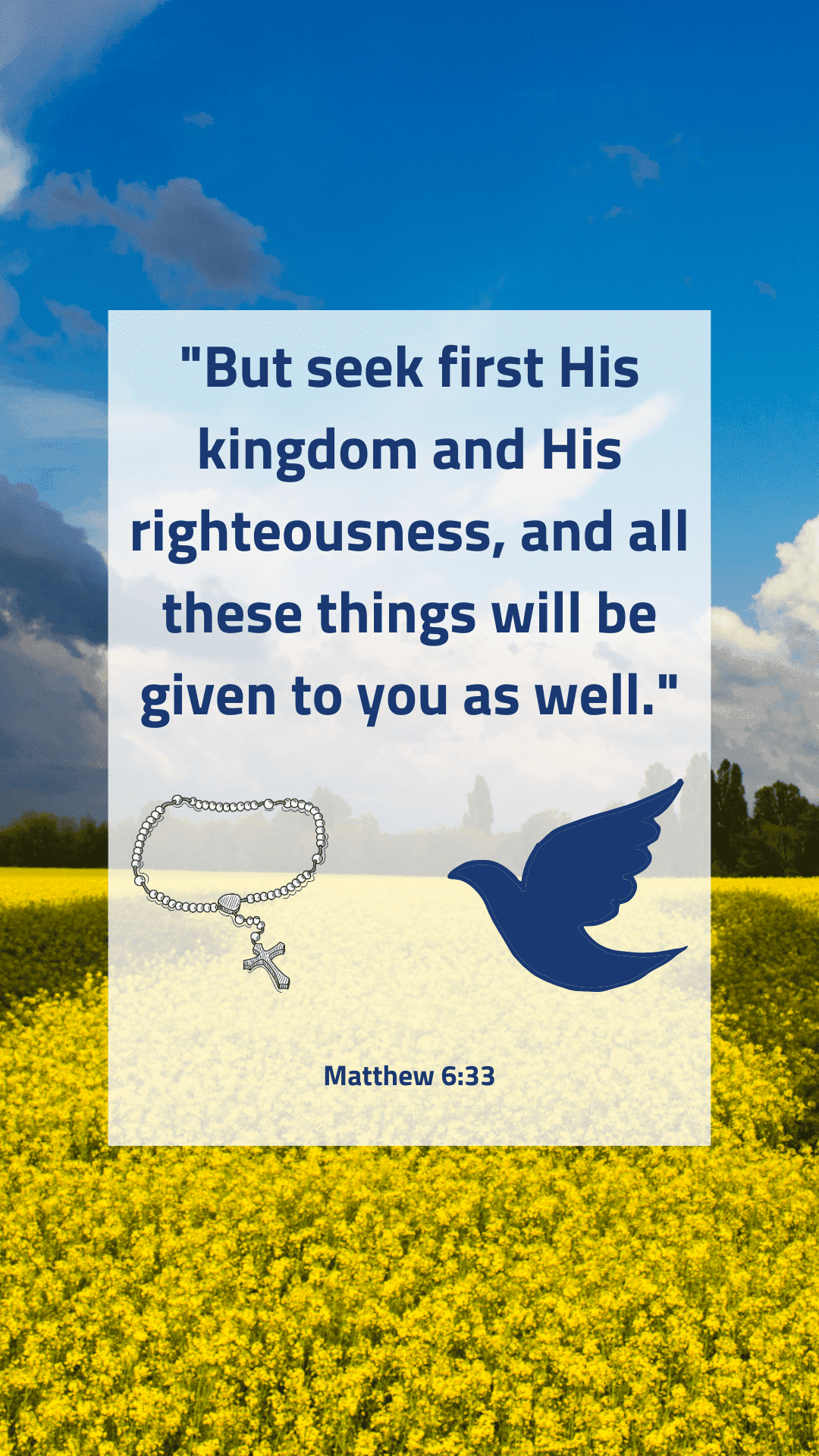
The instruction to seek first the kingdom of God is not a command to ignore practical concerns — it is a reordering of priorities that promises practical provision as a consequence. The logic is counterintuitive: stop organizing your life around the securing of what you need, and trust the one who knows what you need to provide it. That relinquishment of control is exactly what makes it difficult, and exactly what makes it an act of faith.
Trusting in the name of the Lord rather than in visible means of support — chariots, horses, human power — is a recurring theme in the Psalms and the prophets. It is not a call to passivity but to a different ordering of confidence. The person who trusts in God is not prohibited from working, planning, or acting; they are simply invited to hold those efforts lightly, as means rather than foundations. The foundation is elsewhere, and it does not shift.
Matthew 6:33 – “But seek first His kingdom and His righteousness, and all these things will be given to you as well.”
Psalm 20:7 – “Some trust in chariots and some in horses, but we trust in the name of the Lord our God.”
Isaiah 50:10 – “Let the one who walks in the dark, who has no light, trust in the name of the Lord and rely on their God.”
Romans 5:5 – “And hope does not put us to shame, because God’s love has been poured out into our hearts.”
James 1:12 – “Blessed is the one who perseveres under trial because, having stood the test, that person will receive the crown of life.”
Verses on Light, Guidance, and the Path Forward
The image of God’s word as a lamp for the feet rather than a floodlight for the whole terrain is one of the most honest and practically useful metaphors in the Psalms. A lamp for the feet illuminates only the next step, not the entire journey. It does not resolve every uncertainty or make the distant road visible. But it provides enough light to move without stumbling — and in seasons of genuine darkness, that is exactly the right amount to ask for.
The verses about not conforming to the pattern of this world, about setting the mind on things above, about letting the light shine — these are not calls to detachment from ordinary life. They are calls to a different relationship with it: engaged fully, but oriented differently, with the attention calibrated toward what lasts rather than what merely demands. That reorientation is the work of a lifetime, and scripture offers guidance for it at every stage.

Psalm 119:105 – “Your word is a lamp for my feet, a light on my path.”
John 16:33 – “In this world, you will have trouble. But take heart! I have overcome the world.”
Luke 12:32 – “Do not be afraid, little flock, for your Father has been pleased to give you the kingdom.”
1 Corinthians 2:5 – “So that your faith might not rest on human wisdom, but on God’s power.”
Proverbs 16:9 – “In their hearts, humans plan their course, but the Lord establishes their steps.”
Verses on God’s Unfailing Love
The Hebrew word often translated as “unfailing love” or “steadfast love” — hesed — does not have a precise English equivalent. It carries connotations of loyal commitment, covenant faithfulness, and a love that persists regardless of what the beloved does in return. It is one of the central words used to describe God’s character throughout the Old Testament, and its weight is considerable. This is not a sentimental love; it is a committed one, rooted in character rather than feeling.
The New Testament carries this theme forward through the language of grace and the imagery of the vine and the branches — a relationship of organic connection in which the believer’s fruitfulness depends entirely on remaining attached to the source. These verses are for the person who needs to be reminded that God’s love is not contingent on their performance. It held before they were aware of it, and it will hold when awareness wavers.
Psalm 46:5 – “God is within her; she will not fall; God will help her at break of day.”
Isaiah 54:10 – “Though the mountains be shaken and the hills be removed, yet my unfailing love for you will not be shaken.”
1 John 4:4 – “You, dear children, are from God and have overcome them, because the one who is in you is greater than the one who is in the world.”
Psalm 27:14 – “Wait for the Lord; be strong and take heart and wait for the Lord.”
John 15:5 – “I am the vine; you are the branches. If you remain in me and I in you, you will bear much fruit.”
Verses on Transformation and Renewal of Mind
The transformation that Paul describes in Romans 12 — being renewed in the mind rather than conformed to the surrounding world — is not a single event but a continuing process. The mind is where so much of the spiritual life is actually lived: where fear takes hold or is released, where trust is exercised or withheld, where the patterns of response to difficulty are formed over time. A renewed mind is not a passive achievement; it is the result of persistent attention to what is true.
Letting the light shine, approaching the throne of grace with confidence, praising God in the midst of difficulty — these are active postures. They require something of the person taking them. The verses in this section are less about receiving comfort than about living outwardly from a faith that is already internally present. They are for the person who wants their faith to show in how they move through the world, not just in what they privately believe.
Matthew 5:16 – “Let your light shine before others, that they may see your good deeds and glorify your Father in heaven.”
Romans 12:2 – “Do not conform to the pattern of this world, but be transformed by the renewing of your mind.”
Psalm 73:26 – “My flesh and my heart may fail, but God is the strength of my heart and my portion forever.”
2 Thessalonians 3:3 – “But the Lord is faithful, and He will strengthen you and protect you from the evil one.”
Hebrews 4:16 – “Let us then approach God’s throne of grace with confidence, so that we may receive mercy and find grace.”
Verses on God’s Guidance and Provision
Guidance in scripture is rarely dramatic. It tends to arrive through ordinary means — through the quiet direction of a steadfast heart, through the word that lands at exactly the right moment, through the gentle sense of a path opening or closing. The promise that God will guide always, that He will satisfy needs in even the most barren circumstances, is a promise calibrated to the long ordinary stretches of a life rather than only to its crises.
The verses about God’s compassions being new every morning, about guarding the heart, about the benefits of the Lord — these are invitations to a kind of attention that notices what is already being given rather than focusing only on what is still lacking. Gratitude and faith are closely related in scripture; the person who cultivates one tends to find the other growing alongside it. That connection is worth holding in mind as you read.
Psalm 103:2-5 – “Praise the Lord, my soul, and forget not all His benefits.”
Isaiah 58:11 – “The Lord will guide you always; He will satisfy your needs in a sun-scorched land.”
Lamentations 3:22-23 – “Because of the Lord’s great love, we are not consumed, for His compassions never fail.”
John 5:24 – “Whoever hears my word and believes Him who sent me has eternal life.”
Proverbs 4:23 – “Above all else, guard your heart, for everything you do flows from it.”
Verses on Tasting and Seeing God’s Goodness
The invitation to taste and see that the Lord is good is one of the most sensory invitations in the Psalms — an appeal not to intellectual assent but to direct experience. It assumes that the goodness of God is something that can be encountered rather than merely argued for, that there is a quality of divine presence available to the person who draws near that cannot be fully communicated to someone who has only read about it. This verse is both a promise and an invitation to test the promise.
Fixing the eyes on Jesus, as Hebrews describes it, is a similar kind of directness. Not faith in faith, not confidence in one’s own spiritual condition, but attention focused on the pioneer and perfecter of faith himself. These closing verses in this section are for the person who wants to move past secondhand religion into something more immediate — a faith that is genuinely encountered rather than merely inherited.
Psalm 34:8 – “Taste and see that the Lord is good; blessed is the one who takes refuge in Him.”
Hebrews 12:2 – “Fixing our eyes on Jesus, the pioneer and perfecter of faith.”
2 Corinthians 12:9 – “My grace is sufficient for you, for my power is made perfect in weakness.”
Psalm 90:17 – “May the favor of the Lord our God rest on us.”
Ecclesiastes 3:1 – “There is a time for everything, and a season for every activity under the heavens.”
What These Words Are For
Scripture was not written to be read once and set aside. It was written — and copied, and carried, and memorized, and passed between people in every conceivable circumstance — because it does something that other words don’t. It meets people where they actually are rather than where they present themselves as being. A verse that seemed unremarkable in a season of comfort can become the single most important sentence you know in a season of crisis. That responsiveness is not coincidental; it is the nature of language that reaches toward the deepest things.
Faith is not the absence of questions or the suppression of doubt. Some of the most faithful voices in scripture are also the most searching — the psalmists who cry out from genuine anguish, the prophets who press God on His promises, the disciples who ask the hard questions directly. The faith that can hold questions without collapsing is often stronger than the kind that requires the questions to stop. These verses have room for the full range of where a person might find themselves.
What the verses gathered here share, across their differences in tone and circumstance and genre, is a persistent orientation toward God as the one in whom everything ultimately holds together. That orientation is not a feeling that arrives automatically; it is cultivated through repeated return to the words that express it. The practice of reading scripture is the practice of keeping that orientation alive — returning the compass needle toward true north when everything else is pulling it off course.
Take the verses that landed today and return to them. Write one down and put it somewhere visible. Read the same psalm multiple times in a week and notice how it changes. Let the words become familiar enough that they are available when you need them most — not as decoration, but as something load-bearing. The people who have found scripture genuinely sustaining have almost universally found it through this kind of slow, repeated, attentive engagement rather than through a single dramatic encounter.
The love described in these pages is not fragile. It does not depend on your consistency or your clarity of faith or the quality of your understanding on any given day. It held when the psalmist was in the pit, when Paul was in prison, when the disciples were hiding behind locked doors. It holds now, in whatever season you are reading this, however much or little you can feel it at the moment. That is the testimony these words carry — not that faith is easy, but that its object is reliable.
Return to these verses as often as you need to. There is no virtue in reading them quickly or exhausting them. The ones that have shaped generations of believers did so through being returned to — in the morning, in the dark, at the end of a long day, at the beginning of something frightening. They are not finished with you after the first reading. They have the kind of depth that reveals itself slowly, over time, to the person who is willing to keep coming back.