
Just so you know – some links on this page are affiliate links. If you click and buy something, I may earn a small commission (think coffee money, not a luxury vacation) at no extra cost to you. I only share things I genuinely like and believe are worth it. Thanks for supporting this little corner of the internet – it really helps keep everything running.
A garden has a quiet way of bringing people back to themselves. It does not rush, shout, or demand attention in the way much of life does. It simply grows, changes, rests, and begins again with each season. Being near plants, flowers, soil, and sunlight can make the mind feel less crowded. Sometimes peace arrives when life becomes simple enough to notice again.
There is something deeply grounding about watching things grow at their own pace. A garden teaches patience without needing to explain it. Seeds take time, flowers open slowly, and roots strengthen quietly beneath the surface. That rhythm can feel comforting in a world that often expects everything to happen quickly. Nature reminds people that slow progress is still progress.
Gardens hold beauty in a way that feels honest and alive. They are never perfectly still, and they are never finished for long. Leaves change, petals fall, weeds appear, and new growth begins in places that once looked empty. This gentle cycle can make ordinary life feel softer. It shows that care, patience, and small daily attention can create something quietly beautiful.
Spending time in a garden can feel like stepping into a slower kind of wisdom. The world does not disappear, but it becomes easier to breathe inside it. A warm patch of sun, the scent of flowers, or the sound of leaves moving in the wind can calm the heart in simple ways. Nature has always known how to heal without making a scene. A garden reminds people that peace can grow in small, ordinary places.
Peace Found in the Garden
Peace in a garden often comes from how gently everything seems to exist. Nothing needs to hurry to prove its worth. The flowers bloom when they are ready, the leaves move when the wind comes, and the soil holds more life than it shows. That quiet order can make the mind feel less scattered.
A garden gives people permission to slow down without feeling useless. It turns stillness into something meaningful rather than empty. Sitting among plants can feel like being reminded that life does not always need to be loud to be full. Peace often grows where attention becomes gentle.
Peace grows quietly in the places where the heart finally slows down.
A garden can calm thoughts that words never seem to reach.
Some peace is found with soil under your feet and sunlight on your face.
The garden does not rush, and somehow it teaches the soul not to either.
In a garden, even silence feels alive.
Flowers do not solve everything, but they make the world feel softer.
A peaceful garden reminds the heart that calm can still grow here.
Nature has a gentle way of returning peace to tired places.
The quietest corners often hold the deepest kind of rest.
A garden is proof that peace can be planted, tended, and found again.
Looking for Good K-Beauty?
MISSHA has a huge range of Korean skincare and makeup, including some seriously popular bestsellers.
Growing Slowly and Naturally
Growing slowly can feel frustrating in a world that praises speed. But nature rarely rushes what is meant to last. A plant strengthens its roots long before its growth becomes obvious above the surface. That hidden work matters more than people often realize.
Natural growth has its own rhythm, and it cannot always be forced without damage. A garden teaches that becoming takes time, care, rest, and patience. Some seasons are for blooming, while others are for rooting deeply. Both are part of the same quiet progress.
Growing slowly is still growing.
Nature never rushes what is meant to become strong.
The deepest roots often grow where no one can see them.
Slow growth can still lead to a beautiful bloom.
A garden teaches that becoming takes time and quiet care.
Do not mistake a slow season for a wasted one.
What grows naturally often lasts longer than what is forced.
Patience gives growth the space it needs to become real.
Some things bloom beautifully because they were allowed to grow gently.
Growth does not need to be loud to be meaningful.
Flowers That Bloom in Their Own Time
Flowers bloom when their season arrives, not when someone becomes impatient for color. Their timing is part of their beauty. A closed bud is not a failure, and a late bloom is not less worthy than an early one. Nature has always understood that readiness cannot be rushed.
This kind of patience can be comforting for people too. Everyone grows through different seasons, and not all progress looks the same. Some parts of life open slowly because they need more time to become strong. A flower does not question its worth while it waits to bloom.

Every flower blooms in its own time, and so do you.
A late bloom is still beautiful when its season comes.
Flowers do not rush to prove they are worthy of the sun.
Blooming takes time, and waiting is part of the becoming.
A closed bud is not behind; it is simply not finished yet.
The garden knows that beauty has its own timing.
You do not have to bloom on someone else’s schedule.
Some flowers open slowly because their beauty is still gathering strength.
There is no shame in needing time to bloom.
Nature never compares one flower’s season to another.
The Beauty of Quiet Mornings Outside
Quiet mornings outside can make the day feel softer before it fully begins. The light is gentler, the air feels fresher, and the world seems to move with less pressure. A garden in the morning carries a calm that is hard to recreate indoors. It gives the heart a peaceful place to wake up slowly.
Morning in a garden often feels like a small reset. Dew on leaves, birdsong, and the first warmth of sunlight can make ordinary life feel new again. Nothing dramatic has to happen for the moment to matter. Sometimes beauty is simply the day beginning quietly.
Quiet mornings in the garden make the whole day feel gentler.
Morning light has a way of making simple things feel sacred.
A garden at sunrise feels like peace before the world gets busy.
Some mornings are best spent outside, listening to life wake up.
The garden is softest before the day begins asking for too much.
Fresh air and quiet flowers can change the shape of a morning.
There is beauty in letting the day begin slowly.
Morning gardens remind the soul that new beginnings can be gentle.
The first sunlight in a garden feels like a quiet promise.
A peaceful morning outside can stay with you all day.
Life Lessons Hidden in Nature
Nature teaches without speaking directly. It shows patience through seeds, resilience through roots, and acceptance through changing seasons. A garden holds these lessons in plain sight, but they often become clearer when life slows down enough to notice them. Every small cycle carries meaning.
The lessons hidden in nature are rarely complicated. They remind people to begin again, rest when needed, grow where they are planted, and release what has finished its season. A garden does not pretend every day is perfect. It simply keeps living through sun, rain, growth, and change.
Nature teaches the quiet lessons the world is too loud to hear.
A garden reminds us that growth and rest both belong to life.
Roots grow deeper when storms teach them where to hold.
Nature does not fear change; it moves with the seasons.
Every leaf, seed, and flower carries a small lesson in becoming.
The garden teaches patience better than any rushed answer could.
Life grows stronger when it learns how to bend without breaking.
Nature shows that endings can become part of new beginnings.
A quiet garden can teach more than a crowded room.
What grows from the earth often teaches what the heart needs to remember.
Finding Calm Among the Flowers
Flowers have a gentle way of changing the mood around them. Their colors, shapes, and quiet presence can make a place feel more alive without making it feel busy. Being among flowers often brings the mind back to the present moment. It is difficult to rush through beauty when it asks only to be noticed.
Calm among the flowers is not dramatic or complicated. It comes through small sensory details that soften the day. A petal, a scent, a patch of sunlight, or a slow breath can create a moment of relief. Sometimes the heart needs beauty that does not ask anything from it.
Among the flowers, the heart remembers how to be still.
Flowers bring calm without needing to explain their beauty.
A quiet flower can soften a noisy mind.
Calm grows easily where beauty is allowed to breathe.
Some peace smells like fresh flowers and warm earth.
The garden gives tired hearts a gentler place to land.
Flowers remind us that softness can still be strong.
There is comfort in standing near something that blooms quietly.
A garden full of flowers can make silence feel kind.
Calm often begins with noticing one beautiful thing.
Gardens and Gentle Living
Gardens and gentle living belong naturally together. Both ask for patience, care, attention, and a willingness to move at a softer pace. A gentle life does not need to be perfect or completely quiet. It simply makes room for things that help the heart feel more at home.
A garden can become a reminder that life does not have to be filled with constant pressure to be meaningful. Small routines, fresh air, and time spent tending living things can create a sense of calm order. Gentle living often grows from repeated choices that protect peace. It is less about escape and more about returning to what matters.
A garden teaches the beauty of living gently.
Gentle living begins where hurry no longer leads every step.
Gardens remind us that peace can be part of daily life.
A soft life can grow from simple routines and quiet care.
Living gently does not mean living without strength.
The garden shows how beauty can come from steady attention.
There is grace in choosing a slower, kinder rhythm.
Gentle days are often built from small peaceful choices.
A garden life is not perfect, but it knows how to breathe.
Softness grows stronger when it is tended with care.
Healing Through Nature
Nature can offer a kind of healing that does not feel forced. It does not demand that a person explain everything before feeling better. A garden simply gives the senses something peaceful to return to. The heart can begin to settle while the hands touch soil, water plants, or rest in the sun.
Healing through nature often happens quietly, almost without being noticed at first. The mind becomes less tense, the body breathes more deeply, and the world feels less harsh for a while. Even a small garden can become a place of emotional shelter. Nature reminds people that renewal is still possible.

Nature heals gently, without asking the heart to rush.
A garden can become a quiet place for the soul to recover.
Healing often begins where the body remembers how to breathe.
The earth has a calm way of holding what the heart cannot explain.
Nature does not fix everything, but it softens what feels too heavy.
Among leaves and flowers, pain can feel less alone.
A little sunlight can remind the soul that warmth still exists.
Gardens teach that renewal can begin after difficult seasons.
The quiet of nature can reach places noise never could.
Healing grows slowly, like roots finding their way through the dark.
Watching Things Grow with Patience
Watching things grow teaches patience in a very honest way. A garden does not respond to worry, pressure, or constant checking. It responds to care, time, light, water, and trust. That process can feel slow, but it also feels deeply real.
There is comfort in seeing growth unfold little by little. A new leaf, a taller stem, or the first sign of a flower can feel quietly rewarding. Patience becomes easier when progress is understood as something that happens in layers. The garden reminds people that waiting can still be full of life.
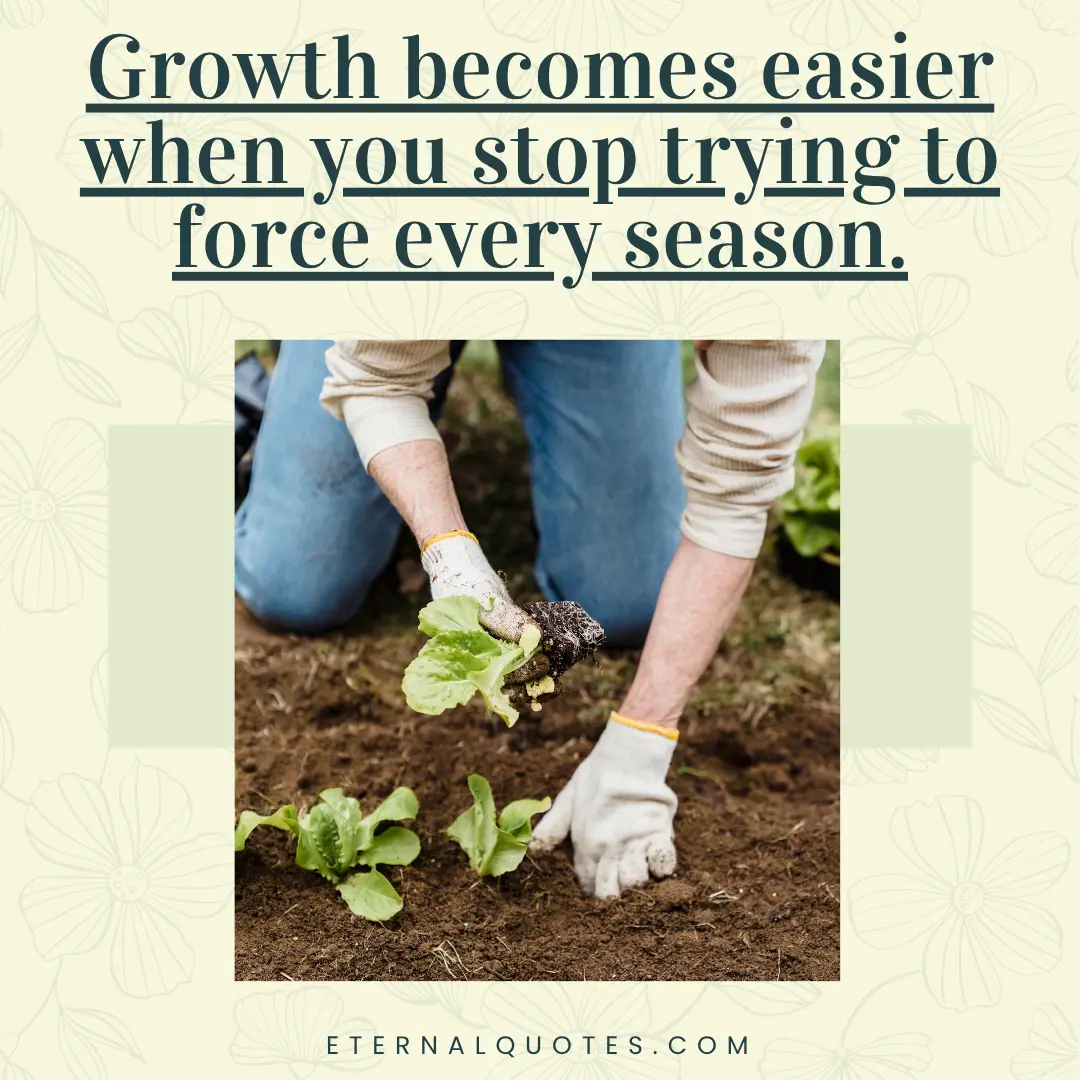
Watching things grow teaches patience better than rushing ever could.
A garden rewards the heart that knows how to wait.
Growth becomes more beautiful when you understand how long it took.
Patience is easier when you trust what is happening beneath the soil.
Every small leaf is proof that quiet progress is still progress.
The garden teaches that waiting can still be alive with purpose.
Things worth growing often take longer than expected.
Patience turns small changes into something worth noticing.
What grows slowly often teaches the deepest kind of trust.
A patient gardener learns to celebrate beginnings before blooms arrive.
Simple Joys Beneath the Sun
Simple joys beneath the sun often feel more meaningful than they first appear. A warm breeze, a blooming flower, a quiet bench, or the smell of fresh earth can turn an ordinary moment into something memorable. These small joys do not need to be impressive. They only need to be noticed.
The garden makes simple happiness feel natural again. It offers beauty without pressure and calm without complication. Under the sun, even small moments can feel generous. Sometimes joy is not something big to chase, but something gentle already waiting nearby.

Simple joys often grow best beneath the sun.
A warm garden can make ordinary life feel quietly rich.
Sunlight on flowers is a small happiness worth noticing.
The simplest joys are often the ones that ask for the least.
A peaceful afternoon outside can feel like a gift.
Joy does not always arrive loudly; sometimes it grows in the garden.
Beneath the sun, even small moments can feel golden.
A garden reminds us that happiness can be simple and still enough.
Fresh air, warm light, and quiet flowers can soften the whole day.
Simple joys become beautiful when the heart slows down to receive them.
A Gentle Place to Grow
A garden is more than a pretty place. It is a reminder that life becomes softer when care is given slowly and consistently. Every flower, leaf, and patch of soil carries the quiet evidence of time and attention. The garden does not become beautiful all at once. It becomes beautiful through small acts repeated with patience.
There is comfort in seeing growth happen without force. A seed does not become a flower because it is pressured into blooming. It becomes what it is through light, water, rest, and the right season. People often need the same kind of gentleness. Growth becomes more peaceful when it is allowed to unfold naturally.
Gardens also teach that not every season will look the same. Some days are full of color, while others are quiet, bare, or waiting for change. That does not make the garden less alive. It simply means life is moving in a different way for a while. Even stillness can belong to growth.
Spending time outside can help the heart remember what calm feels like. The mind does not have to solve every problem while standing among flowers. Sometimes it only needs fresh air, sunlight, and a moment without hurry. Nature gives people space to breathe before they try again. That kind of pause can become its own quiet healing.
The beauty of a garden is that it welcomes both effort and surrender. A person can plant, water, tend, and care, but they still must wait. The rest belongs to time, weather, soil, and seasons beyond complete control. This balance can feel deeply wise. It teaches that not everything good can be rushed, controlled, or forced into bloom.
A garden leaves people with a gentle kind of hope. It shows that renewal is possible, that small beginnings matter, and that quiet care can shape something beautiful. Even after difficult seasons, life can return in soft and surprising ways. The sun comes back, flowers open, and the earth keeps offering new chances. Sometimes the garden is simply reminding the heart to keep growing.