
Just so you know – some links on this page are affiliate links. If you click and buy something, I may earn a small commission (think coffee money, not a luxury vacation) at no extra cost to you. I only share things I genuinely like and believe are worth it. Thanks for supporting this little corner of the internet – it really helps keep everything running.
Prayer is one of the quietest and most enduring forms of trust a person can practice. It does not require grand circumstances or perfect words. It simply asks that you turn toward something larger than yourself and stay there long enough to listen as much as you speak. Across centuries and cultures, people have found in prayer a steadying place — not because it always produces immediate answers, but because the act itself is a form of rootedness.
What makes prayer so persistent in human life is that it meets us at our most honest. We do not usually pray when everything is fine and manageable. We pray when we are uncertain, when we are grieving, when we have run out of our own ideas. That vulnerability is not a weakness in the practice — it is the whole point. It is the moment when pretense falls away and something more real can begin.
For those who draw from the Christian tradition, prayer is woven into scripture at every level. It appears in laments and celebrations, in desperate nighttime cries and quiet morning offerings. The biblical writers did not present prayer as a technique for getting what you want. They presented it as an ongoing conversation with a God who is already present — already listening before the first word is formed.
Alongside prayer, the scriptures speak frequently about the unseen battles that shape a person’s interior life — fear, doubt, temptation, exhaustion. Faith in this context is not about feeling certain. It is about choosing to act as though God is real and attentive even when the evidence feels thin. These two things, prayer and faith, are not separate practices but two faces of the same orientation toward the divine.
Verses on the Power of Prayer
The power of prayer is not something that can be measured the way we measure other things. It does not always show up quickly or visibly, and yet those who have practiced it faithfully across a lifetime tend to speak of it as the most consequential thing they have ever done. It reshapes not just circumstances but the person doing the praying — gradually, persistently, in ways that are hard to articulate but impossible to miss.
Scripture returns to this theme again and again because the early communities of faith needed the reminder just as much as we do. Life had a way of making prayer feel futile or small. The biblical writers pushed back against that feeling not with motivational language but with testimony — accounts of people who prayed in desperation and found that something moved. That record is itself an invitation.
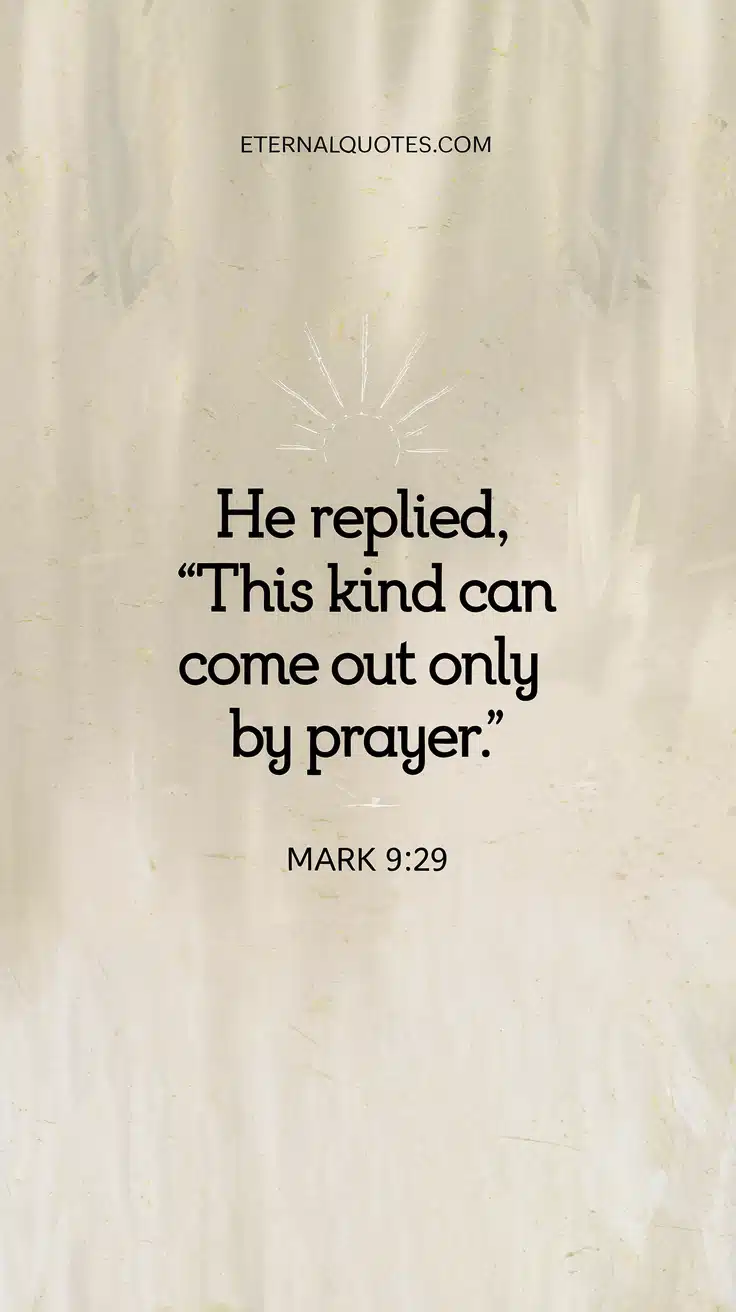
The prayer of a righteous person is powerful and effective.
James 5:16
Rejoice always, pray continually, give thanks in all circumstances; for this is God’s will for you in Christ Jesus.
1 Thessalonians 5:16-18
Ask, and it will be given to you; seek, and you will find; knock, and it will be opened to you.
Matthew 7:7
Call to me and I will answer you and tell you great and unsearchable things you do not know.
Jeremiah 33:3
Do not be anxious about anything, but in every situation, by prayer and petition, with thanksgiving, present your requests to God. And the peace of God, which transcends all understanding, will guard your hearts and your minds in Christ Jesus.
Philippians 4:6-7
Looking for Good K-Beauty?
MISSHA has a huge range of Korean skincare and makeup, including some seriously popular bestsellers.
Praying Without Ceasing
Praying without ceasing — a phrase that might seem impossible at first — points to something more subtle than constant verbal prayer. It describes a posture, a habitual turning of the heart toward God that runs beneath ordinary life like a quiet current. People who have cultivated this kind of sustained prayerfulness often describe a growing sense that nothing is entirely outside the conversation.
What the scriptures on persistent prayer share is a consistent assurance: prayer is heard. Not always answered the way we imagined, not always on our timeline, but genuinely received by a God who is attentive to every sincere reaching out. That confidence changes the way a person approaches difficulty — not with dread, but with the quiet expectation that they are not facing it alone.
More Quotes You May Enjoy


If you remain in me and my words remain in you, ask whatever you wish, and it will be done for you.
John 15:7
And I will do whatever you ask in my name, so that the Father may be glorified in the Son. You may ask me for anything in my name, and I will do it.
John 14:13-14
In the same way, the Spirit helps us in our weakness. We do not know what we ought to pray for, but the Spirit himself intercedes for us through wordless groans.
Romans 8:26
He will respond to the prayer of the destitute; he will not despise their plea.
Psalm 102:17
Before they call I will answer; while they are still speaking I will hear.
Isaiah 65:24
When God Hears the Cry of the Desperate
One of the more quietly astonishing things in these verses is the image of God answering before the call is even complete. It speaks to an intimacy that runs deeper than request and response — a knowing that anticipates need before need can fully form itself into words. For someone in the middle of genuine pain or confusion, that image is not abstract theology. It is a lifeline.
Communal prayer — the kind described in Matthew’s account of two or three gathered — adds another dimension entirely. Something happens when people carry the same burden together before God. The weight distributes, and the faith of one person holds up the faith of another when it falters. This is not magic but community, and the New Testament writers understood it as one of the most important practices available to a struggling church.
Again, truly I tell you that if two of you on earth agree about anything they ask for, it will be done for them by my Father in heaven. For where two or three gather in my name, there am I with them.
Matthew 18:19-20
Watch and pray so that you will not fall into temptation. The spirit is willing, but the flesh is weak.
Matthew 26:41
The Lord is far from the wicked, but he hears the prayer of the righteous.
Proverbs 15:29
Let your ear be attentive and your eyes open to hear the prayer your servant is praying before you day and night for your servants, the people of Israel.
Nehemiah 1:6
So I say to you: Ask and it will be given to you; seek and you will find; knock and the door will be opened to you. For everyone who asks receives; the one who seeks finds; and to the one who knocks, the door will be opened.
Luke 11:9-10
Verses on Spiritual Warfare and Strength in Prayer
Spiritual warfare is a concept that can sound dramatic or outdated, but the experience it describes is familiar to almost anyone who has tried to live with integrity. It is the internal resistance that meets every sincere effort — the pull toward anxiety, the temptation to give up, the voice that says your prayers are not reaching anyone. The biblical tradition names this resistance as real and takes it seriously rather than dismissing it.
The armor described by Paul in his letter to the Ephesians is a striking image precisely because it acknowledges that the believer is not passive. Prayer, in this framing, is not a retreat from the world but an engagement with it at the deepest level. To pray is to take a position — to stand in something larger than your own strength and refuse to be moved by forces that want you scattered and small.

Put on the full armor of God, so that you can take your stand against the devil’s schemes. For our struggle is not against flesh and blood, but against the rulers, against the authorities, against the powers of this dark world and against the spiritual forces of evil in the heavenly realms.
Ephesians 6:11-12
The weapons we fight with are not the weapons of the world. On the contrary, they have divine power to demolish strongholds.
2 Corinthians 10:4
Then Jesus told his disciples a parable to show them that they should always pray and not give up.
Luke 18:1
He will cover you with his feathers, and under his wings you will find refuge; his faithfulness will be your shield and rampart.
Psalm 91:4
But those who hope in the Lord will renew their strength. They will soar on wings like eagles; they will run and not grow weary, they will walk and not be faint.
Isaiah 40:31
Standing Firm When the Battle Is Long
The image from Isaiah — of strength renewed, of running without weariness — speaks to something many people experience in long seasons of difficulty. Endurance in hardship is rarely dramatic. It looks more like simply not stopping. Prayer is one of the things that makes not stopping possible, because it roots the person in a source of steadiness that does not depend on how they feel on any given day.
What the warfare passages ultimately communicate is that the battles worth fighting are rarely the visible ones. The fight for a person’s peace, their hope, their willingness to keep trusting — these are the contested grounds. And the weapons suited for those contests are not force or cleverness but faithfulness, prayer, and the deliberate choice to stay close to what is true.
Be alert and of sober mind. Your enemy the devil prowls around like a roaring lion looking for someone to devour.
1 Peter 5:8
He said: ‘Listen, King Jehoshaphat and all who live in Judah and Jerusalem! This is what the Lord says to you: ‘Do not be afraid or discouraged because of this vast army. For the battle is not yours, but God’s.’
2 Chronicles 20:15
No weapon forged against you will prevail, and you will refute every tongue that accuses you. This is the heritage of the servants of the Lord, and this is their vindication from me, declares the Lord.
Isaiah 54:17
But the Lord is faithful, and he will strengthen you and protect you from the evil one.
2 Thessalonians 3:3
Praise be to the Lord my Rock, who trains my hands for war, my fingers for battle.
Psalm 144:1
The God Who Fights on Your Behalf
The promise that no weapon forged against you will prevail is not a promise that nothing hard will happen. The people these words were written for were enduring genuine suffering and opposition. The promise is more specific and more profound than immunity from difficulty — it is the assurance that difficulty will not have the final word. That framing changes everything about how a person can carry hardship.
Paul’s words to the Thessalonians — that the Lord will strengthen and protect — come from a letter written to a community facing real pressure and loss. They were not theoretical comfort. They were the distilled conviction of someone who had tested that faithfulness personally and found it reliable. That context makes them heavier and more useful than decorative encouragement. They are testimony.

Submit yourselves, then, to God. Resist the devil, and he will flee from you.
James 4:7
Do not be afraid of them; the Lord your God himself will fight for you.
Deuteronomy 3:22
I have fought the good fight, I have finished the race, I have kept the faith.
2 Timothy 4:7
You armed me with strength for battle; you humbled my adversaries before me.
Psalm 18:39
All those gathered here will know that it is not by sword or spear that the Lord saves; for the battle is the Lord’s, and he will give all of you into our hands.
1 Samuel 17:47
Verses on Boldness and Faith in Prayer
Boldness in prayer is not the same as presumption. It is not the belief that God is obligated to deliver whatever we ask. It is, rather, the willingness to actually bring the full weight of what you need and want before God — without hedging, without apology, without shrinking the request down to something that feels safe to ask for. That kind of honest, open-handed asking is what the scriptures repeatedly encourage.
Faith, in this context, is less a feeling and more a practice. It is the repeated choice to act as though God is real, attentive, and good — even when the circumstances make that choice feel counterintuitive. People who describe their faith as strong rarely mean that doubt never visits them. They mean they have chosen, again and again, to orient toward trust rather than toward fear.
Therefore I tell you, whatever you ask for in prayer, believe that you have received it, and it will be yours.
Mark 11:24
This is the confidence we have in approaching God: that if we ask anything according to his will, he hears us. And if we know that he hears us – whatever we ask—we know that we have what we asked of him.
1 John 5:14-15
The righteous cry out, and the Lord hears them; he delivers them from all their troubles.
Psalm 34:17
Trust in the Lord with all your heart and lean not on your own understanding; in all your ways submit to him, and he will make your paths straight.
Proverbs 3:5-6
Let us then approach God’s throne of grace with confidence, so that we may receive mercy and find grace to help us in our time of need.
Hebrews 4:16
Approaching God Without Fear
The invitation in Hebrews to approach the throne of grace with confidence is one of the more quietly radical ideas in the New Testament. In the ancient world, approaching a throne was an act weighted with protocol and danger. The writer reframes the whole dynamic — not diminishing the holiness of God, but insisting that those who come in need are welcomed rather than tolerated. That reframing still has the power to change how a person prays.
Trusting God with the whole heart, as Proverbs describes, does not mean abandoning careful thought or good judgment. It means releasing the grip of self-sufficiency — the belief that understanding everything is a precondition for moving forward. Some of the most important steps a person takes are ones where the path is not fully clear, and faith is precisely what enables those steps to be taken with integrity rather than paralysis.

The Lord is my light and my salvation—whom shall I fear? The Lord is the stronghold of my life—of whom shall I be afraid?
Psalm 27:1
He replied, ‘Because you have so little faith. Truly I tell you, if you have faith as small as a mustard seed, you can say to this mountain, ‘Move from here to there,’ and it will move. Nothing will be impossible for you.
Matthew 17:20
After they prayed, the place where they were meeting was shaken. And they were all filled with the Holy Spirit and spoke the word of God boldly.
Acts 4:31
Have I not commanded you? Be strong and courageous. Do not be afraid; do not be discouraged, for the Lord your God will be with you wherever you go.
Joshua 1:9
So do not fear, for I am with you; do not be dismayed, for I am your God. I will strengthen you and help you; I will uphold you with my righteous right hand.
Isaiah 41:10
Faith That Moves Mountains
The mustard seed image is one of the most generous things Jesus ever said about faith. He did not require abundance of it. He pointed to something small — arguably the smallest visible seed his listeners knew — and said that was enough. The emphasis falls not on the size of the faith but on what it is oriented toward. A tiny, sincere trust directed toward the right source moves more than confident self-reliance ever could.
Joshua’s charge — be strong and courageous — was given to a man about to lead a people into completely unfamiliar territory. The command was not an assessment of Joshua’s natural temperament. It was a call to act from something other than how he felt. That gap between feelings and action is often where courage actually lives, and where prayer becomes less a comfort and more a preparation for the next difficult step forward.

Consequently, faith comes from hearing the message, and the message is heard through the word about Christ.
Romans 10:17
And without faith it is impossible to please God, because anyone who comes to him must believe that he exists and that he rewards those who earnestly seek him.
Hebrews 11:6
For the Spirit God gave us does not make us timid, but gives us power, love, and self-discipline.
2 Timothy 1:7
When I am afraid, I put my trust in you.
Psalm 56:3
But as for me, I watch in hope for the Lord, I wait for God my Savior; my God will hear me.
Micah 7:7
When Prayer Becomes a Way of Living
Prayer, at its deepest, is less a discipline you add to life and more a way of moving through it. It is the difference between facing each day as a problem to solve alone and facing it as a conversation already in progress. That shift does not happen overnight, and it rarely happens through willpower. It happens gradually, through practice, through repetition, through choosing to turn toward God even on the days when nothing in you feels like it.
What the Bible offers in passages like these is not a formula but a record. Person after person, in circumstances ranging from desperate to joyful, found that prayer was reliable. Not always in the ways they anticipated, and not always without waiting — but reliable. That record matters because it means the practice has been tested across a vast range of human experience, not just in calm or favorable conditions.
Spiritual warfare, too, is something that unfolds over time rather than in single decisive moments. The person who prays faithfully through a long season of difficulty is not making one large stand — they are making hundreds of small ones. Each small decision to pray rather than despair, to trust rather than capitulate to fear, accumulates into something that looks, from the outside, like extraordinary faith. From the inside it probably just looks like not giving up.
Boldness in prayer grows with familiarity. The person who has prayed honestly through loss, through confusion, through seasons where God felt absent, tends to become less careful and more direct over time. Not because they have stopped taking God seriously, but because they have stopped performing for God. That informality is not irreverence. It is intimacy — the kind that only develops when you have kept showing up through everything.
Faith and prayer reinforce each other in a way that is difficult to describe from the outside but unmistakable from within. Prayer builds faith because it requires acting on trust before you feel certain. Faith deepens prayer because it gradually releases the anxiety about whether you are doing it correctly, and replaces it with the simpler confidence that you are heard. Together they form a kind of interior stability that the circumstances of life can shake but not permanently break.
Wherever you are in your own practice of prayer — whether it is new and tentative, long and tested, or somewhere in between — the invitation in these scriptures remains the same. Bring what you have. Say what is true. Trust that the one you are speaking to already knows you, already holds you, and is already at work in the things you cannot yet see. That is not a small thing to believe. It turns out to be more than enough to keep going.