Just so you know – some links on this page are affiliate links. If you click and buy something, I may earn a small commission (think coffee money, not a luxury vacation) at no extra cost to you. I only share things I genuinely like and believe are worth it. Thanks for supporting this little corner of the internet – it really helps keep everything running.
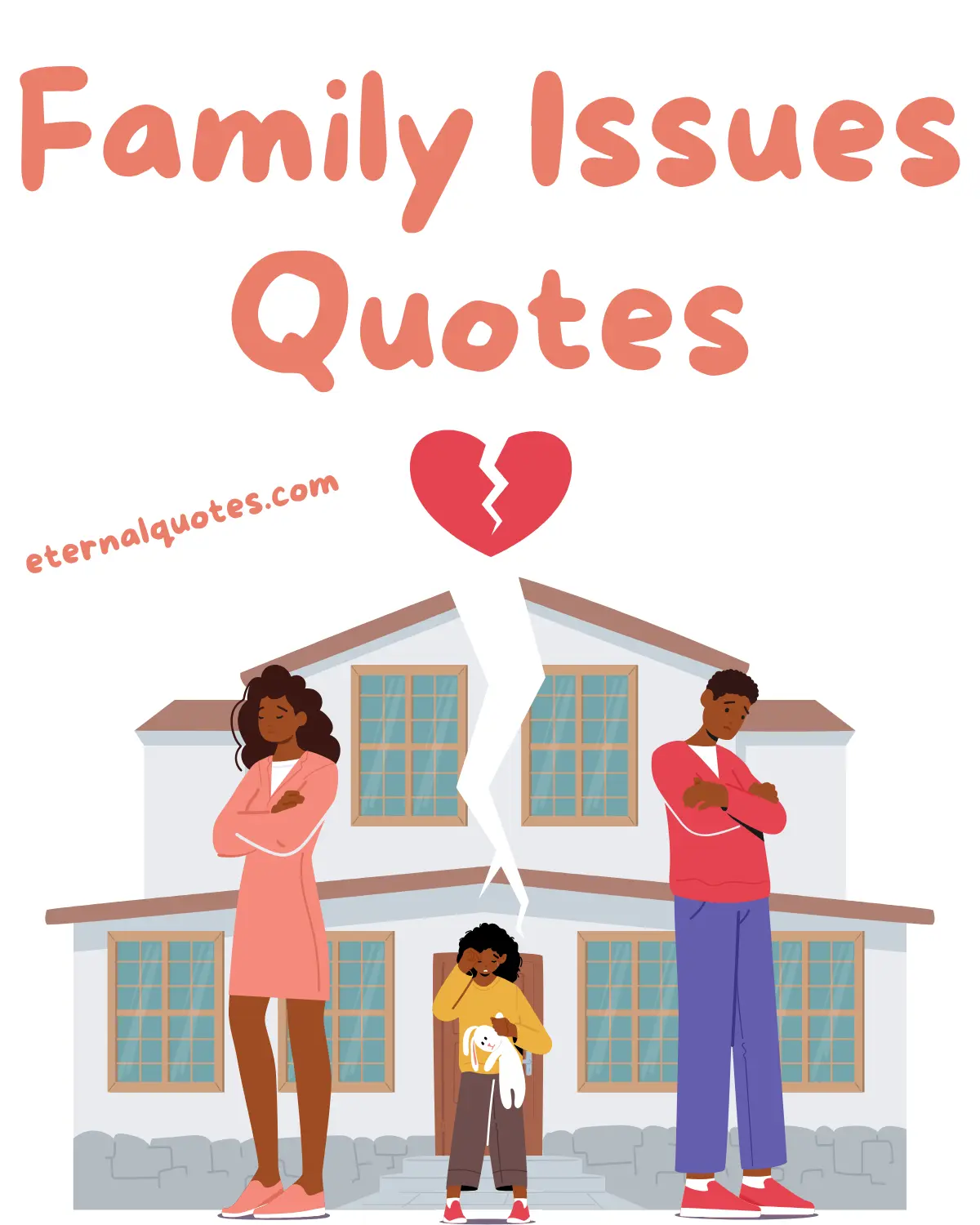
Family is one of the most complicated things a person can carry. It is the place where we first learn what love looks like, what safety feels like, and — for many of us — where we first encounter pain that doesn’t have a name yet. The people who shape us most are often the same ones who wound us most deeply, and that contradiction can take years to untangle.
Most families contain more silence than they do honesty. There are stories that never get told, hurts that never get acknowledged, and patterns that repeat across decades simply because no one stopped long enough to question them. The unspoken things have a way of living in the body long after they’ve left the room.
Dysfunction doesn’t always look dramatic. Sometimes it looks like a family that appears perfectly normal from the outside — holiday photos and birthday calls and shared meals — while something underneath remains quietly broken. The gap between how a family presents and how it actually functions can be one of the loneliest places to exist.
Many people spend years trying to reconcile who their family members are with who they needed them to be. That grief — for the parent who couldn’t show up, the sibling who chose sides, the home that never felt safe — is real and valid, even when no one around you acknowledges it as such. Grief doesn’t require death to be legitimate.
Healing from family wounds is slow work. It rarely happens in a single conversation or a single session of therapy. It tends to move in spirals, circling back to the same tender places with slightly more clarity each time, until something finally shifts. Progress often looks invisible right up until the moment it doesn’t.
Whatever your particular story holds — estrangement, dysfunction, a childhood that asked too much of you, or a present that still asks too much — you are not alone in it. A great many people are quietly carrying the weight of complicated families while doing their best to build something steadier for themselves. That effort matters, even when it goes unseen.
Breaking Generational Patterns
Generational patterns are rarely obvious when you’re living inside them. They feel like personality, like temperament, like simply the way things are — until one day you recognize that the way you respond to conflict, or to love, or to need, was taught to you long before you had any say in the matter. That recognition is painful, but it is also the beginning of something.
Choosing to interrupt what was passed down to you is not a rejection of your family. It is a form of care — for yourself, for anyone who comes after you, and in some quiet way, even for the people who couldn’t manage it themselves. The work is hard and largely invisible, but its effects tend to ripple outward in ways you may never fully see.
Healing yourself breaks the chain of dysfunction for every generation that comes after.
The cycle ends with you when you choose to do the work they couldn’t do.
Some families pass down recipes, others pass down trauma – you get to decide what you serve.
Your children will thank you for the therapy you get today instead of the therapy they’d need tomorrow.
Breaking generational patterns isn’t betraying your family – it’s saving your family.
The bravest thing you can do is refuse to normalize what damaged you.
You can honor your parents while still acknowledging the ways they failed you.
Generational healing happens when someone finally says this stops here.
The family dysfunction that shaped you doesn’t have to define your children.
Sometimes loving your family means loving them from a distance while you heal.

K-Beauty Favorite: MISSHA BB Cream
Lightweight coverage with SPF 42, hyaluronic acid & ceramides — backed by 3,000+ reviews.
View BB CreamSetting Boundaries with Toxic Family
Boundaries within families are one of the most misunderstood acts of self-preservation there is. In many families, the concept of a limit — a line that says this far and no further — is framed as betrayal, as coldness, as evidence that something is wrong with you rather than with the situation. That framing is designed to keep things exactly as they are.
Learning to protect yourself from people you love, or once loved, requires a particular kind of courage. It means sitting with guilt that doesn’t belong to you, holding firm in the face of pressure, and accepting that some people will never understand your reasons. The discomfort of that process is real, but so is the cost of the alternative.
You can love someone and still protect yourself from their dysfunction.
Setting boundaries with family isn’t cruel – it’s necessary for your survival.
The people who get angry about your boundaries are exactly why you need them.
You don’t owe anyone access to your life just because you share DNA.
Protecting your mental health isn’t selfish, even when family calls it that.
Some family members are more toxic than strangers because they know exactly how to hurt you.
You can’t set yourself on fire to keep someone else warm, even if they’re family.
Saying no to family dysfunction is saying yes to your own wellbeing.
The guilt you feel for setting boundaries was programmed into you by people who benefit from having none.
Sometimes the most loving thing you can do is step back and let people face their own consequences.
Dealing with Narcissistic Family Members
One of the most disorienting things about growing up with a narcissistic family member is that the distortion feels ordinary. When someone rewrites events, dismisses your feelings, or makes every room about themselves, you learn to adapt rather than question. That adaptation becomes second nature long before you understand what it costs you.
Narcissistic dynamics in families rarely announce themselves clearly. They often hide beneath a surface of charm, or martyrdom, or fierce loyalty to appearances. Recognizing the pattern — and understanding that no amount of patience or accommodation will change it — is one of the most significant and difficult things a person can do.
You’ll never get the apology you deserve from someone who doesn’t think they did anything wrong.
Narcissistic parents create children who either become narcissists or people-pleasers.
You can’t reason with someone who thinks your feelings are always wrong.
Narcissistic family members will rewrite history to make themselves the victim of every story.
The emotional manipulation feels normal when it’s all you’ve ever known.
They’ll punish you for having needs and then act like you’re ungrateful.
Narcissistic family members turn family gatherings into performances where everyone has to play their assigned role.
You’re not responsible for managing their emotions or protecting their fragile ego.
They’ll make you question your own reality because gaslighting is their native language.
The love they offer always comes with strings attached and a hidden price tag.
Childhood Trauma and Family Wounds
Childhood trauma doesn’t always look like a single catastrophic event. More often it accumulates quietly — in the things that were never said, the needs that were never met, the moments when you looked for safety and found something else instead. The body keeps a record of those experiences even when the mind works hard to set them aside.
What makes childhood wounds particularly complex is that they form during the years when we are least equipped to contextualize or resist them. Children adapt to survive, and those adaptations — the hypervigilance, the people-pleasing, the emotional shutting down — make complete sense given the environment that shaped them. Understanding that is not the same as excusing it, but it can be the beginning of real compassion for yourself.
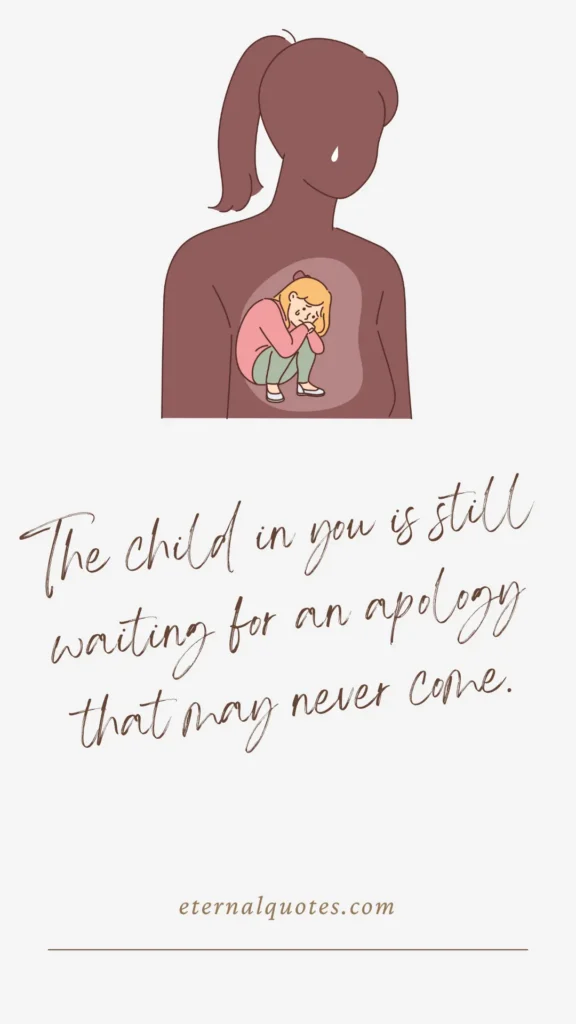
What happened to you as a child wasn’t your fault, but healing from it is your responsibility.
Your inner child deserves the protection and comfort you never received.
Some wounds are so deep they change the shape of your entire life.
The family that was supposed to be your safe place became your first source of fear.
Childhood trauma teaches you that love comes with conditions and pain.
You learned to be grateful for the bare minimum because that’s all they gave you.
The adults who should have protected you were often the ones you needed protection from.
Your hypervigilance isn’t paranoia – it’s a survival skill you developed too young.
Some families create wounds so deep that healing takes a lifetime of conscious effort.
The little version of you who endured all that deserves to be proud of who you’ve become.
Family Communication Breakdowns
Healthy communication is rarer in families than most people admit. What passes for connection in many households is actually a carefully negotiated performance — everyone speaking in ways designed to manage reactions rather than express truth. Real honesty, the kind that risks something, is often the first casualty of a family that has learned to prioritize peace over understanding.
When families don’t develop the capacity to have difficult conversations, those conversations don’t disappear — they go underground. They resurface as tension at the dinner table, as decades-old resentments that flare without warning, as the particular silence that fills a room when the wrong subject is almost mentioned. What cannot be spoken tends to find other ways to be heard.
The silent treatment is emotional abuse disguised as conflict resolution.
Family meetings often become courtrooms where everyone’s a prosecutor.
You can’t have healthy communication with people who weaponize your vulnerability.
Some family members only hear you when you’re screaming, then blame you for raising your voice.
Passive-aggressive family members say everything except what they actually mean.
The inability to have difficult conversations keeps families sick for generations.
Some families mistake screaming for honesty and silence for peace.
You can’t force understanding on people who benefit from misunderstanding you.
Family communication often involves more performing than actual connecting.
The conversations that need to happen the most are usually the ones everyone avoids.
Addiction and Mental Health in Families
Addiction and untreated mental illness don’t stay contained to the person experiencing them. They move through a family like weather — changing the atmosphere, altering everyone’s behavior, creating a household where moods must be monitored and unpredictability becomes the only constant. Children who grow up in these environments often spend years unlearning the alertness it took to survive them.
One of the cruelest aspects of loving someone through addiction or mental illness is that you can give everything and still not be enough to change the outcome. That is not a failure of love. It is a recognition of what love, on its own, cannot do — and learning that distinction, as painful as it is, matters enormously for your own survival.
Living with an addicted family member means grieving someone who’s still alive.
Mental illness in the family affects everyone, not just the person who has it.
You can’t love someone out of their addiction, no matter how hard you try.
Families often enable dysfunction in the name of helping.
Growing up with addiction teaches you that chaos feels like home.
Mental health issues run in families, but so does the stigma and denial.
You become an expert at reading moods and walking on eggshells before you can even walk properly.
Addiction makes liars out of people you used to trust with your life.
The family disease of addiction infects everyone it touches with fear, shame, and secrets.
Sometimes the kindest thing you can do is stop enabling and let people hit their bottom.
Divorce and Blended Family Challenges
Divorce reshapes a family in ways that take years to fully understand. For the adults involved, it is often experienced as an ending — but for children, it tends to feel more like a permanent rearrangement of the world they knew. The family still exists, just differently, and navigating that difference requires a kind of emotional flexibility that children shouldn’t have to develop so young.
Blended families ask everyone in them to make room for new relationships without a roadmap. There is no formula for how quickly affection develops, or how long adjustment takes, or what it feels like to love a parent’s new partner while still missing the life that came before. The process is rarely clean, and the people who navigate it best tend to be the ones willing to move slowly and honestly.

Children become messengers and mediators in wars they didn’t start.
Blended families require everyone to learn new roles without a script.
The word step-parent carries weight that no one prepared you for.
Divorced parents sometimes forget that their children lost their family structure too.
Custody schedules turn childhood into a perpetual state of transition.
Blended families work best when everyone remembers that love multiplies, it doesn’t divide.
The loyalty conflicts in divorced families can tear children apart from the inside.
New family structures require new rules, new boundaries, and a lot of patience.
Some children become experts at living in multiple worlds just to keep everyone happy.
The grief of divorce affects every family member differently, but it affects everyone.
Financial Stress and Family Money Issues
Money problems have a way of amplifying everything else that is already strained in a family. They bring urgency and scarcity into spaces that were already short on patience, and they have a particular talent for making people behave in ways they later regret. Financial pressure doesn’t create conflict so much as it removes the insulation that kept existing conflicts manageable.
For children who grow up inside financial instability, the effects often extend far beyond the practical. The anxiety becomes internalized, the sense that security is always one event away from collapsing becomes a lens through which everything is viewed. That scarcity mindset can linger long into adulthood, shaping decisions and relationships in ways that aren’t always easy to trace back to their source.
Financial stress turns family dinners into budget meetings filled with tension.
Some families use money as a weapon and financial support as emotional control.
Growing up with financial instability teaches you that security is always temporary.
Money fights between parents become anxiety disorders in their children.
The stress of keeping up appearances while struggling financially exhausts entire families.
Financial trauma gets passed down just like other forms of family dysfunction.
Some family members mistake financial support for emotional connection.
Money problems reveal which family members will stand by you and which ones won’t.
The fear of financial ruin can make families either incredibly tight or completely fractured.
When money becomes the measure of love, everyone in the family feels bankrupt.
Estrangement and Family Reconciliation
Family estrangement is one of the most misunderstood decisions a person can make, largely because it is so often judged by people who weren’t in the room for the things that led to it. From the outside, cutting off a family member can look cold or dramatic. From the inside, it is frequently the result of years of effort, hope, and disappointment — a last act of self-protection rather than a first one.
Reconciliation, when it happens, deserves more than the passage of time. Time alone doesn’t change behavior or repair what was broken. What makes reconciliation real — when it is real — is the presence of accountability, changed patterns, and a willingness from everyone involved to approach the relationship differently than before. Without those things, returning tends to mean returning to the same place.
Estrangement isn’t giving up on family – sometimes it’s saving yourself from them.
The family members who refuse to acknowledge their role in the estrangement often created it.
Going no-contact feels like grief because you’re mourning the family you wished you had.
Reconciliation requires accountability, not just the passage of time.
Some bridges are burned for a reason and shouldn’t be rebuilt until the foundation changes.
Family estrangement affects holidays, weddings, funerals, and every major life event.
The people who pressure you to reconcile usually aren’t the ones who lived through the abuse.
Sometimes the family you choose becomes more supportive than the one you were born into.
Reconciliation without changed behavior is just a temporary ceasefire in an ongoing war.
The door can stay open without you walking through it every time someone knocks.
Healing and Moving Forward
Healing from family wounds doesn’t mean arriving at a place where the past no longer matters. It means gradually developing the capacity to carry it differently — with more understanding, less shame, and a growing ability to separate who you are from what happened to you. That separation is slow work, and it is rarely linear.
What makes healing possible, more than anything else, is the willingness to stop pretending that things were fine when they weren’t. Honesty — with yourself, with a therapist, with people you trust — is where the process actually begins. Not the performed version of honesty that announces itself dramatically, but the quieter kind that simply stops looking away.
You can acknowledge your family’s role in your pain without letting it define your entire story.
Therapy becomes necessary when family dysfunction starts affecting every relationship you have.
The work of healing is hard, but it’s harder to live with unprocessed family trauma.
Some family members will never understand your healing journey, and that’s not your problem.
Forgiveness is for you, not for them – and it doesn’t require reconciliation.
Healing family trauma often means becoming the parent to yourself that you never had.
The patterns that feel normal to you might be the very things that need to change.
You can’t heal in the same environment that made you sick.
Family healing happens when someone finally chooses truth over peace.
The strongest families are often the ones that have learned to heal together instead of hurt together.
You Are Not the Sum of What Was Done to You
Whatever your family gave you — love mixed with harm, chaos dressed up as normal, silence where honesty should have been — none of it is the final word on who you are. People carry their histories without being defined by them. That is not a small thing. It is, in fact, one of the more remarkable things human beings are capable of.
The fact that you are reading this, sitting with these ideas, willing to look clearly at something most people spend a lifetime avoiding — that already says something about you. Awareness is not nothing. It is often the first real thing, the thing that makes everything else possible.
Healing is not a destination you arrive at and then stay. It is more like a practice — something you return to, something that deepens over time, something that asks different things of you at different stages of your life. There will be years when it feels like progress and years when old wounds resurface with surprising force. Both are part of the same process.
The family you build — through chosen relationships, through therapy, through the steady accumulation of people who meet you honestly — can be as real and as nourishing as anything you were born into. In some cases, it becomes more so. Building that kind of chosen community is not a consolation prize. It is its own form of wholeness.
Forgiveness, if it comes, tends to arrive quietly and on its own schedule. It cannot be forced or willed into being, and it does not require you to minimize what happened or welcome back what harmed you. When it comes, it tends to feel less like releasing someone else and more like setting down a weight you didn’t realize you were still carrying.
You are allowed to want things to have been different. You are allowed to grieve the family you deserved and didn’t get. And you are also allowed, slowly and imperfectly, to build something better — for yourself, and for whoever comes after you. That is not a small inheritance to leave behind.