Just so you know – some links on this page are affiliate links. If you click and buy something, I may earn a small commission (think coffee money, not a luxury vacation) at no extra cost to you. I only share things I genuinely like and believe are worth it. Thanks for supporting this little corner of the internet – it really helps keep everything running.
Children move through the world with a kind of openness that adults often forget. They feel things deeply, notice more than we think, and carry small moments with them longer than we realize. A few steady words can shape the way they see themselves when things feel confusing or hard. That is part of why encouragement matters so much in childhood.
Growing up is full of quiet tests. Some of them look ordinary from the outside – a hard school day, a mistake in front of others, the fear of not fitting in, the effort of trying again. For a child, those moments can feel huge. What helps is not pressure, but the feeling that they are still safe, still capable, and still learning.
Confidence in children rarely appears all at once. It usually grows slowly, through repetition, patience, and the kind of support that does not disappear when things go wrong. They build it each time they are allowed to try, fail, recover, and keep going. Over time, that becomes a quiet belief in their own ability to face life as it comes.
Kindness matters here too. The way adults speak to children often becomes part of their inner voice, especially in moments when no one else is around. Gentle, honest language can give them something solid to stand on. It does not need to be dramatic to stay with them.
There is also something important about giving children room to imagine more for themselves. Not in a heavy, demanding way, but in a way that leaves space for curiosity, effort, and hope. A child who feels seen and encouraged often carries that feeling into school, friendships, and the way they approach the future. Sometimes the smallest messages leave the deepest mark.
This kind of support is not only for big milestones. It belongs in daily life – in ordinary afternoons, messy learning curves, and moments when a child needs help finding their footing. The goal is not to make life easy for them, but to help them meet it with steadiness. That is often where real strength begins.
Believing in Yourself
Believing in yourself often begins long before a child has the words to describe it. It grows through small moments of trying, speaking up, and realizing they can handle more than they first thought. That belief does not make fear disappear, but it gives them a way to move through it. Over time, it becomes part of how they carry themselves.
Children do not need to feel sure all the time in order to build confidence. What they need is the chance to keep showing up, even when something feels awkward or uncertain. A steady sense of self is usually built in ordinary moments, not grand ones. It comes from learning that being imperfect does not make them any less worthy.
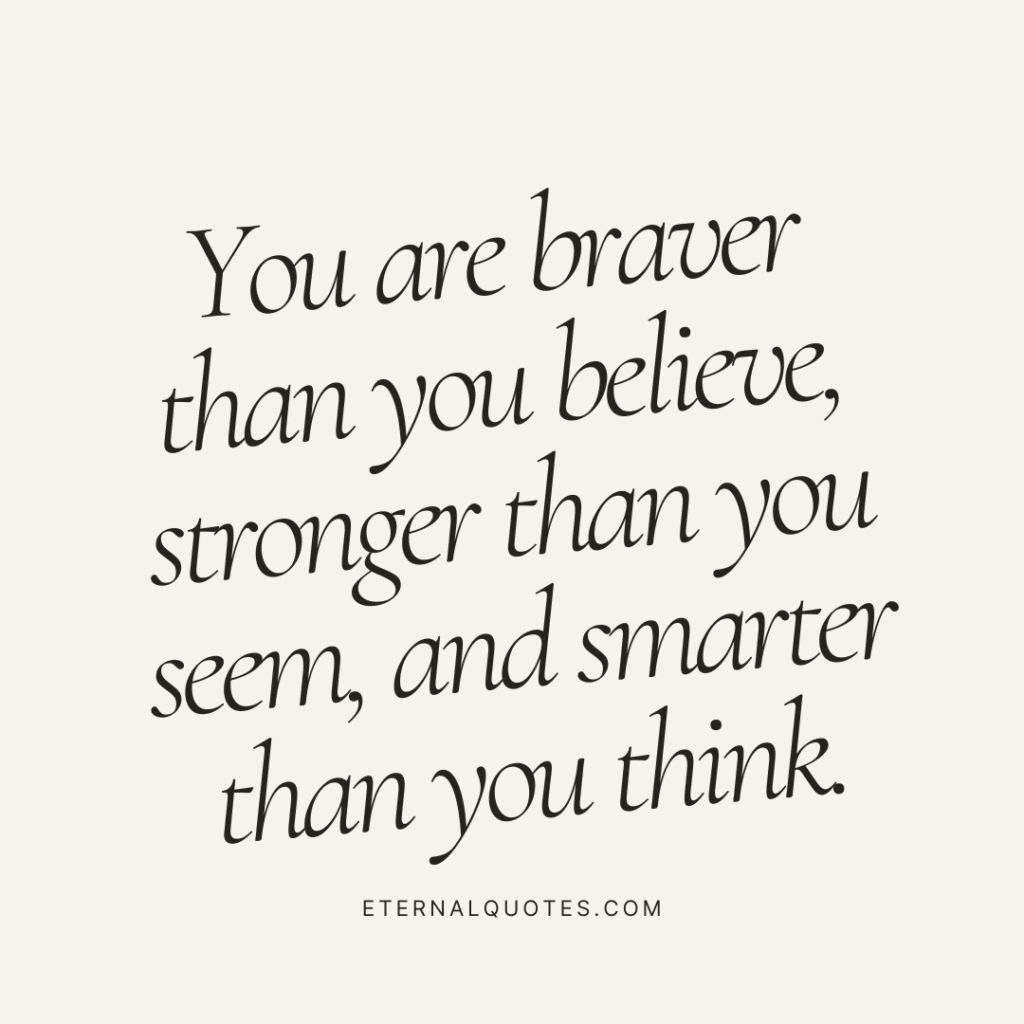
The only person you should try to be better than is the person you were yesterday.
What makes you different makes you special.
Your thoughts become your words, your words become your actions, your actions become your habits.
If you can dream it, you can do it.
You don’t have to be perfect to be amazing.
The best way to predict your future is to create it.
When you feel like quitting, remember why you started.
Your potential is endless. Go do what you were created to do.
You have greatness within you, waiting to be unleashed.
Trust yourself. You know more than you think you do.
Looking for Good K-Beauty?
MISSHA has a huge range of Korean skincare and makeup, including some seriously popular bestsellers.
Growth Mindset
A growth mindset gives children a healthier way to understand struggle. Instead of seeing difficulty as proof that they are not good enough, they begin to see it as part of learning. That shift can change the entire mood around mistakes. What once felt like failure starts to feel more like practice.
This way of thinking helps children stay open when progress is slow. It teaches them that ability is not fixed, and that effort has value even before results show up. There is something grounding in knowing they are still becoming. It makes room for patience, resilience, and a little more trust in the process.
Learning is a treasure that will follow its owner everywhere.
Your brain is like a muscle – the more you use it, the stronger it gets.
Being challenged in life is inevitable, being defeated is optional.
Fall seven times, stand up eight.
The expert in anything was once a beginner.
I’m not telling you it’s going to be easy, I’m telling you it’s going to be worth it.
Every mistake you make is progress.
You don’t learn to walk by following rules. You learn by doing, and by falling over.
The more that you read, the more things you will know. The more that you learn, the more places you’ll go.
The beautiful thing about learning is that no one can take it away from you.
Perseverance
Perseverance is often less dramatic than people imagine. For children, it can look like sitting with frustration a little longer, trying once more after getting something wrong, or not giving up at the first sign of difficulty. Those quiet moments matter more than they seem. They teach that hard things can be faced without turning away.
Sticking with something does not mean pushing without rest or pretending things are easy. It means learning how to stay present when progress is uneven and results take time. Children need space to discover that effort can be tiring and still worthwhile. That lesson can stay with them far beyond childhood.
Never give up on something you really want. It’s difficult to wait, but more difficult to regret.
If Plan A doesn’t work, the alphabet has 25 more letters.
Difficult roads often lead to beautiful destinations.
Success is not final, failure is not fatal: it is the courage to continue that counts.
The difference between a successful person and others is not a lack of strength, not a lack of knowledge, but rather a lack of will.
The hardest battles are given to the strongest soldiers.
Don’t watch the clock; do what it does. Keep going.
The only way to do great things is to love what you do.
Success is falling nine times and getting up ten.
If it doesn’t challenge you, it doesn’t change you.
Dream Big
Children naturally imagine beyond the edges of what is right in front of them. They picture new worlds, future versions of themselves, and lives that feel wide open. That instinct to dream matters because it keeps possibility alive. It allows them to think of life as something they can help shape.
Dreaming big is not only about ambition. It is also about permission – permission to hope, to explore, and to take their own interests seriously. When children feel free to imagine without being rushed into limits too soon, something inside them stays awake. That sense of wonder can become a steady source of direction later on.
Today a reader, tomorrow a leader.
Dream big and dare to fail.
The future belongs to those who believe in the beauty of their dreams.
Don’t just fly, soar.
Adventure is out there. Go find it.
Today is your opportunity to build the tomorrow you want.
The sky is the limit. You are the sky.
Big dreams create the magic that stirs people to greatness.
Nothing is impossible. The word itself says “I’m possible!”
Dreams don’t work unless you do.
Kindness
Kindness is one of the first ways children learn that they have an effect on the world around them. A small gesture, a gentle word, or the choice to include someone can change the shape of a day. These things may look simple, but they are never small in meaning. They teach children that care is something they can practice, not just feel.
It also helps children understand that other people carry feelings they cannot always see. That awareness can soften the way they move through friendships, classrooms, and conflict. Kindness does not require perfection or constant cheerfulness. It begins with attention, respect, and the willingness to be thoughtful even in ordinary moments.
No act of kindness, no matter how small, is ever wasted.
Kind words can be short and easy to speak, but their echoes are truly endless.
Kindness is a language which the deaf can hear and the blind can see.
Kindness begins with understanding that we all struggle.
Do things for people not because of who they are or what they do in return, but because of who you are.
Be somebody who makes everybody feel like a somebody.
How you make others feel about themselves says a lot about you.
One kind word can change someone’s entire day.
The simplest acts of kindness are far more powerful than a thousand heads bowing in prayer.
Be the reason someone smiles today.
Courage
Courage in childhood is often quiet and easy to miss. It can be found in telling the truth, raising a hand when unsure, walking into a new room, or trying again after embarrassment. These moments may not look heroic from the outside, but they ask a lot from a child. Real bravery often begins there.
Children need to know that courage is not the absence of fear. It is the decision to move with honesty even when fear is present. That understanding can make them gentler with themselves in difficult moments. Instead of waiting to feel completely ready, they begin to trust that they can still take the next step.
Life shrinks or expands in proportion to one’s courage.
Courage is what it takes to stand up and speak; courage is also what it takes to sit down and listen.
It takes courage to grow up and become who you really are.
Fear is a reaction. Courage is a decision.
Being different takes courage.
Courage doesn’t always roar. Sometimes courage is the quiet voice at the end of the day saying, “I will try again tomorrow.”
You cannot swim for new horizons until you have courage to lose sight of the shore.
The brave may not live forever, but the cautious do not live at all.
With courage, you will dare to take risks, have the strength to be compassionate, and the wisdom to be humble.
Sometimes the bravest thing you can do is ask for help.
Leadership
Leadership in children does not have to mean being loud, popular, or in charge. Very often it shows up as steadiness, fairness, and the ability to make others feel included. A child can lead by example long before they ever hold a title. In many cases, the strongest form of leadership begins with character.
When children learn that leadership is connected to responsibility and care, it takes on a healthier shape. It becomes less about attention and more about presence. They begin to see that influence can be used to help, encourage, and guide. That understanding gives leadership a quieter and more lasting foundation.
Leadership is not about being the best. It’s about making everyone else better.
The best way to find yourself is to lose yourself in the service of others.
A good leader takes a little more than his share of the blame, a little less than his share of the credit.
Leaders don’t force people to follow – they invite them on a journey.
You don’t have to hold a position to be a leader.
Leadership is about making others better as a result of your presence.
A true leader has the confidence to stand alone, the courage to make tough decisions, and the compassion to listen to the needs of others.
Great leaders don’t set out to be a leader… they set out to make a difference.
A leader is one who knows the way, shows the way, and goes the way.
The greatest leader is not necessarily the one who does the greatest things. He is the one that gets others to do the greatest things.
Creativity
Creativity is one of the most natural parts of being a child. It lives in questions, games, stories, drawings, strange ideas, and the urge to make something from almost nothing. Children often create before they know how to judge what they are making. That freedom is part of what makes their imagination so alive.
Protecting creativity means allowing room for curiosity without rushing everything toward correctness. Not every idea needs to be useful or polished to matter. Sometimes the value is simply in exploring, noticing, and trying. When children feel safe to imagine openly, they often become more confident in many other parts of life too.
You can’t use up creativity. The more you use, the more you have.
Logic will get you from A to B. Imagination will take you everywhere.
The future belongs to the curious. The ones who are not afraid to try it, explore it, question it, and turn it inside out.
Every child is an artist. The problem is how to remain an artist once we grow up.
Think left and think right and think low and think high. Oh, the thinks you can think up if only you try!
Creativity takes courage.
You see things; and you say “Why?” But I dream things that never were; and I say “Why not?”
Creativity is seeing what others see and thinking what no one else has thought.
The desire to create is one of the deepest yearnings of the human soul.
To practice any art, no matter how well or badly, is a way to make your soul grow.
Friendship
Friendship can shape childhood in ways that are both tender and lasting. It teaches children how to trust, how to be known, and how to make room for another person in their everyday life. Some friendships feel easy, while others teach patience, repair, and understanding. All of that becomes part of how children learn connection.
Being a good friend is not only about having fun together. It also means listening, showing care, and staying kind when things are not perfectly smooth. These early experiences often become a child’s first lessons in loyalty and empathy. Through friendship, they begin to understand that closeness is built over time.
Friends are the siblings God never gave us.
Walking with a friend in the dark is better than walking alone in the light.
A friend is someone who knows all about you and still loves you.
The only way to have a friend is to be one.
Good friends are like stars. You don’t always see them, but you know they’re always there.
A true friend is someone who accepts your past, supports your present, and encourages your future.
Friends are the family we choose for ourselves.
Friendship is born at that moment when one person says to another, “What! You too? I thought I was the only one.”
Many people will walk in and out of your life, but only true friends will leave footprints in your heart.
A friend is someone who helps you up when you’re down, and if they can’t, they lay down beside you and listen.
Positive Attitude
A positive attitude is not about pretending everything feels good all the time. For children, it is more helpful to understand it as a way of meeting life with steadiness, openness, and a little hope. It leaves room for disappointment without letting disappointment decide everything. That difference can shape how they recover from hard days.
When children learn to notice what is still possible, they often become more flexible and resilient. They start to see that one bad moment does not have to define the rest of the day. This kind of outlook is not built through denial, but through practice. It grows when they are gently shown how to look for light without forcing it.

It’s not what happens to you, but how you react to it that matters.
A positive attitude gives you power over your circumstances instead of your circumstances having power over you.
Life is 10% what happens to us and 90% how we react to it.
Every day may not be good, but there is something good in every day.
The happiness of your life depends upon the quality of your thoughts.
Attitude is a little thing that makes a big difference.
Choose to be optimistic, it feels better.
A bad attitude is like a flat tire. You can’t go anywhere until you change it.
Positive thinking will let you do everything better than negative thinking will.
Wherever you go, no matter what the weather, always bring your own sunshine.
Growing Into Their Own Light
Childhood is full of small turning points that adults do not always notice in the moment. A child tries again after wanting to quit, says something honest when it would be easier to stay quiet, or begins to believe that being different is not the same as being wrong. These are quiet forms of growth, but they matter deeply. They become part of how a child learns to live inside their own life.
Encouragement has a way of settling into places that are still forming. It can soften self-doubt before it hardens into something heavier. It can remind a child that struggle is not failure and that effort still counts when the outcome is uncertain. Sometimes a few steady words help create a sense of safety that keeps growing long after the moment passes.
Children do not need to be extraordinary in every direction. They do not need to be the smartest, fastest, bravest, or most confident person in the room in order to matter. What they need is room to become themselves at a human pace. That kind of space is often what allows their strengths to show up honestly.
It also helps when they learn that who they are is not measured only by performance. There is value in their curiosity, their kindness, their persistence, and the way they keep learning how to relate to the world around them. These things may not always earn applause, but they shape character in lasting ways. A child who understands this carries a steadier kind of confidence.
The world will offer children enough pressure soon enough. What stays with them more deeply is often the tone of the voices that helped shape them early on. Gentle truth, patient guidance, and steady belief can become part of the way they speak to themselves later. That is a quiet gift, but not a small one.
As children grow, they are not just learning facts or building skills. They are learning how to think about themselves, how to respond to difficulty, and how to keep moving when life does not feel simple. That process deserves patience as much as direction. In the end, what matters most is not a perfect path, but a grounded heart that keeps finding its way.