Just so you know – some links on this page are affiliate links. If you click and buy something, I may earn a small commission (think coffee money, not a luxury vacation) at no extra cost to you. I only share things I genuinely like and believe are worth it. Thanks for supporting this little corner of the internet – it really helps keep everything running.
There are moments in conversation where the right words simply do not come. You walk away replaying the exchange, piecing together the response you wish you had given. It is one of the more quietly frustrating experiences of everyday life.
Standing up for yourself is not about aggression or scoring points. It is about maintaining your sense of self when someone else seems determined to chip away at it. That takes a certain kind of steadiness, one that can be practiced and built over time.
Words carry weight in both directions. The ones you choose in a tense moment can either escalate things or quietly defuse them. Learning to respond rather than react is a skill, and like any skill, it gets easier the more you understand your own instincts.
What follows is a collection of responses across different situations and tones. Some are dry and understated. Others are more direct. The goal throughout is the same — to help you find your footing when someone else tries to pull it out from under you.
Classic Witty Responses
Wit is one of those things that looks effortless from the outside but often takes a quiet confidence to pull off. It does not require cruelty or volume — just a certain ease with language and a willingness to stay calm when someone else is not.
A well-placed observation, delivered without heat, can say more than a long argument ever could. It signals that you are paying attention, that you are unbothered, and that you are entirely capable of holding your own.
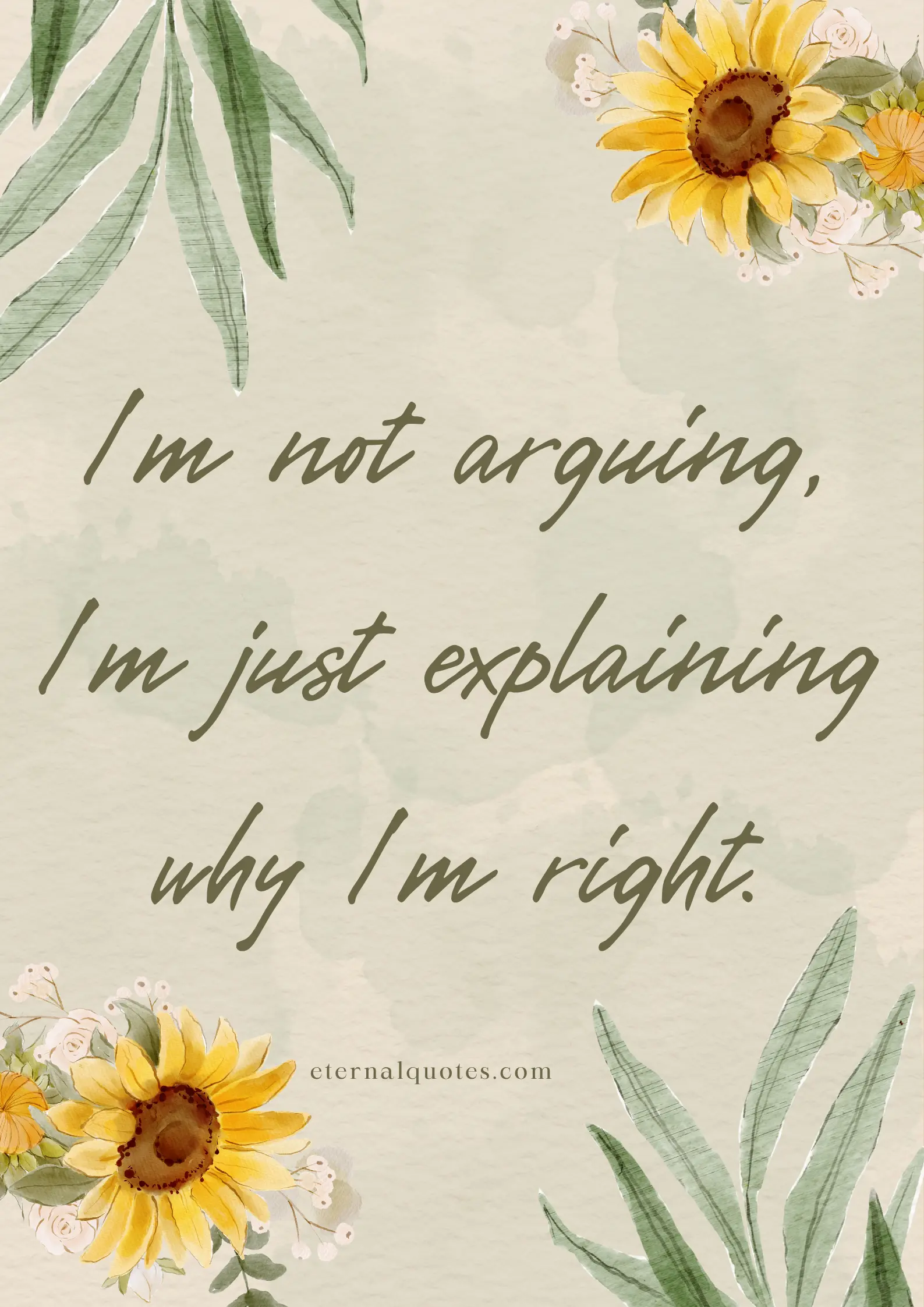
I’d agree with you, but then we’d both be wrong.
I’m sorry, did the middle of my sentence interrupt the beginning of yours?
I’m not insulting you, I’m describing you.
If I wanted to listen to an idiot, I’d watch TV.
I don’t have the time or the crayons to explain this to you.
I’m not mean, I just say what most people think.
Your opinion is noted and completely ignored.
I’d explain it to you, but I don’t have any puppets with me.
I’m allergic to stupidity, so please keep your distance.
If ignorance is bliss, you must be the happiest person alive.
Confidence Boosters
Genuine confidence is not something you perform for other people. It is the quiet, internal sense that your choices are yours to make and your life is yours to live — regardless of whether anyone else approves.
When someone tries to undermine that steadiness, the most grounded response often comes from a place of indifference rather than defence. Not coldness — just a settled sense of where you stand.
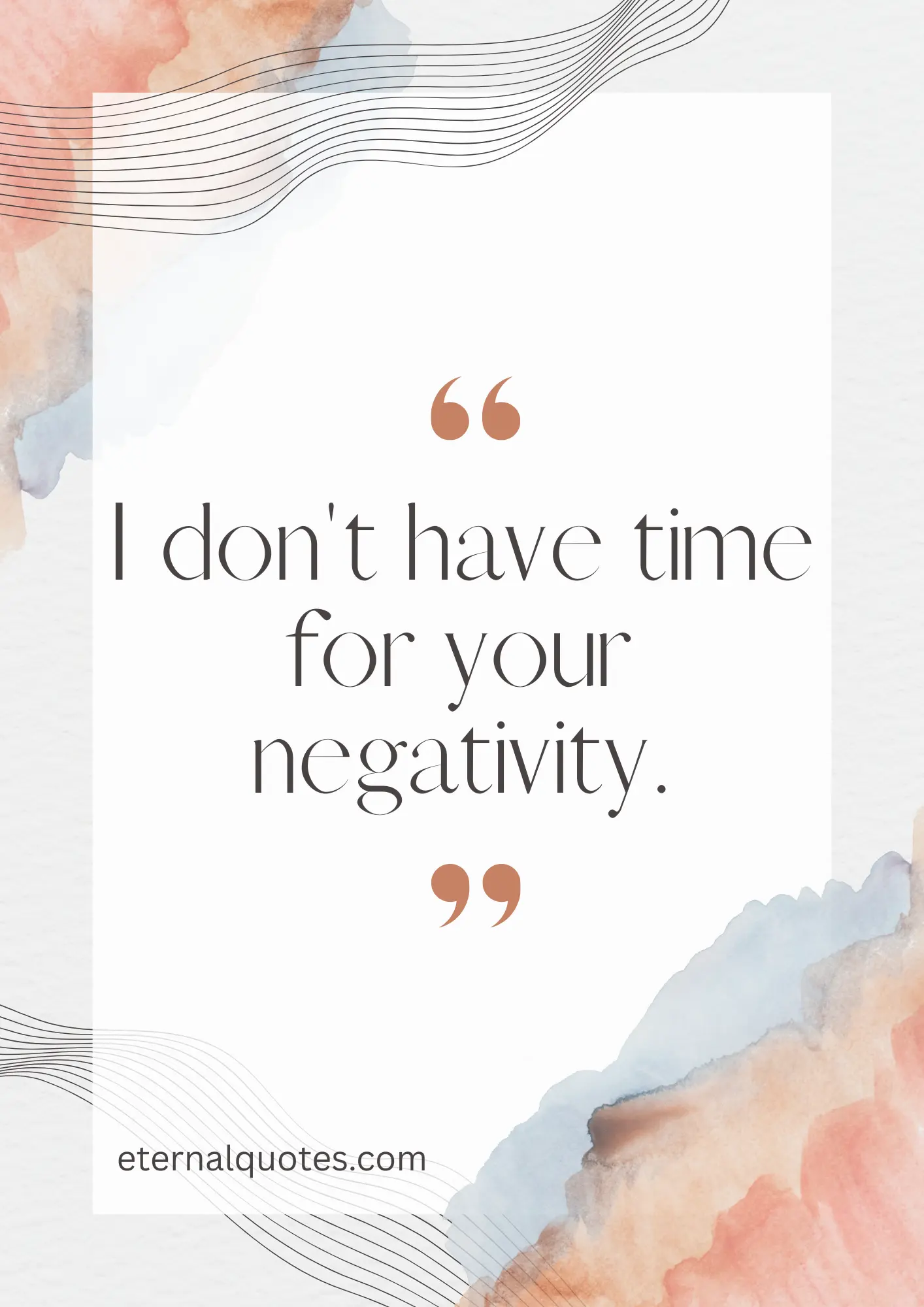
Your approval is not required for my happiness.
I’m too busy working on my own grass to notice if yours is greener.
My life doesn’t need your commentary.
I’m the main character in my story, not a supporting role in yours.
Your opinion of me is none of my business.
I don’t shrink to make others comfortable.
My energy is reserved for people who deserve it.
I’d rather be disliked for who I am than liked for who I’m not.
Success is the best response to criticism.
I’m not everyone’s cup of tea, and that’s perfectly fine.
Professional Comebacks
Professional environments have their own particular brand of friction — the passive comment in a meeting, the unsolicited critique on work that was never theirs to evaluate. Navigating that without losing your composure is its own kind of skill.
Staying measured in those moments is not weakness. It is a deliberate choice to keep things on your terms, to redirect without escalating, and to make clear that you are not easily rattled.
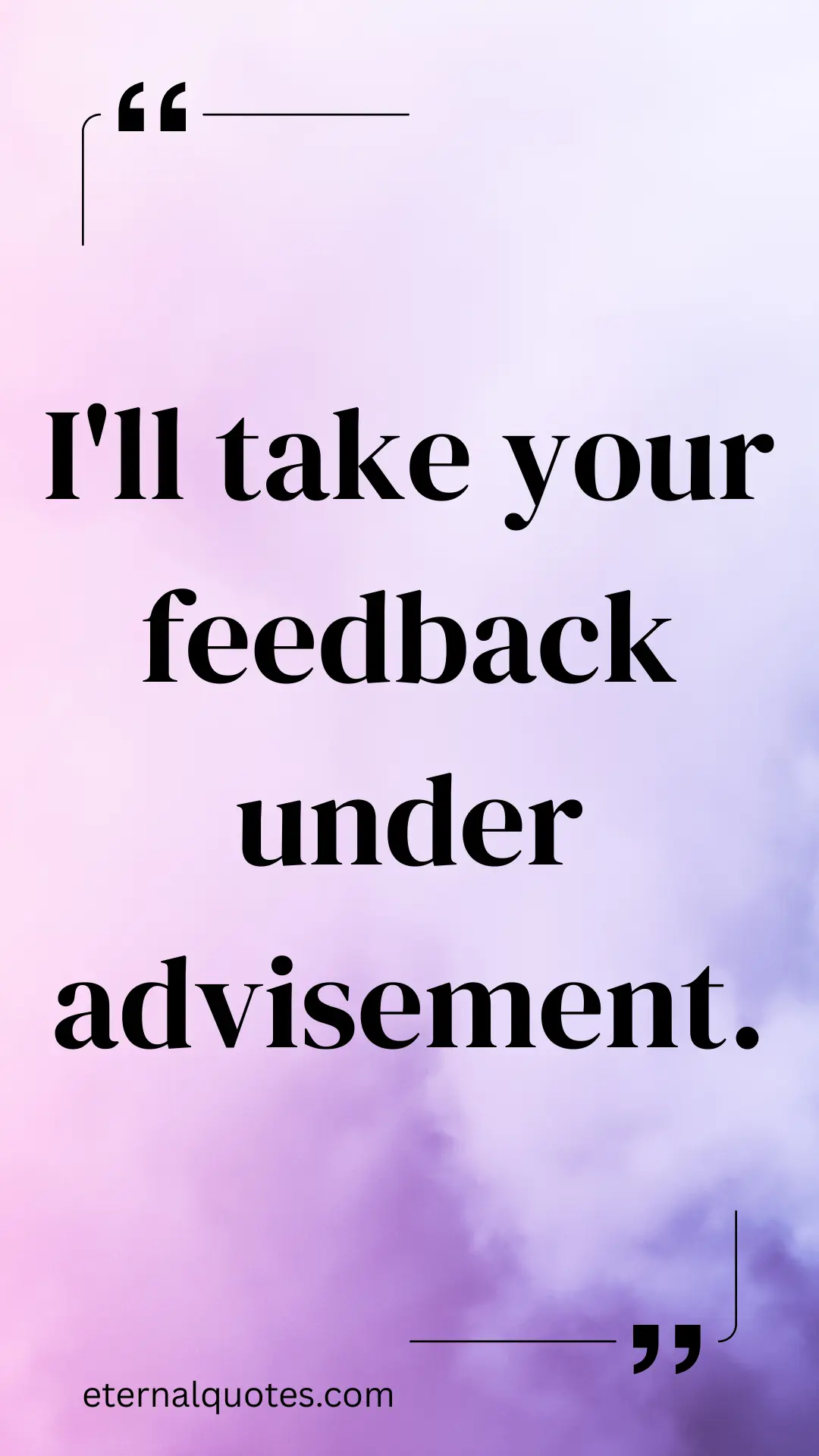
That’s an interesting perspective, but I’ll stick with the facts.
I appreciate your concern, but I’ve got this handled.
Your input is valuable, but not required right now.
I’m confident in my approach, thanks for checking.
That’s one way to look at it, here’s another.
I understand your point, but I disagree.
Let’s focus on solutions instead of problems.
I’d prefer to discuss this professionally.
My work speaks for itself.
Experience has taught me otherwise.
Social Situation Savers
Social settings can be unpredictable. Someone oversteps, says something they had no business saying, or offers an opinion you never invited. In those moments, the instinct is often either to go silent or to overreact — and neither tends to serve you well.
There is a middle ground between absorbing someone’s rudeness and matching it. A response that is firm without being combative, brief without being dismissive, can close the conversation cleanly and let you move on with your dignity intact.
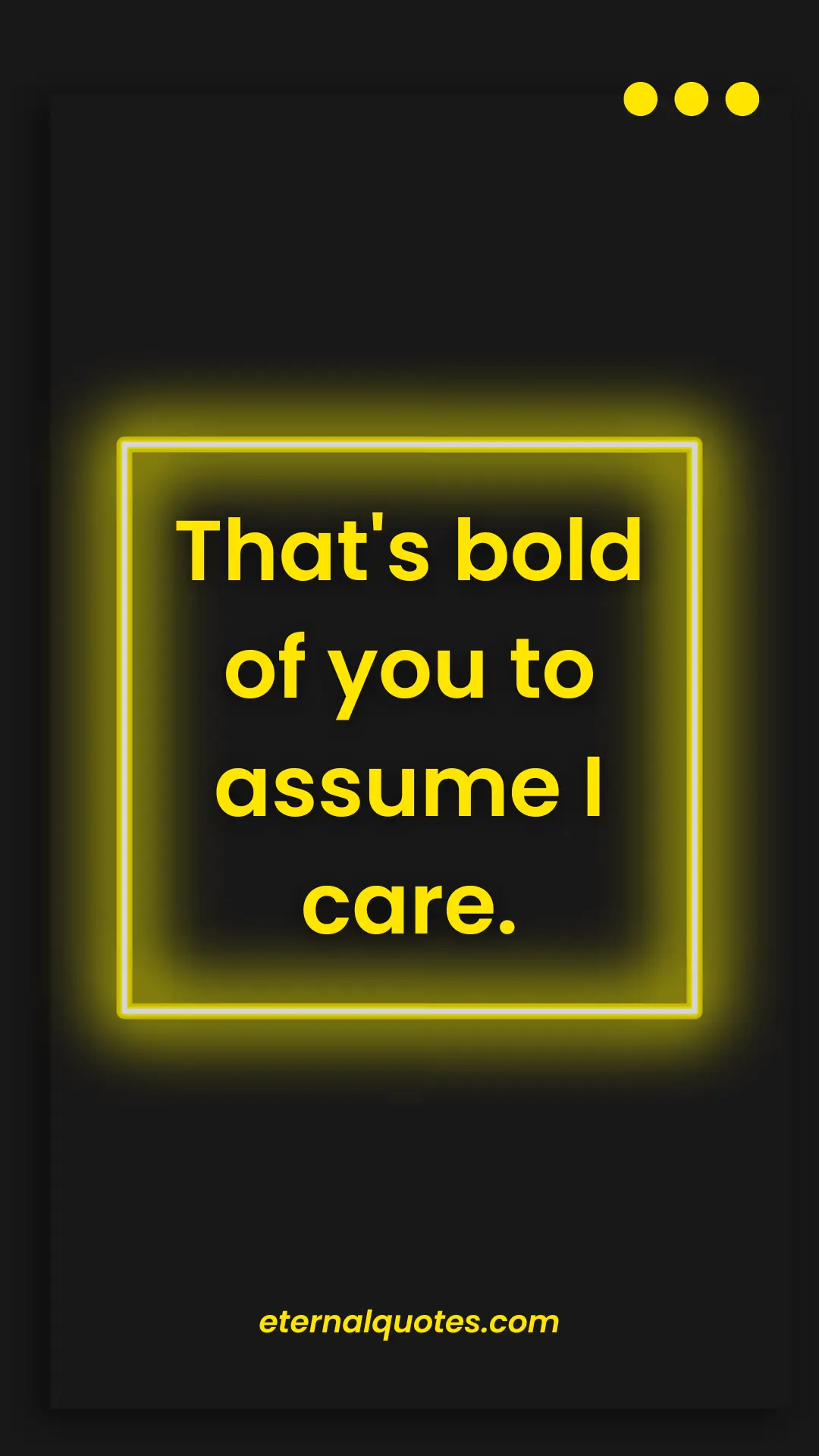
Thanks for sharing, but nobody asked.
Your concern is touching but unnecessary.
I’ll file that under things I didn’t need to know.
That’s a you problem, not a me problem.
I’m living my life, not performing for your approval.
Your judgment says more about you than me.
I don’t remember asking for your opinion.
That’s fascinating, tell someone who cares.
I’m sorry, was I supposed to be impressed?
Your drama is not my entertainment.
Dealing With Critics
Criticism is worth taking seriously when it comes from someone who genuinely understands your situation and wants to see you do well. But not all criticism is that. Some of it is projection, some of it is habit, and some of it has very little to do with you at all.
Learning to tell the difference is one of the quieter forms of self-protection. You do not have to shut every critic out, but you do not have to absorb every word either. Source matters as much as content.
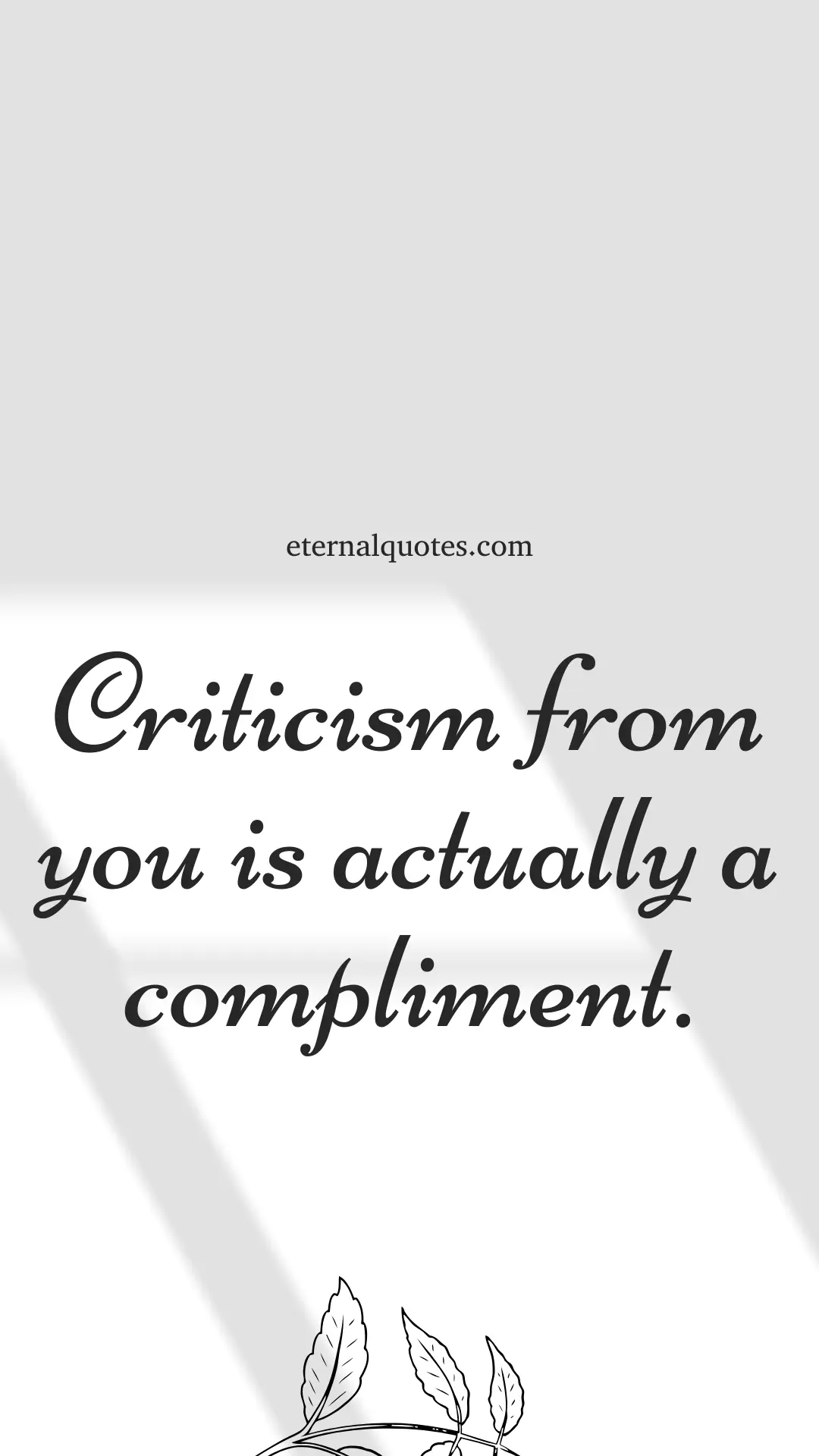
I’d take your advice if you had your life together.
Show me your credentials before giving me life advice.
Your track record doesn’t inspire confidence in your opinions.
I’ll consider your feedback when you achieve what I have.
That’s rich coming from someone in your position.
Practice what you preach before preaching to others.
Your criticism is noted and filed under irrelevant.
I don’t take advice from people I wouldn’t trade places with.
Maybe work on yourself before critiquing others.
Your opinion would matter if your actions matched your words.
Handling Rude Comments
Rudeness rarely has much to do with the person on the receiving end. It tends to say a great deal more about where the other person is — emotionally, mentally, in that particular moment. That does not make it pleasant to experience, but it does change how much weight you give it.
Responding to rudeness does not always mean engaging with it directly. Sometimes the most effective thing you can do is acknowledge what happened without letting it pull you into the same register. Calm is often its own kind of answer.
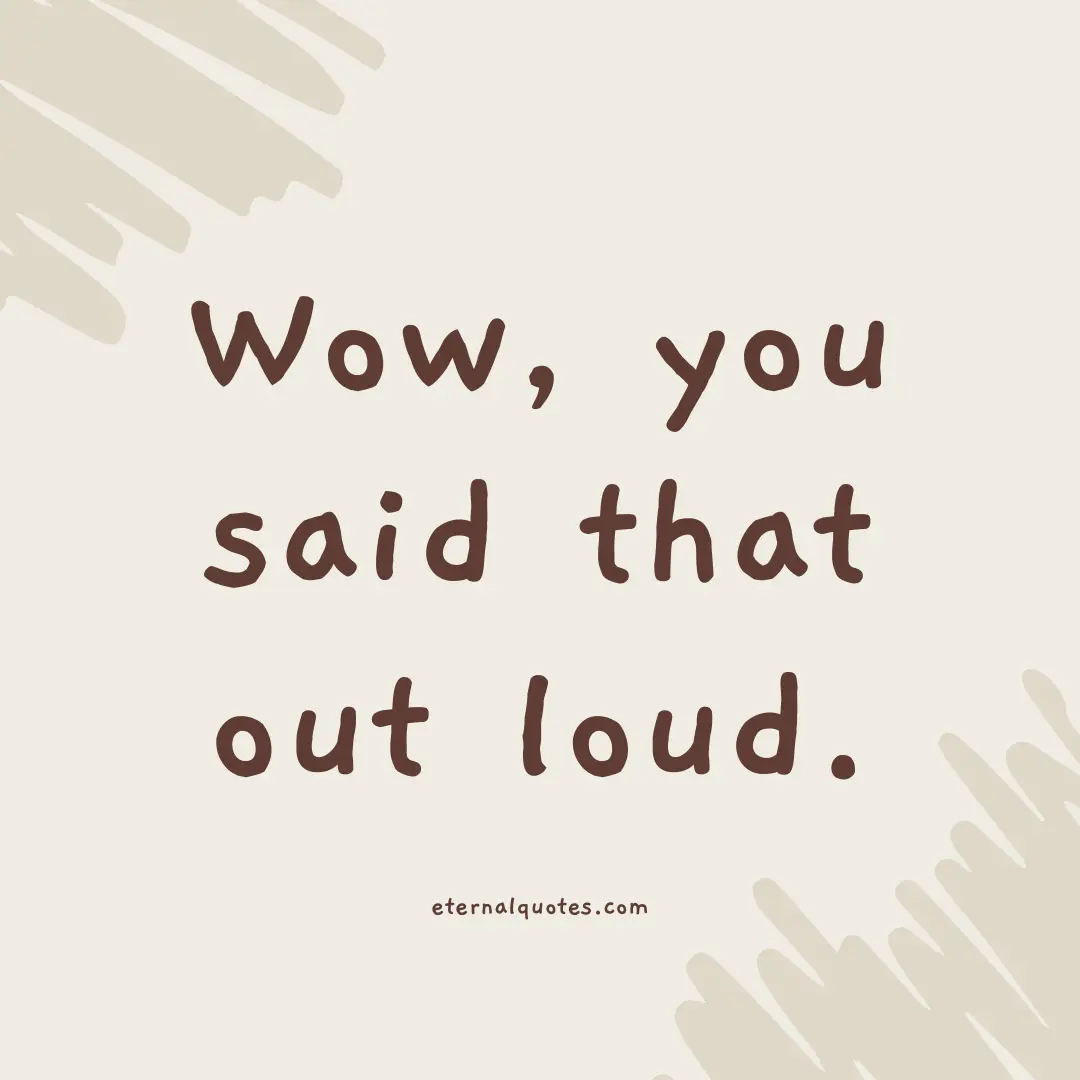
That’s not a good look for you.
Did you mean to be that rude, or does it come naturally?
I’m embarrassed for you right now.
That’s unfortunate for your reputation.
Yikes, someone’s having a rough day.
I hope your day gets better so your attitude can too.
That’s not the energy I want in my space.
I’m going to pretend I didn’t hear that.
Your manners seem to be on vacation.
Is this really the hill you want to die on?
Quick and Sharp Responses
Not every situation calls for a considered, multi-sentence reply. Sometimes a single word or short phrase lands harder than anything more elaborate could. Brevity, used well, carries its own kind of authority.
Short responses also have a way of refusing to feed the dynamic someone else is trying to create. They do not give the other person much to work with, which is sometimes exactly the point.
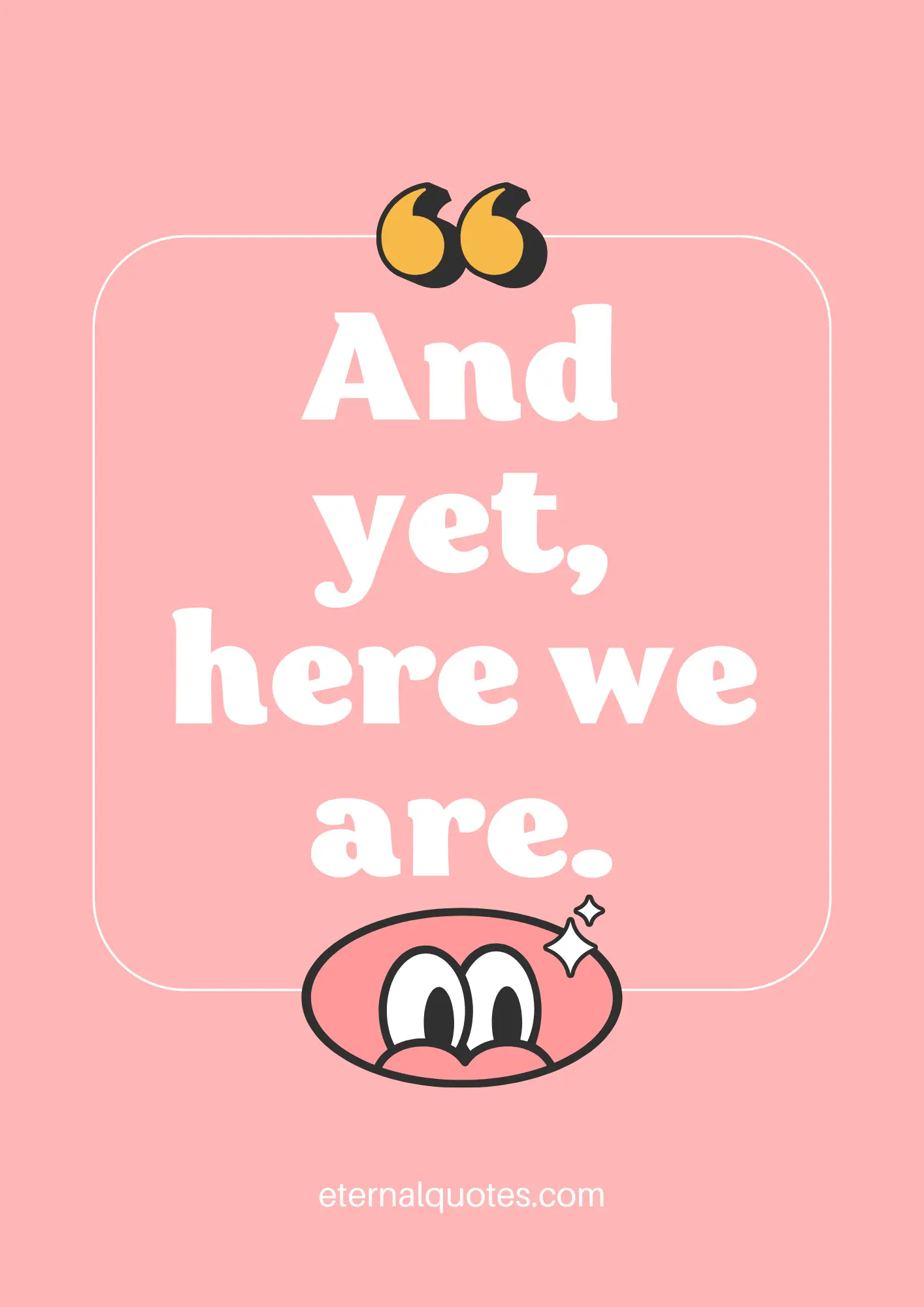
How original.
Fascinating.
Cool story.
That’s nice.
Good for you.
Sure thing.
Whatever helps you sleep at night.
If you say so.
I’ll keep that in mind.
Thanks for that insight.
Self-Defense Champions
Defending yourself is not the same as being defensive. One comes from a place of clarity — knowing what you will and will not accept — while the other comes from anxiety. The distinction matters, both in how it feels and in how it lands.
Boundaries are not ultimatums or declarations of war. They are simply the quiet, consistent ways you communicate where you end and someone else begins. Holding them steadily, without drama, is one of the more underrated forms of self-respect.
My life, my rules, my consequences.
You’re entitled to your opinion, not your facts.
I don’t need your permission to be myself.
Your discomfort with my success is not my problem.
I refuse to set myself on fire to keep you warm.
My boundaries are not up for negotiation.
I don’t have to justify my decisions to anyone.
Your expectations of me are not my responsibility.
I’m not responsible for managing your emotions.
My worth is not determined by your approval.
Humor-Based Deflections
Humor can do something that a straight rebuttal often cannot — it shifts the emotional temperature of a moment without requiring you to escalate. Used lightly, it signals ease. It shows that whatever someone threw your way did not actually land the way they hoped.
The key is that it stays wry rather than mean-spirited. There is a version of deflection through humor that disarms a situation entirely, and a version that just pours fuel on it. The tone you bring to it makes all the difference.
That’s a special kind of logic you’ve got there.
Did you rehearse that or was it improvised?
I admire your confidence in being wrong.
That’s definitely one way to see it.
Your creativity in missing the point is impressive.
I love how you make simple things complicated.
That’s a unique interpretation of reality.
Your ability to confuse yourself is remarkable.
I see we’re operating from different planets today.
Your mental gymnastics deserve a gold medal.
Final Word Winners
Some conversations have a natural ending point, and the skill is in recognising it. Knowing when to stop — when to close the loop rather than keep pulling on it — is not giving up. It is choosing not to let something go further than it needs to.
Getting the last word is not always about what you say. Sometimes it is simply about refusing to continue. Stepping back cleanly, without apology or lingering, is its own kind of statement — and often a more powerful one than anything said aloud.
I’m done explaining myself to you.
We’re going to have to agree to disagree.
I’ve said what I needed to say.
My point stands regardless of your opinion.
I’m not interested in continuing this discussion.
Let’s move on from this topic.
I think we’ve exhausted this conversation.
I’m comfortable with my position on this.
This is where I draw the line.
I’ve made my decision and I’m sticking to it.
The Real Strength Is Knowing When to Speak
Having the right words available to you changes something subtle but real. It is less about using them constantly and more about knowing they are there — a kind of quiet readiness that keeps you from feeling caught off guard.
The most grounded people are not necessarily the ones who always respond. They are the ones who choose their moments carefully, who do not feel compelled to fill every uncomfortable silence or answer every provocation. That restraint is its own form of strength.
How you carry yourself through friction — whether you stay measured, whether you protect your energy, whether you walk away when walking away is the right call — says far more about you than any single comeback ever could.
So keep what is useful here, set aside what does not fit your nature, and trust your own read of the room. The goal was never to win every exchange. It was always just to leave it feeling like yourself.