Feeling used is one of the most painful realizations you can have about a relationship. It’s discovering that someone you cared about saw you as a resource to exploit rather than a person to value.
The sting of being used comes from the betrayal of trust, the questioning of your judgment, and the hurt of realizing your kindness was taken advantage of instead of appreciated.
These words speak to that specific pain – the moment you realize someone was only around for what you could give them, not for who you actually are. They’re for anyone who’s felt like a stepping stone, an ATM, an emotional dumping ground, or just convenient until they weren’t needed anymore.
Being used teaches hard lessons about boundaries, self-respect, and recognizing when generosity becomes self-betrayal. It hurts, but it also clarifies who deserves your energy and who doesn’t.
Recognizing You’re Being Used
Real recognition comes when you notice they disappear the moment you can’t provide what they want.
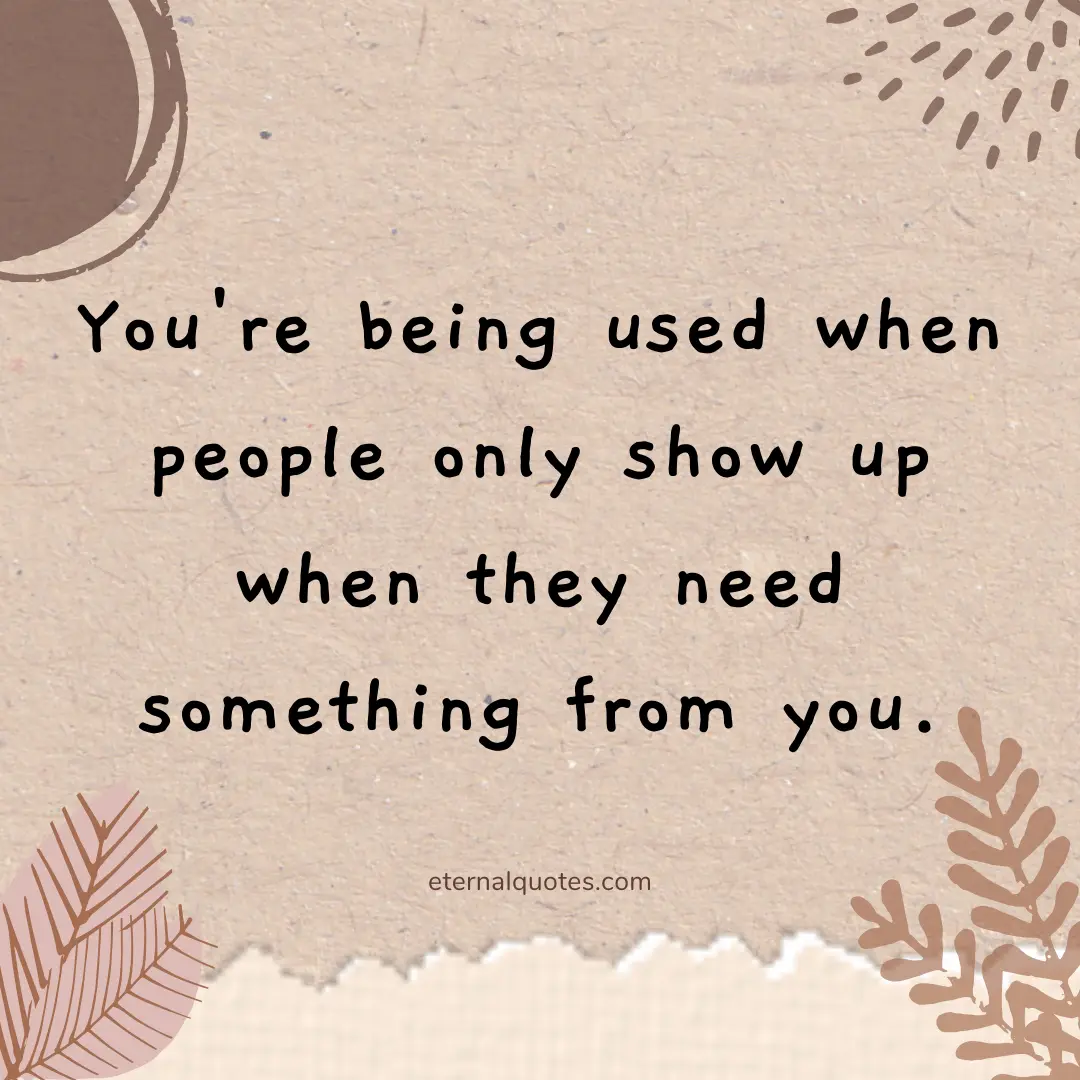
You’re being used when the relationship feels one-sided and you’re always giving while they’re taking.
The pattern becomes clear when they’re available for your help but unavailable for your needs.
You’re being used when they treat you like a resource to extract from rather than a person to value.
Real awareness comes when you realize they never ask how you’re doing, only what you can do for them.
You’re being used when they show interest in your life only to figure out what they can get from you.
The truth reveals itself when you stop giving and they stop coming around immediately.
You’re being used when their kindness is conditional on your continued usefulness to their agenda.
Real clarity comes when you notice they only remember you exist when they need something again.
You’re being used when the relationship drains you consistently while energizing only them.
The Pain of Realization
The pain comes from understanding your kindness was exploited, not appreciated or reciprocated fairly.
Discovering you were used makes you question your judgment and feel foolish for not seeing it sooner.
Real heartbreak is realizing the relationship you valued meant nothing to them beyond convenience.
The pain of being used includes anger at them and disappointment in yourself for allowing it.
Realizing you were used strips away the illusion of connection you thought you shared with them.
The hurt comes from accepting that your genuine care was met with calculated manipulation.
Real pain is understanding that every kind gesture you made was an opportunity they exploited.
Discovering you’ve been used makes you doubt your ability to trust people or read intentions accurately.
The realization that you were used is both clarifying and devastating in equal measure simultaneously.
Real heartbreak is knowing they’d use you again if you let them back into your life.
Patterns of Being Used
Real patterns emerge when you notice you’re always the giver and never the receiver in relationships.
You keep getting used because you accept less than you deserve out of fear of being alone.
The pattern continues when you mistake being needed for being valued by people using you.
You attract users when your self-worth is tied to how useful you are to other people.
Real patterns show up when everyone seems to need you desperately until you need them back.
You keep getting used because you ignore red flags and explain away behaviors that should concern you.
The cycle repeats when you confuse manipulation for appreciation of your generous nature.
You attract users when you’re more focused on being liked than on being respected appropriately.
Real patterns emerge when you realize every relationship follows the same take-take-take dynamic.
You keep getting used until you learn that giving to people who only take is enabling, not loving.
Setting Boundaries After Being Used
Real protection comes from recognizing user behavior early and removing access to your resources immediately.
Boundaries mean understanding that people who truly value you won’t need to be cut off or restricted.
Setting limits after being used requires accepting that some people will leave when you stop giving.
Real boundaries mean being okay with people being upset that you won’t let them use you anymore.
Protection comes from valuing your peace more than you value people’s opinions of you.
Boundaries after being used mean watching people’s actions instead of believing their manipulative words.
Real self-respect is refusing to be anyone’s convenience, backup plan, or emotional support animal unpaid.
Setting boundaries means accepting that users will call you selfish for no longer letting them be selfish.
Protection comes from understanding that real relationships don’t require you to drain yourself consistently.
Real boundaries mean some relationships end, and that’s the trash taking itself out ultimately.
Self-Worth After Being Used
Real healing starts when you stop blaming yourself for their decision to use you selfishly.
Your worth isn’t determined by how someone with no integrity chose to treat you poorly.
Self-worth after being used means recognizing your value independent of their inability to see it.
Real recovery is understanding that being used happened because you were kind, not because you were stupid.
Your worth remains intact regardless of how many people tried to use you for personal gain.
Self-worth after being used means refusing to let their behavior define how you see yourself.
Real strength is knowing that users target good people, not weak people, despite what shame says.
Your value doesn’t decrease because someone treated you like you were disposable or convenient.
Self-worth after being used comes from understanding that their behavior was about them, not about you.
Real healing is reclaiming your worth from people who had no right to make you question it.
Trust Issues After Being Used
Real trust issues develop when you’ve been burned so many times that caution becomes your default.
After being used, you struggle to accept genuine kindness without suspecting hidden agendas behind it.
Trust issues emerge when past experiences teach you that people usually want something eventually.
Real damage from being used is learning to protect yourself but struggling to open up healthily.
After being used, you analyze every interaction for signs of manipulation or selfish intentions.
Trust issues mean you push away good people because you’re protecting yourself from more users.
Real healing requires learning to trust selectively while maintaining boundaries, not closing off completely.
After being used, vulnerability feels dangerous because you’ve seen how people weaponize your openness.
Trust issues develop when generosity has been consistently punished through exploitation by selfish people.
Real recovery is learning that trust can be rebuilt slowly with people who actually earn it properly.
People Who Use Others
Real users know exactly what to say to keep you giving while they continue taking endlessly.
People who use others have a talent for playing victim when you finally set boundaries.
Users will drain you dry and then blame you for having nothing left to give them.
Real users are experts at manipulation disguised as friendship, love, or genuine need for help.
People who use others rarely change because using people works for them without consequences.
Users will keep taking as long as you keep giving, with no natural limit to their selfishness.
Real users make you feel guilty for your own boundaries and selfish for basic self-preservation.
People who use others move on quickly to the next target when you stop being useful to them.
Users justify their behavior by convincing themselves they deserve whatever they can extract from you.
Real users leave destruction in their wake and never look back with remorse or accountability.
Learning From Being Used
Real lessons from being used include learning that not everyone deserves your kindness or time.
You learn that setting boundaries early saves you from resentment and exploitation later on.
Being used teaches you the difference between being helpful and being taken advantage of consistently.
Real wisdom from being used is understanding that you train people how to treat you.
You learn that someone needing you constantly isn’t the same as someone valuing you appropriately.
Being used teaches you to protect your energy like the precious resource it actually is.
Real lessons include learning to recognize red flags instead of explaining them away with excuses.
You learn that walking away from users is self-respect, not cruelty or abandonment of anyone.
Being used teaches you that your worth isn’t measured by your usefulness to selfish people.
Real wisdom is understanding that being used was about their character deficiency, not your value deficit.
Moving On From Being Used
Real healing is understanding that you can’t change the past but you control who gets access now.
Moving on means forgiving yourself for not seeing it sooner and for being too generous initially.
Recovery from being used requires grieving the relationship you thought you had, not what actually existed.
Real moving on is when you think about it without that sick feeling in your stomach anymore.
Healing means using the experience as education about boundaries instead of as shame about yourself.
Moving on from being used requires releasing bitterness so it doesn’t poison your future relationships.
Real recovery is when you can recognize user behavior immediately and remove yourself without second-guessing.
Moving on means choosing carefully who gets your time, energy, and resources going forward intentionally.
Healing from being used is building self-worth that doesn’t depend on being needed by others.
Real moving on is when you’re grateful for the lesson even though you hated learning it that way.
Protecting Yourself Going Forward
Real self-preservation is noticing when relationships feel transactional instead of reciprocal and acting accordingly.
Protecting yourself means accepting that saying no to users isn’t mean, it’s necessary survival.
Self-protection requires paying attention to patterns in people’s behavior instead of isolated kind gestures.
Real boundaries mean you’re comfortable with people thinking you’re difficult when you refuse to be used.
Protection means understanding that good people won’t push your boundaries or make you feel guilty constantly.
Self-preservation is recognizing that your giving should be appreciated, not expected or demanded endlessly.
Real protection means valuing reciprocity in relationships and walking away when it’s consistently absent.
Protecting yourself requires trusting your gut when something feels off about someone’s intentions toward you.
Self-protection means choosing peace over people-pleasing even when it disappoints users who expected more.
Real boundaries mean being okay with being called selfish by people who were actually the selfish ones.
Rising From Being Used
These words can’t erase the pain of being used, but maybe they can help you understand it wasn’t your fault.
Being used hurts because you gave genuinely and they took strategically. You showed up with good intentions while they showed up with hidden agendas. That’s not a reflection of your naivety – it’s a reflection of their character.
People who use others are skilled at it. They know how to make you feel special, needed, and valued just enough to keep you giving. They’re experts at manipulation because they’ve had plenty of practice on other kind people before you.
The lesson isn’t to become cynical or closed off. It’s to become discerning. To watch actions over time, not just believe words in the moment. To recognize that healthy relationships have reciprocity and users only take.
You’re allowed to be angry about being used. You’re allowed to grieve relationships that turned out to be transactions. You’re allowed to set boundaries that would’ve felt “mean” to your pre-used self.
But don’t let being used make you bitter. Don’t let it steal your kindness or generosity from people who deserve it. Use it as education about who gets access to you and who doesn’t.
Because the right people will value what you offer, not just use it until you’re empty.
And those are the only people who deserve your time, your energy, and your beautiful generous heart going forward.